


Introduction
Electric vehicles, energy storage systems, and renewable-power equipment have created one of the fastest-growing sources of demand for precision metal components. A single EV program pulls together die-cast battery and motor housings, extruded cooling profiles, stamped busbars and contacts, and hundreds of machined brackets and interfaces — often on development timelines measured in months, not years.
For buyers and engineers on new energy programs, the challenge is rarely finding "a metal supplier." It is finding one that understands which process fits which component, how the processes hand off to each other, and how to keep quality stable as volumes ramp from prototypes to mass production. This guide walks through the main component categories in new energy applications, the process and material choices behind each, and the quality expectations that matter at volume.
What New Energy Applications Demand from metal parts
New energy products concentrate several demanding requirements in the same component set:
Lightweighting. Every kilogram removed from a battery enclosure or drive unit extends range or increases payload. This pushes designs toward aluminum and thin walls, and toward processes like aluminum die casting that produce near-net-shape parts with minimal waste.
Thermal management. Batteries, inverters, and motors all generate heat that must be conducted away through the metal structure itself. Cooling plates, fins, and housings with integrated thermal paths are common — the design logic behind custom heat sink manufacturing applies directly.
Sealing and protection. Battery enclosures and outdoor power electronics must resist dust, water, and vibration for the life of the product. That makes machined gasket surfaces, flatness control, and consistent surface treatment functional requirements rather than cosmetic ones.
Electrical performance. Busbars, terminals, and connectors carry high currents and need controlled contact resistance, plating quality, and dimensional repeatability.
Ramp discipline. New energy programs scale fast. A process that works at 500 units per month must hold its quality at 10,000 — which favors processes with stable, repeatable tooling such as die casting, extrusion, and stamping.
Behind these product-level requirements sits a commercial one: many new energy programs are first-generation designs, which means drawings evolve. Suppliers who can absorb engineering changes without losing process control — and who flag manufacturability issues early — protect both the schedule and the budget. That combination of flexibility and discipline is worth testing explicitly during supplier qualification, before volumes make it expensive.
Key Component Categories and How They Are Made
Battery pack housings. Large aluminum enclosures are typically die cast in one piece or built from extruded frame profiles with stamped and machined covers. Die casting consolidates parts and reduces sealing interfaces; the process, materials, and design considerations are covered in this guide to aluminum die casting precision parts.
Motor and power-electronics housings. These combine complex internal geometry with precision bearing and sealing surfaces. The usual route is die casting followed by CNC finishing of critical interfaces — casting gives the shape, machining gives the accuracy.
Busbars and electrical contacts. Flat copper and aluminum conductors are produced by metal stamping from coil, often with plating afterward. For current-carrying parts where casting makes sense, copper die casting is a specialized option described in this guide to copper die casting for conductive components.
Cooling structures. Liquid-cooling plates and finned profiles are natural products of aluminum extrusion, followed by cnc machining of ports and sealing faces. Extrusion delivers long, consistent cross-sections at low unit cost.
Brackets and structural supports. Mounting brackets, frames, and reinforcement parts span the full range: sheet metal fabrication for simple flat geometry, die casting for consolidated shapes, and CNC machining for high-load or high-precision parts in lower volumes.
Charging and grid infrastructure. Charging stations, inverter cabinets, and grid-connected equipment add their own component set: sheet metal enclosures and doors, extruded heatsinks for power modules, machined terminals, and weatherproof hardware. These parts run at lower volumes than vehicle components but live outdoors for years, which shifts the emphasis toward corrosion protection and robust sheet metal fabrication rather than extreme weight reduction.
Choosing the Right Process
Most new energy programs mix several processes. The table below compares the four that carry the most volume:
| Aspect | Die casting | Extrusion | Stamping | CNC machining |
|---|---|---|---|---|
| Typical volume | High | High | Very high | Low to medium |
| Geometry strength | Complex 3D shapes, thin walls | Constant cross-sections, long parts | Flat parts from coil, bends and forms | Any geometry, tightest tolerances |
| Tooling investment | High | Moderate (profile die) | High (progressive die) | Low (fixtures and programs) |
| Unit cost at volume | Low | Low | Lowest | Higher |
| Common new energy parts | Housings, enclosures | Cooling profiles, frames | Busbars, contacts, shields | Brackets, finished interfaces |
In practice the processes chain together. A battery enclosure may start as a die casting, have its sealing faces and connector ports finished by CNC, and receive corrosion protection through surface finishing before assembly. Evaluating these choices together — rather than buying each process separately — usually shortens the supply chain and removes hand-off risk. A broader comparison of casting and machining trade-offs appears in this guide to CNC machining vs die casting.
Materials in New Energy Components
Aluminum dominates the category. Die-cast housings commonly use foundry alloys such as ADC12 or A380 for their castability and strength; extruded cooling profiles and frames use 6061 or 6063 for thermal conductivity and finishing quality; stamped busbars use high-conductivity copper or aluminum strip, sometimes pre-plated. Where an enclosure needs higher strength than a standard casting alloy provides, the options and trade-offs are reviewed in this guide to aluminum die casting in high-strength components.
Two material-related details deserve buyer attention. First, thermal conductivity varies significantly between alloy families — a cooling plate in the wrong alloy can quietly underperform its design targets. Second, mixed-material assemblies (aluminum housings with copper busbars, steel fasteners) create galvanic pairs; coating and insulation choices need to account for this from the start.
Tolerances, Porosity, and Post-Machining
Cast and formed parts get their shape from the tool, but the interfaces that matter — sealing faces, bearing bores, connector ports — are usually machined afterward. Well-maintained machining centers offer machine capability around ±0.005 mm at the spindle, and finished precision features commonly reach accuracies near ±0.01 mm; what a specific part can hold depends on its geometry, material, and fixturing, as explained in this guide to CNC machining accuracy.
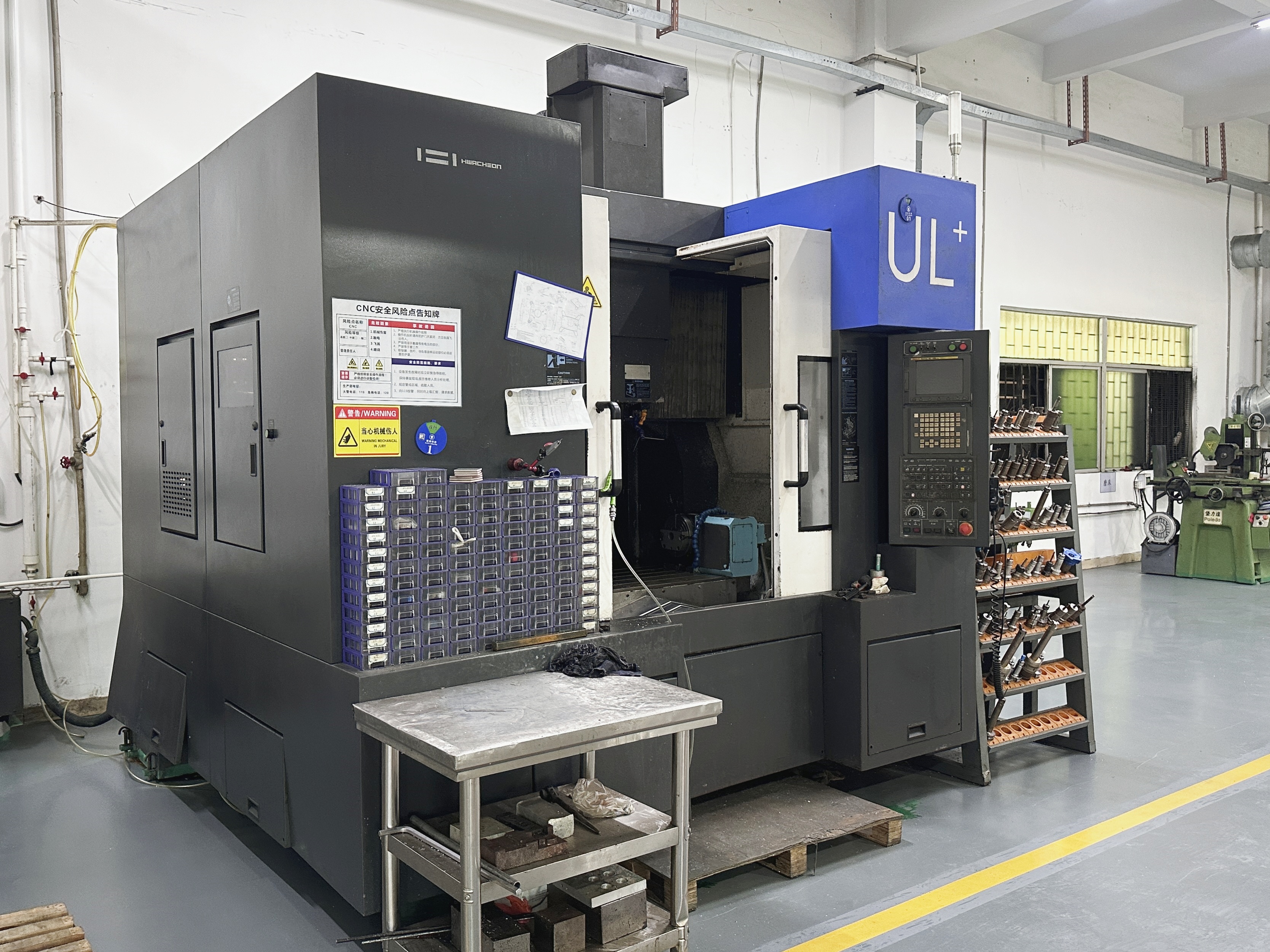 CNC finishing turns cast blanks into sealed, precision interfaces
For die-cast parts, the key quality issue behind machined surfaces is porosity. Gas or shrinkage porosity inside a casting can break out during machining, creating leaks in a sealed enclosure. Controlling it requires discipline in melting, die temperature, venting, and parameters — plus X-ray or section inspection where the application demands it. Buyers sourcing cast housings should ask suppliers specifically how porosity is detected and what acceptance criteria apply to machined areas.
Quality and Consistency at Volume
New energy programs amplify the cost of inconsistency: a housing lot that leaks, or busbar lot with the wrong plating thickness, stops an assembly line that is running thousands of units per day. The controls that protect volume production include:
| Control point | Typical method | Risk it addresses |
|---|---|---|
| Incoming material | Mill certs, lot verification | Wrong alloy or temper entering production |
| Casting process | Parameter monitoring, X-ray sampling | Internal porosity reaching machined surfaces |
| Machined features | CMM / dimensional inspection, SPC | Sealing and fit failures at assembly |
| Coating and plating | Thickness and adhesion tests | Corrosion, contact resistance drift |
| Release | Final inspection and lot records | Nonconforming product reaching the customer line |
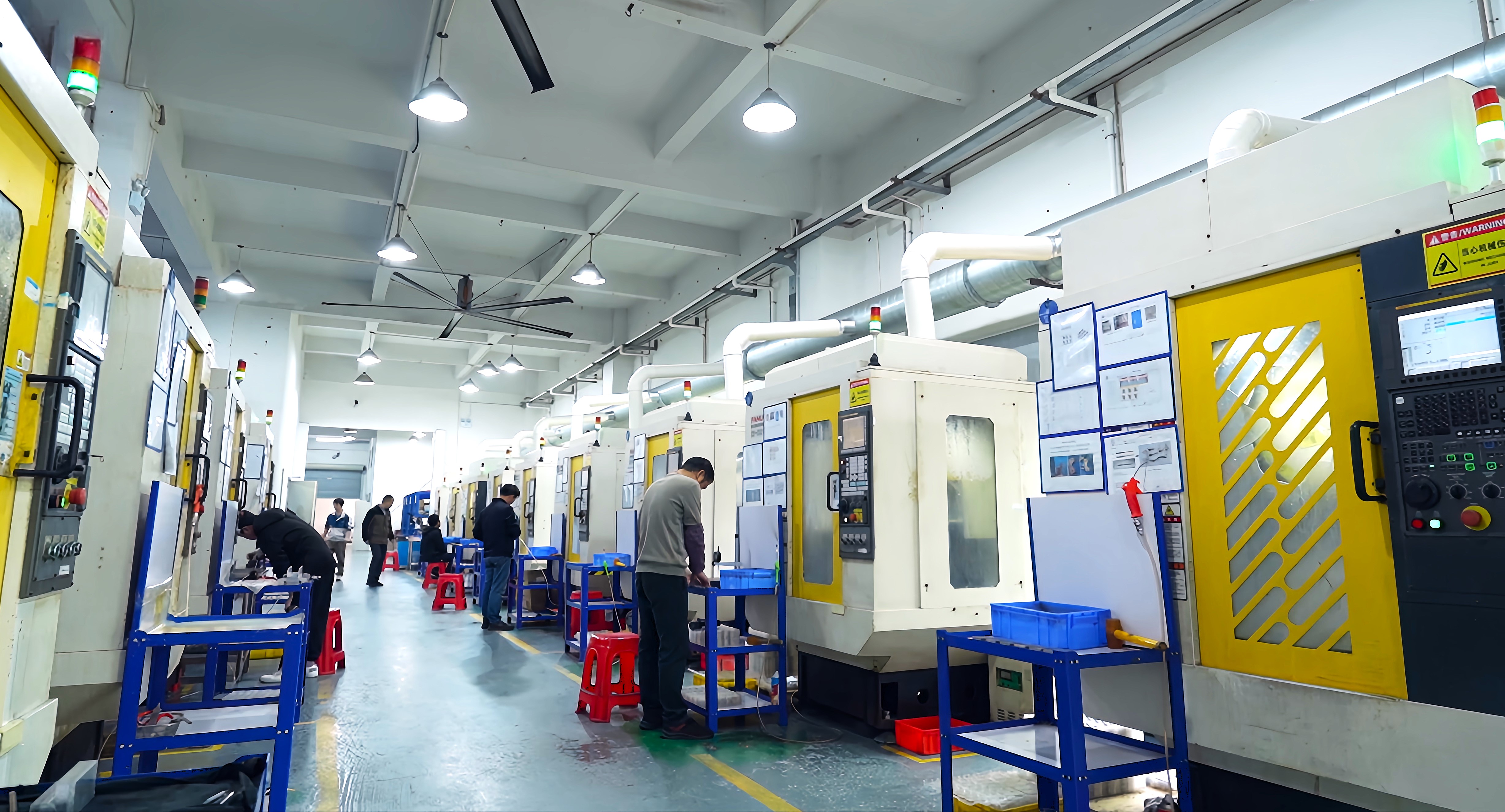 Rows of machining centers support volume production with consistent process controlA structured overview of what a complete verification process looks like is covered in this guide to professional quality inspection service. For programs planning the ramp itself, this guide to high-volume metal part production discusses how to organize capacity and process control as quantities grow.
Cost Drivers Buyers Should Understand
Understanding where the money goes in a metal component helps buyers have more productive conversations with suppliers. Four factors usually dominate the unit cost of new energy parts:
Raw material. Aluminum and copper prices are commodity-driven and fluctuate. For heavy parts like battery housings, material can be the largest cost block — which is why casting routes that minimize scrap and machining stock are preferred, and why quotes should state material weight and price basis explicitly.
Tooling amortization. Die-casting dies, extrusion profile dies, and progressive stamping dies each carry significant upfront cost. The more volume that runs through a tool, the lower its per-part share — the core reason process selection depends so heavily on program volume. Tooling ownership and maintenance terms deserve explicit contractual treatment, as discussed in the supplier section below.
Secondary machining. Every machined feature adds cycle time and fixture cost. Designs that limit machining to the interfaces that genuinely need it — instead of defaulting to all-over tolerances — keep this cost contained. Early DFM feedback from the supplier is the cheapest time to make these trade-offs.
Surface treatment. Coatings protect against corrosion and manage contact resistance, but process choice (anodizing, powder coating, plating) carries very different costs and batch-size economics. Requirements that match the actual environment — rather than blanket specifications — avoid paying for protection the part never uses.
A structured way to weigh these factors across the component set is to build a simple cost model per part: material weight, process route, tooling amortization over program volume, and secondary operations. Even a rough version of this model reveals which components deserve a value-engineering review first.
How to Qualify a New Energy Metal Parts Supplier
Five questions cut to the heart of supplier capability in this category:
1. Multi-process capability under one roof? Die casting, extrusion, stamping, and CNC in one supplier removes hand-off risk and shortens engineering loops. Confirm which processes are in-house versus subcontracted, and who controls quality in each case.
2. Porosity and leak control. Ask how cast housings are inspected and whether leak testing is available for sealed parts.
3. Alloy and material discipline. Certified purchasing, lot segregation, and the ability to advise on alloy selection — not just accept it.
4. Ramp experience. Ask for an example of a part that scaled from prototype to mass production with the supplier, and what changed (and did not) along the way.
5. Engineering responsiveness. New energy designs iterate fast; the supplier needs DFM feedback and drawing-revision discipline. The questions listed in this checklist before choosing a metal parts manufacturer help structure the conversation.
One Partner from Casting to Finished Part
SUNPREC (Sunprec Hardware Co., Ltd.) offers the full process chain for new energy components under one roof — die casting, extrusion, stamping, CNC machining, and surface finishing — supported by an ISO-certified quality management system and complete material traceability. Our team works with customers across industrial and energy-related applications, as introduced on our new energy solutions page, and our equipment and process capabilities are summarized on the capability page.
Whether your program needs die-cast housings, extruded cooling profiles, or stamped busbars, we can support the project from prototype through mass production — with the process control and documentation your application requires. Send us your drawings for a detailed quotation and DFM review.
Conclusion
New energy products succeed on the quality of their metal components: housings that seal, busbars that conduct, cooling structures that dissipate, and brackets that hold it all together through years of vibration and thermal cycling. For buyers, the most reliable path is to evaluate processes and supplier capability together — choosing the manufacturing route per component, consolidating where one partner can control multiple processes, and insisting on the porosity, dimensional, and coating controls that protect volume production.
Sourcing Metal Parts for a New Energy Program?
Send your drawings to SUNPREC for a detailed quotation and DFM feedback — die casting, extrusion, stamping, and CNC under one roof.
Request a QuoteFAQ
Why is die casting so common in EV and energy storage components?
Because it produces complex, thin-walled aluminum parts at low unit cost once tooling is in place — exactly the profile of battery housings, motor enclosures, and inverter cases produced at volume. Casting also consolidates multiple parts into one, reducing assembly and sealing interfaces.
Can one supplier handle casting, extrusion, stamping, and machining?
Some full-service manufacturers operate all of these processes in-house — SUNPREC is one example. Consolidating processes with one partner shortens communication loops, keeps quality control under one system, and simplifies logistics compared to managing a separate supplier for each process.
What aluminum alloys are used for battery housings?
Die-cast housings typically use foundry alloys such as ADC12 or A380; extruded frame profiles and cooling structures use 6061 or 6063. The choice depends on the manufacturing process, strength requirements, thermal conductivity targets, and corrosion environment — and should be confirmed case by case with the supplier's engineering team.
How are cast parts finished to tight tolerances?
Only the functional interfaces are machined after casting: sealing faces, bores, and connector ports. The casting provides the geometry at low cost; CNC finishing provides accuracy where it is needed. This hybrid approach keeps both tooling and unit costs under control.
What quality tests matter for sealed housings?
Porosity inspection (X-ray or section sampling), leak testing of sealed cavities, dimensional verification of machined interfaces, and coating thickness or adhesion tests where surface treatment provides corrosion protection. The right test set depends on the part's IP and lifetime requirements.
How do I get a quote for new energy metal parts?
Provide 2D drawings and 3D models where available, alloy and finish requirements, annual and per-lot volumes, and any sealing or testing requirements. Complete RFQs get faster and more accurate responses — the preparation checklist in these questions before choosing a metal parts manufacturer is a good starting point.