

Introduction
Behind every chip that leaves a fab stands an entire industry of capital equipment makers — the companies that build deposition, etch, lithography, and inspection tools. Their machines are assemblies of thousands of precision metal components: vacuum chambers, gas-delivery parts, wafer-handling mechanisms, and structural frames, most of them produced by cnc machining. As equipment platforms iterate faster and fabs push for higher yields, the demand for capable machining partners in this sector keeps growing.
Semiconductor equipment is one of the most demanding machining applications in industry. Components must hold tight tolerances, survive aggressive process chemistry and plasma, and stay free of particles that could contaminate a wafer. This guide explains which components are typically machined, which materials and finishes are used, what quality expectations apply, and how to qualify a machining supplier for this sector.
Why Semiconductor Equipment Is a Demanding Application
Three characteristics of semiconductor manufacturing shape everything about its machined components:
Particle sensitivity. A particle landing on a wafer can destroy die worth far more than the component itself. Every machined part that operates inside a tool — and many that do not — must be deburred, cleaned, and packed so that it does not introduce contamination. Machining burrs that would be trivial in other industries are disqualifying here.
Process environments. Plasma, reactive gases, high temperatures, and aggressive cleaning chemistry attack component surfaces. Material selection and surface treatment are functional requirements: the wrong alloy or coating corrodes, sheds particles, or outgasses into the process chamber.
Long equipment lives. A fab runs its tools for a decade or more. Equipment makers must supply spare parts long after original production runs, which means machining suppliers need stable processes and the discipline to reproduce a part from archived programs years later — the same documentation thinking behind engineering metal parts for high-performance industrial systems.
Common CNC-Machined Semiconductor Components
CNC machining produces a large share of the metallic content inside semiconductor tools. The most frequent categories include:
Vacuum chambers and body parts. Process chambers, lids, doors, and adapter flanges, usually machined from aluminum plate in multi-axis operations. These are large, complex parts with many sealed interfaces — geometry that demands the design freedom of multi-axis machining.
Gas and flow components. Fittings, manifolds, nozzles, and valve bodies that deliver process gases. Many are cylindrical precision parts, where the capabilities described in advanced CNC turning come into play, and where internal surface finish directly affects flow and cleanliness.
Wafer handling and robotics parts. End-effectors, arm segments, blades, and clamps that move wafers inside the tool. These parts combine low mass, high stiffness, and very smooth surfaces to avoid scratching or generating particles.
Frames, brackets, and metrology fixtures. Structural supports for optics, sensors, and motion systems. Stability matters more than weight here — a bracket that relaxes over time shifts an optical path, so stress-relieved material and machining sequences matter.
Tooling and service parts. Maintenance fixtures, alignment tools, and the long tail of spare parts that keep installed tools running — often produced in small, urgent batches, where the flexibility described in on-demand metal part manufacturing is the deciding factor.
One planning note for buyers: component requirements differ sharply between equipment segments. Front-end process tools (deposition, etch, lithography) live closest to the wafer and carry the strictest cleanliness and material requirements; metrology and inspection tools emphasize stability of optical mounts; back-end assembly and test equipment runs larger structural parts at friendlier tolerances. Quoting all of these through one generic RFQ template wastes leverage — segment-specific expectations get segment-specific pricing and lead times.
Materials for Semiconductor Equipment Components
The material palette is narrower than general industry — every choice is screened for corrosion behavior, particle generation, and vacuum compatibility:
| Material | Why it is used | Typical components | Machining / finishing notes |
|---|---|---|---|
| Aluminum 6061-T6 | Good machinability, stable, anodizes well | Chamber bodies, frames, fixtures | Common route: machine, then hard or sulfuric anodize |
| Aluminum 7075 | Higher strength for thin structures | Robotics arms, precision brackets | Watch residual-stress distortion on thin walls |
| Stainless 304 / 316L | Corrosion resistance to gases and cleaning chemistry | Gas-line parts, wet-process components | Electropolishing or passivation often specified |
| Stainless 17-4PH | High strength with corrosion resistance | Motion components, fasteners, clamps | Machine in solution condition, age afterward |
| Engineering plastics (PEEK, PTFE, PPS) | Low particle generation, insulating, chemically inert | Insulators, seals carriers, wafer-contact parts | Careful clamping; thermal expansion management |
Surface treatment is inseparable from material choice in this sector. Anodizing, electropolishing, passivation, and specialized coatings each serve a function — corrosion resistance, particle control, or plasma durability — and the differences between them are explained in this guide to how surface finishing improves part performance. Buyers should treat finishing as part of the component specification, not a post-process afterthought, and evaluate suppliers on their finishing partners as well as their machining, as covered in this overview of industrial surface finishing.
Tolerances, Surface Finish, and Cleanliness
Semiconductor drawings routinely specify tight geometric tolerances on sealing faces, optical mounts, and motion interfaces. Machine capability on well-maintained machining centers is on the order of ±0.005 mm at the spindle, and finished features on precision work commonly reach accuracies around ±0.01 mm — with the actual achievable tolerance always depending on part geometry, material, fixturing, and inspection, as explained in this guide to CNC machining accuracy. Where components need finish levels beyond milling and turning, precision grinding takes over for sealing and mating surfaces.
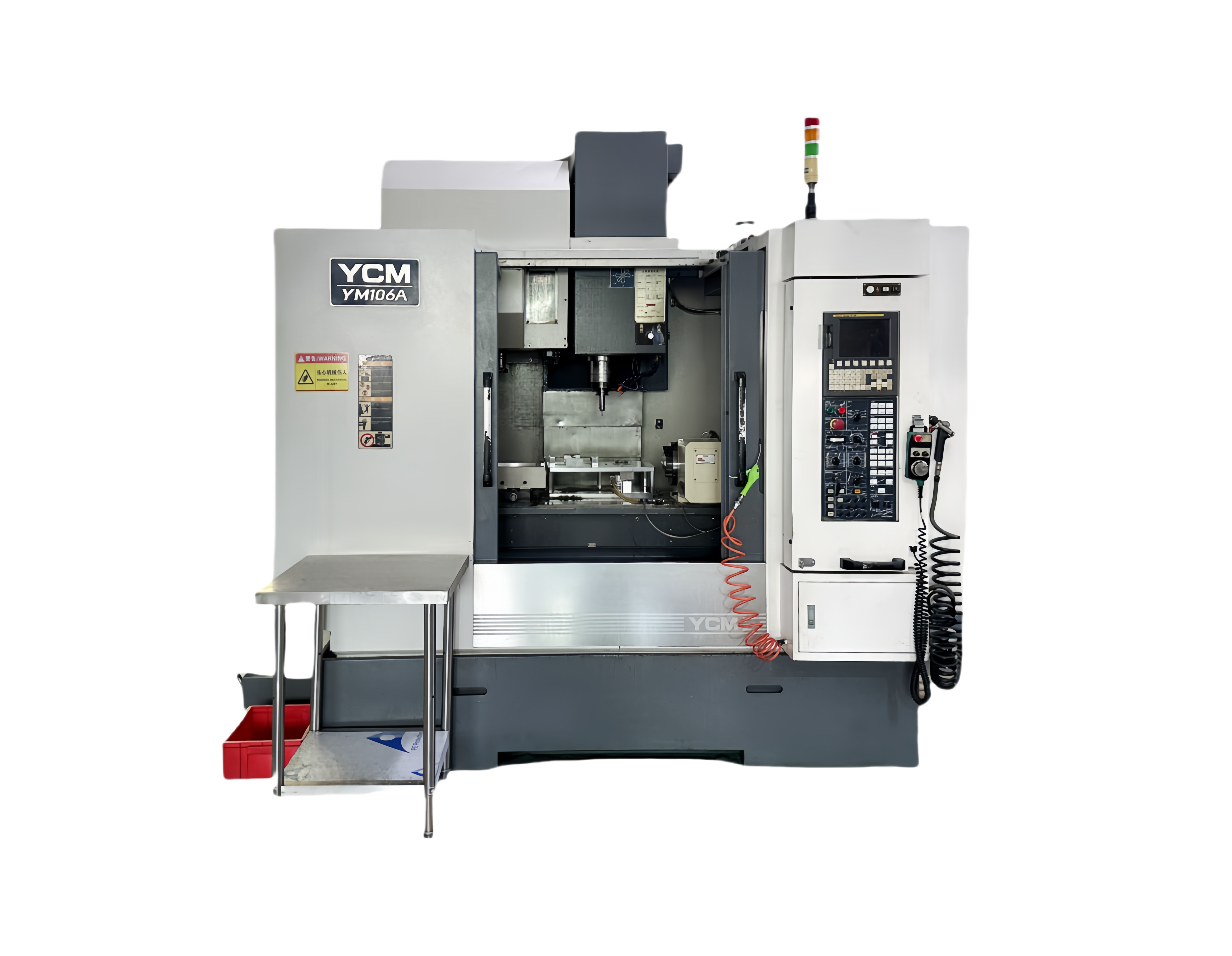 Precision machining centers hold the tight geometric tolerances semiconductor parts require
Cleanliness is the third dimension of quality here, alongside dimensions and material. It spans the whole production chain: deburring every edge (including edges a drawing does not mention), removing cutting fluids with approved cleaning processes, preventing cross-contamination between materials, and packing parts in clean, sealed packaging that survives international shipping. Buyers should specify cleanliness requirements explicitly — inspection methods, packaging class, and documentation — because suppliers cannot infer them reliably. A supplier who asks detailed questions about cleanliness during quoting is usually one who already serves this sector.
Packaging and logistics deserve their own line in the RFQ. Parts that pass final inspection in the factory can still arrive contaminated if they travel in ordinary packaging. Standard practice in this sector includes individual bagging with desiccant or foam inserts, sealed containers for cleanroom-introduced parts, and labels that identify cleaning status and date. Confirming these details up front costs minutes; discovering them after a rejected shipment costs weeks.
Quality and Traceability
Semiconductor equipment makers typically apply documented quality systems to their supply base, with first-article inspection on new parts, batch traceability on materials, and dimensional reports on shipped lots. The exact framework varies by customer, but the practical expectations are consistent:
| Expectation | What the supplier provides | Why it matters |
|---|---|---|
| First-article inspection | Feature-by-feature dimensional report on the first production part | Proves the process, not just one part |
| Material traceability | Mill certificates linked to shipped lots | Supports failure analysis and material verification years later |
| Dimensional reporting | Inspection data from calibrated instruments | Confirms conformity without re-inspection at incoming |
| Process stability | Frozen programs, controlled changes, revision discipline | Keeps spare parts identical to originals years later |
A structured view of what complete verification looks like is covered in this guide to professional quality inspection service. During qualification, buyers should ask to see a sample first-article package and a traceability record — experienced suppliers produce them quickly, without preparing for days.
On quality systems: most semiconductor equipment makers audit suppliers against their own criteria rather than requiring a specific industry certificate. A supplier working under an ISO-certified quality management system with documented process control can usually support these audits, but certification scope and audit history should be verified directly with the supplier rather than assumed from a logo on a website.From Prototype to Long-Run Volume
Semiconductor equipment programs have a distinctive production rhythm: fast design iterations during tool development, moderate volumes at tool build, then a long tail of spare and service parts for a decade. Machining suits this rhythm well because the same process spans all phases without redesign — but only if the supplier manages the transitions deliberately.
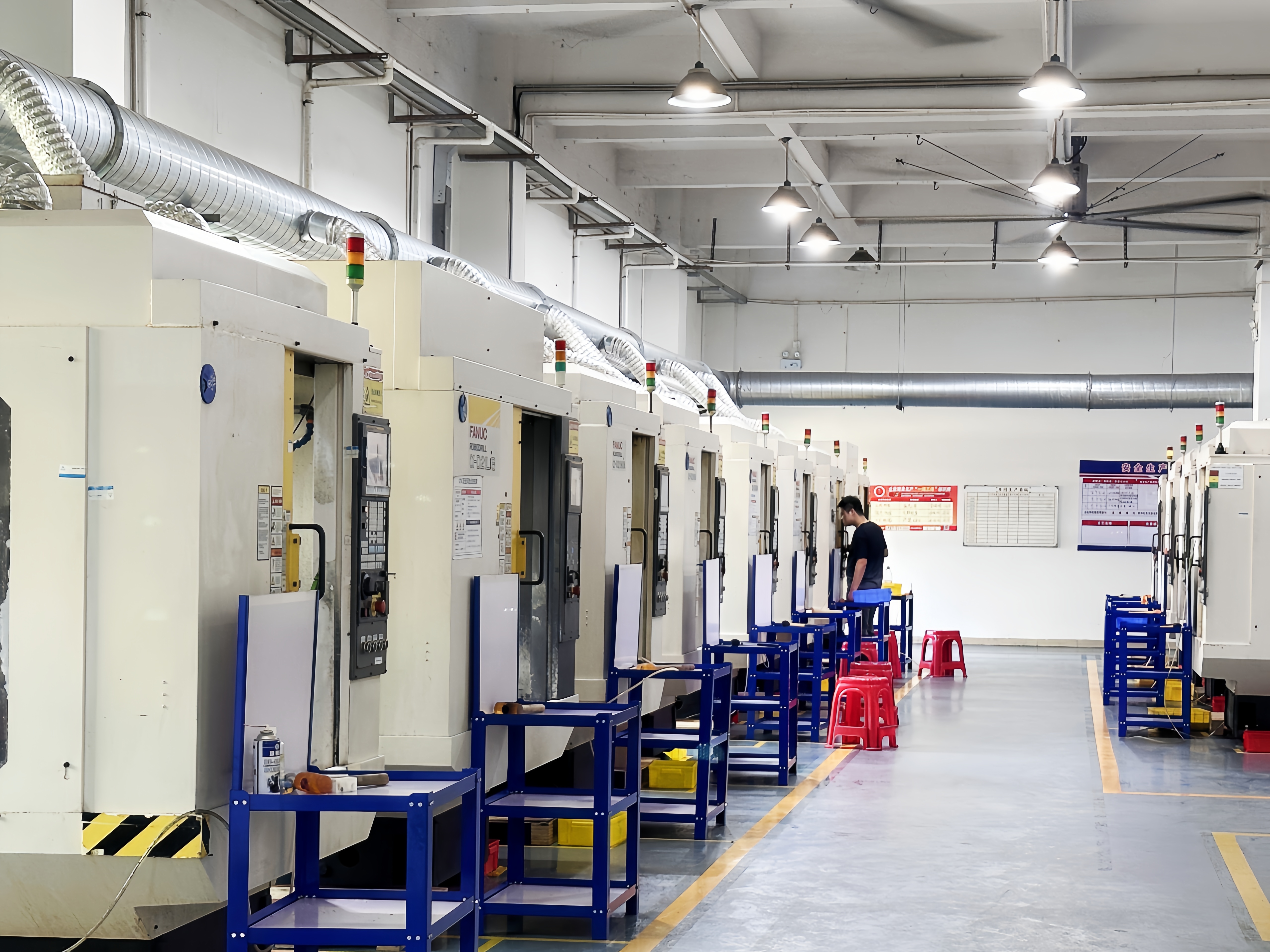 Organized machining cells support both rapid prototypes and repeatable batch production
The development phase rewards responsiveness: quick turnarounds on prototypes and engineering changes, as described in this guide to prototype metal part fabrication and this overview of selecting a metal part prototyping service. The volume and service phases reward discipline: frozen processes, archived programs, and the ability to re-run a part years later without requalification surprises. Suppliers who treat these as one connected lifecycle — rather than separate businesses — are the ones equipment makers keep for the long term, a point echoed in this guide to component reliability through precision CNC machining.
How to Qualify a Supplier for Semiconductor Components
Six checks separate semiconductor-capable machining suppliers from general precision shops:
1. Cleanliness workflow. Ask how parts are deburred, cleaned, and packed, and what packaging classes the supplier routinely handles. This single topic reveals sector experience faster than any certificate.
2. Material certification. Confirm mill certificates, alloy verification, and separation between material lots during storage and machining.
3. Multi-axis and turning capability. Chamber bodies and flow components exercise different machine types; verify both milling and turning depth on your part families.
4. Finishing network. Anodizing, electropolishing, and passivation quality vary widely; a strong supplier manages finishing partners with the same discipline as its own floor.
5. Documentation practice. Review a sample FAI package, dimensional report, and traceability record for format and completeness.
6. Lifecycle commitment. Discuss how archived programs and spare-part reorders are handled — the qualities also listed in this checklist of questions before choosing a metal parts manufacturer and this guide to choosing a reliable CNC machining manufacturer.
On cost, keep one principle in mind: in semiconductor equipment, the cheapest quoted part is rarely the lowest total cost. A component that arrives late stops a tool build; a chamber part with a porosity or cleanliness escape can cost a fab days of downtime. Weighting suppliers on documentation quality, responsiveness, and defect history — not unit price alone — reflects how these parts actually create or destroy value across a program. The same logic drives equipment makers to consolidate their machined spend with fewer, deeper partners instead of spreading it thin.
One Partner for Semiconductor-Grade Precision Components
SUNPREC (Sunprec Hardware Co., Ltd.) provides precision CNC machining and surface finishing under one roof, supported by an ISO-certified quality management system, complete material traceability, and machining centers with machine-level capability on the order of ±0.005 mm. Our team is experienced in first-article documentation, calibrated inspection, and the cleanliness and packaging discipline that high-technology equipment programs require. Equipment and process capabilities are summarized on the capability page, and our broader precision manufacturing services are introduced on the semiconductor solutions page.
Whether you need chamber components, flow parts, or precision handling mechanisms, we can support the project from prototype through long-run production and service supply — with the documentation and cleanliness controls your application expects. Send us your drawings for a detailed quotation and DFM review.
Conclusion
Semiconductor equipment raises the bar on every dimension of machining at once: tighter tolerances, more sensitive surfaces, more aggressive environments, and longer service obligations. For buyers, the qualification focus should fall on process discipline and lifecycle capability — cleanliness control, material traceability, documentation quality, and the ability to reproduce parts faithfully for a decade. Suppliers who can speak to those specifics with evidence are the ones built for this sector.
Need Precision Parts for Semiconductor Equipment?
Send your drawings to SUNPREC for a detailed quotation and DFM feedback — with full traceability and cleanliness control.
Request a QuoteFAQ
What tolerances can CNC machining hold for semiconductor equipment parts?
Machine capability on well-maintained centers is around ±0.005 mm, and finished features commonly reach accuracies near ±0.01 mm. The tolerance a specific part holds depends on its geometry, material, fixturing, and inspection plan — confirm it against the drawing rather than a supplier's general statement.
Which materials are most common in semiconductor tool components?
Aluminum 6061 and 7075 for chambers, frames, and moving structures; stainless 304/316L for gas-contact and wet-process parts; 17-4PH for high-strength motion components; and engineering plastics like PEEK and PTFE where insulation or low particle generation matters.
Why is cleanliness treated as a specification in this industry?
Particles, residues, or outgassing from a component can contaminate the wafer environment and destroy yield. That is why cleanliness requirements — deburring, cleaning methods, packaging class — are written into drawings and purchase orders and verified like any other dimension.
What surface treatments are typical for semiconductor components?
Hard and sulfuric anodizing for aluminum, electropolishing and passivation for stainless steel, and specialized coatings where plasma resistance is needed. The treatment is a functional part of the design, chosen for corrosion, particle, or plasma performance rather than appearance.
Can a machining supplier support spare-part supply years after initial production?
Yes, if it maintains archived programs, frozen processes, and material traceability. This is worth verifying during qualification: ask how the supplier handles a reorder of a part produced five years ago, and what documentation it can reproduce.
How do I get a quote for semiconductor equipment components?
Provide 2D drawings and 3D models, material and finish specifications, quantities, and any cleanliness or documentation requirements. Complete RFQs receive faster, more accurate responses — the preparation checklist in these questions before choosing a metal parts manufacturer covers what to include.