

Introduction
Aerospace places a unique combination of demands on metal components. Parts must be light enough to keep aircraft efficient, strong enough to survive vibration, pressure cycles, and temperature extremes, and dimensionally stable enough to fit into assemblies where every interface is engineered. When a structural bracket, an engine component, or an avionics enclosure is manufactured, there is very little room for "close enough."
This is why CNC machining is one of the most widely used processes in aerospace manufacturing. Machining works the full range of aerospace materials — from 7075 aluminum to titanium and nickel superalloys — it holds tight tolerances repeatably, and it produces both one-off prototypes and production quantities with the same process discipline. For buyers and engineers sourcing aerospace components, understanding how machining is applied in this industry makes supplier conversations far more productive.
This guide covers the components that aerospace programs commonly machine, the materials involved, the tolerance and quality expectations that set aerospace apart, and a practical checklist for qualifying a machining partner.
Why Aerospace Components Demand a Higher Standard
Every industry talks about quality, but aerospace operationalizes it differently. Three factors drive the difference:
Safety criticality. A machined fitting that fails in service can compromise an entire aircraft, not just one unit. Aerospace designs therefore carry conservative safety factors, and every manufacturing deviation must be identified, dispositioned, and documented. The cost of prevention is accepted because the cost of failure is not comparable to any other industry.
Long service life. Commercial aircraft remain in service for decades. Components must perform not only on day one but after tens of thousands of pressurization cycles, thermal swings, and maintenance intervals. Fatigue performance — which depends heavily on surface condition, edge quality, and residual stress — becomes a machining concern, not just a design one.
Full traceability. Aerospace programs expect to trace any component back to its raw-material source and forward through every process it went through. If a material lot is later found to be nonconforming, the program must know exactly which parts contain it. This requirement shapes everything from material purchasing to lot control on the shop floor.
Common CNC-Machined Aerospace Components
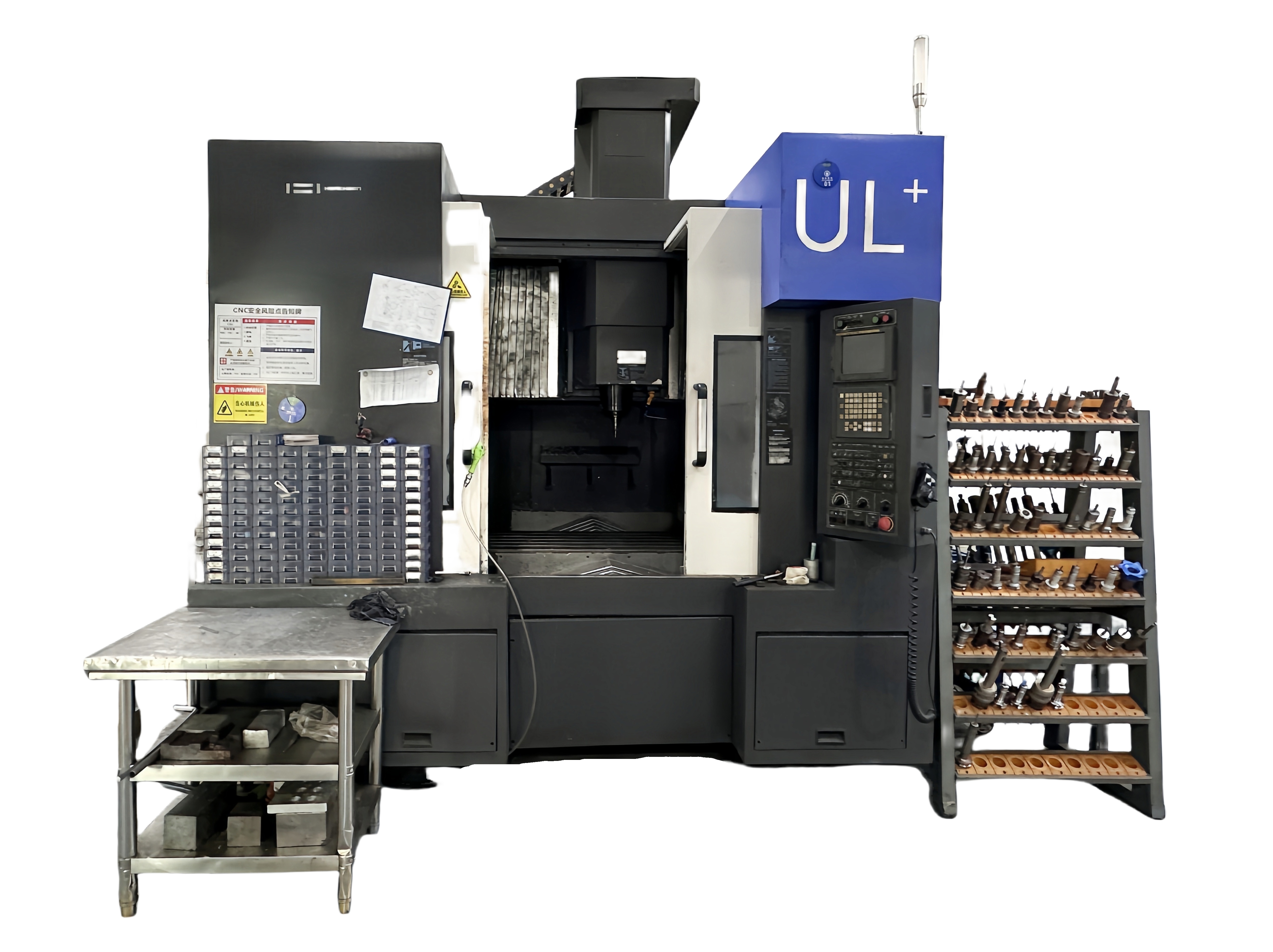
cnc machining touches nearly every metal part on an aircraft that is not a casting, forging, or sheet-metal stamping. The most frequent categories include:
Structural components. Brackets, fittings, ribs, and spars machined from aluminum plate or billet. These parts often combine pockets for weight reduction with thick sections at load-bearing interfaces — a geometry that makes them natural candidates for multi-axis milling, as covered in multi-axis machining.
Engine and powerplant parts. Housings, manifolds, fuel-system components, and mounting hardware, frequently in heat-resistant alloys. Many of these are turned parts, and the considerations described in advanced CNC turning apply directly.
Avionics and electronics housings. Enclosures and chassis for flight-control computers, communication equipment, and sensors. These parts combine EMI-shielding requirements with thermal management — the same concerns behind custom heat sink manufacturing — and demand precise flatness for gasketed and connector interfaces.
Actuation and landing-gear components. Cylinders, pistons, clevises, and rod ends in high-strength steels and titanium, where surface finish and edge condition directly affect fatigue life.
Ground support and tooling. Jigs, fixtures, assembly tools, and test rigs used to build and maintain aircraft. These are aerospace-adjacent but often overlooked; they follow similar documentation discipline at lower criticality levels.
Materials for Aerospace CNC Machining
Aerospace material selection balances strength, weight, temperature capability, and corrosion resistance — and each choice carries machining implications. The table below summarizes the most common options:
| Material | Why aerospace uses it | Typical applications | Machining notes |
|---|---|---|---|
| Aluminum 7075 / 7050 | High strength-to-weight ratio | Structural fittings, wing ribs, brackets | Machines freely; watch residual-stress distortion on large pockets |
| Aluminum 6061-T6 | Good all-round properties, corrosion resistance | Housings, tooling, less critical structures | Very machinable; excellent for prototypes |
| Titanium Ti-6Al-4V | Strength at weight plus temperature and corrosion resistance | Engine-area fittings, actuation parts, fasteners | Low cutting speeds, rigid setups, heat control essential |
| Stainless 15-5PH / 17-4PH | High strength with corrosion resistance | Landing-gear and actuation hardware, housings | Machined in the solution-treated condition, then aged |
| Nickel alloys (e.g., Inconel 718) | Retains strength at high temperature | Engine components, exhaust-adjacent hardware | Among the hardest to machine; tooling cost is significant |
| PEEK and other engineering plastics | Lightweight, chemically inert, insulating | Insulators, wear rings, interior components | Requires careful clamping and thermal management |
One requirement spans every material: certified origin. Aerospace material should arrive with mill certificates tied to the melt lot, and the machining supplier must preserve that linkage through production. Buyers comparing suppliers should treat this as a threshold requirement, not a differentiator — the guidance in working with a certified metal part manufacturer explains why certification and traceability come before price.
Tolerances, Thin Walls, and Machining Strategy
Aerospace drawings commonly specify tolerances far tighter than general industrial work, and many features are defined with geometric controls — flatness, perpendicularity, position — rather than simple plus/minus dimensions. Meeting these requirements depends on process capability, not good intentions. On well-maintained machining centers, machine capability at the spindle is on the order of ±0.005 mm, and finished components on high-precision work reach accuracies around ±0.01 mm — though the tolerance a specific part can hold always depends on its geometry, material, fixturing, and inspection method, and should be confirmed against the drawing rather than assumed from a brochure. A deeper explanation of what governs achievable accuracy appears in this guide to CNC machining accuracy.
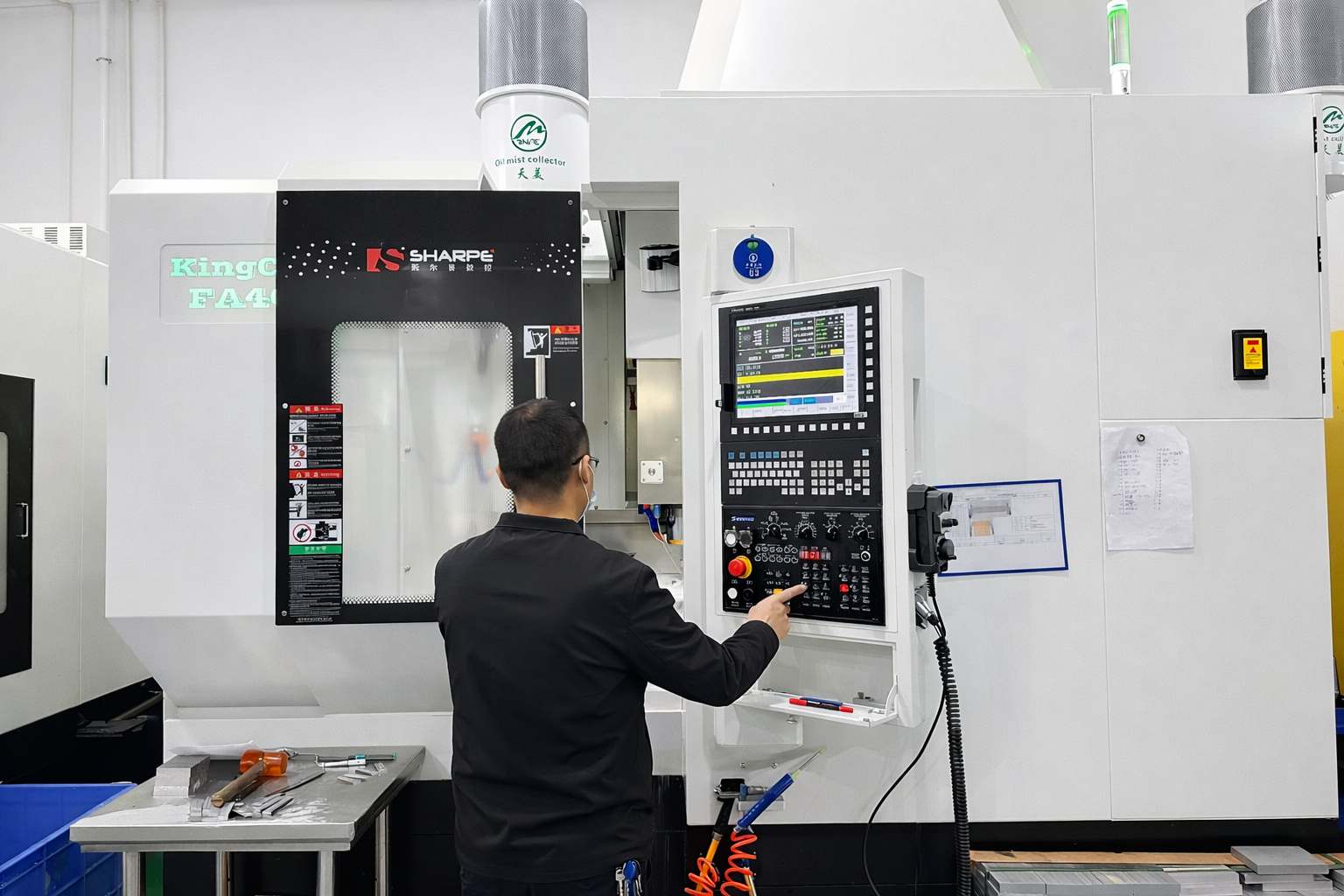 Multi-axis machining centers are the workhorse for aerospace structural components
The defining machining challenge in aerospace is often the thin wall. Structural parts are machined to remove as much weight as possible, leaving walls and webs that flex under cutting forces. Success depends on strategy: roughing sequences that balance internal stresses, finishing passes with light depths of cut, machining sequences that delay final thinning until as late as possible, and fixturing that supports rather than squeezes the part. Distortion control is a discipline of its own, and suppliers who routinely machine structural components will talk about it in detail — suppliers who do not, tend not to mention it at all, which is itself useful information during qualification.
Hard-to-machine alloys add a second layer of difficulty. Titanium's low thermal conductivity concentrates heat at the cutting edge; nickel alloys work-harden as they are cut. Both demand appropriate tooling, conservative parameters, and — for parts that must not be re-fixed between operations — capable multi-operation CNC capability. Where features require surface integrity beyond what milling or turning provides, precision grinding takes over for the final micron-level dimensions.
Quality, Documentation, and Traceability
In aerospace manufacturing, the paper trail is part of the product. A supplier may produce dimensionally perfect parts, but without the documentation to prove process control, those parts cannot be accepted into a program. The core documentation set includes:
| Stage | Document / record | What it proves |
|---|---|---|
| Material receipt | Mill certificates, lot records | Material chemistry and properties from the certified source |
| First production run | First Article Inspection (commonly to the AS9102 format) | Every drawing requirement was met on the first production part |
| In-process | Setup sheets, inspection checkpoints, tool records | The process followed the approved plan, not memory or habit |
| Final inspection | Dimensional reports against the drawing | Shipped parts conform to every specified dimension |
| Shipment | Certificates of conformance, traceability records | Parts are linked to their material lots and process history |
Buyers should note that aerospace quality frameworks — AS9100 at the quality-system level and AS9102 for first articles — are program-specific requirements. A supplier working under an ISO-certified quality management system with aerospace documentation experience can often support these requirements, but certification scope must be verified directly with the supplier rather than assumed. The practical test is simple: ask the supplier to walk through how they produce a FAI and where the records live. An experienced team answers in minutes.
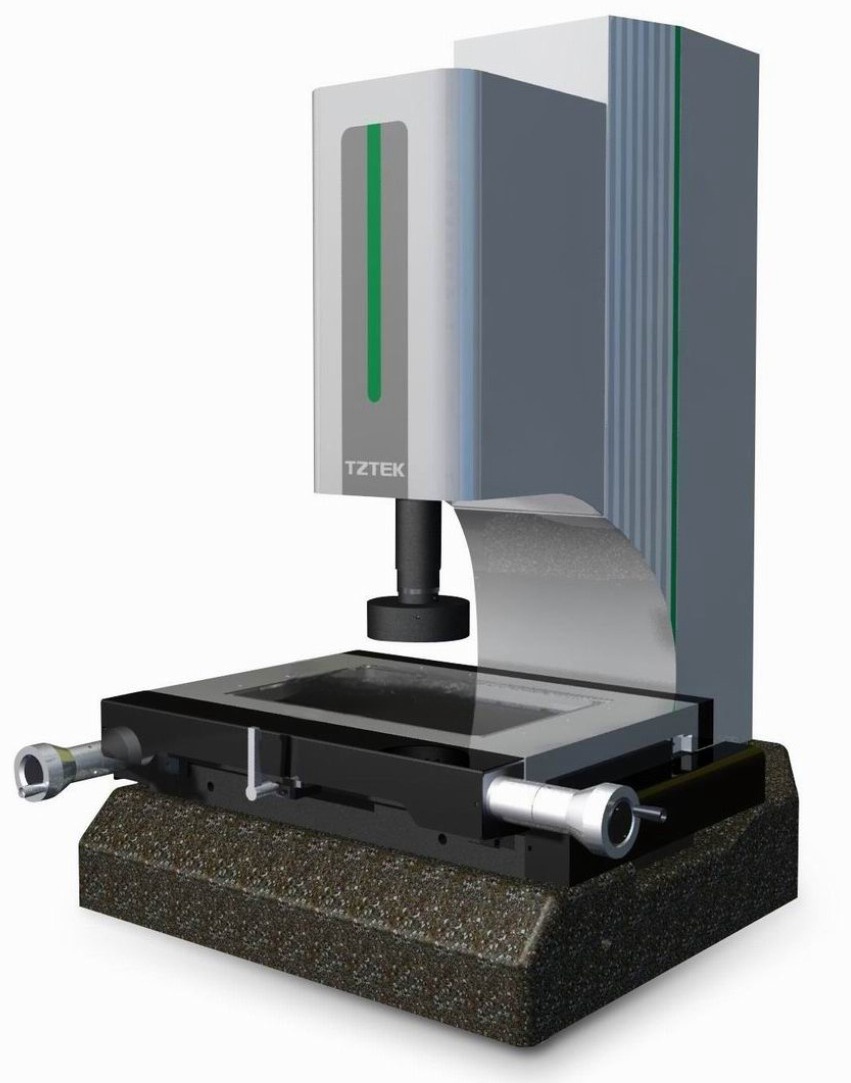 Dimensional verification equipment supports documented, feature-by-feature inspection
Inspection capability matters as much as inspection discipline. Tight-tolerance aerospace features require calibrated measurement equipment with the right resolution and accuracy, environmental controls where required, and documented calibration status for every instrument used on program parts. An overview of what a complete verification process looks like is covered in this guide to professional quality inspection service.
From Prototype to Production
Aerospace development runs in phases: design prototypes, qualification articles, then production quantities. Machining suits this progression well because the same process scales from one part to thousands without changing the manufacturing method — only the production planning changes.
The practical risk in this transition is process drift: prototypes made carefully in a job-shop mode, then production parts made differently under schedule pressure. A capable supplier prevents this by freezing the process after first-article approval — same programs, same tooling, same setups — and controlling changes through formal revision. Buyers evaluating suppliers should look for evidence of both phases under one roof: the responsiveness described in prototype metal part fabrication, combined with the lot discipline of high-volume metal part production. Where development schedules are compressed, this guide to selecting a metal part prototyping service offers a structured approach.
How to Qualify an Aerospace CNC Machining Supplier
Six checks separate aerospace-capable machining suppliers from general precision shops:
1. Traceability system. Ask how a finished part is linked to its material certificate. If the answer relies on manual reconstruction, expect problems in audits.
2. FAI experience. Confirm the team has produced first-article inspections to a defined format and can show a completed example (with customer data removed).
3. Material handling. Aerospace alloys need correct storage, separation from other materials to prevent mix-ups, and certified purchasing channels.
4. Thin-wall and distortion control. Discuss a representative part. Suppliers with structural experience will describe roughing strategy, stress balancing, and finishing sequence unprompted.
5. Measurement capability. Verify the equipment list, calibration records, and whether inspection reports come from calibrated instruments with stated accuracy.
6. Engineering communication. Aerospace programs change. The supplier needs responsive engineering support for drawing revisions, deviation requests, and DFM feedback — the qualities outlined in these questions to ask before choosing a metal parts manufacturer.
For a broader framework that applies across industries, this guide to choosing a reliable CNC machining manufacturer covers the fundamentals, and this checklist of questions before selecting a supplier adds further structure.
One Partner for Aerospace-Grade Precision Components
SUNPREC (Sunprec Hardware Co., Ltd.) provides precision metal component manufacturing under one roof — CNC machining, die casting, investment casting, extrusion, sheet metal fabrication, stamping, and surface finishing — supported by an ISO-certified quality management system and complete material traceability. Our machining centers hold machine-level capability on the order of ±0.005 mm, and our team is experienced in first-article documentation, calibrated inspection, and the lot-control discipline that aerospace and other high-reliability programs require. Our full equipment and process capabilities are summarized on the capability page.
Whether you need structural brackets, avionics housings, or precision turned components for demanding applications, we can support the project from prototype through production — with the documentation your program expects. Send us your drawings for a detailed quotation and DFM review.
Conclusion
CNC machining earns its central role in aerospace by handling the industry's defining combination: hard materials, tight tolerances, complex geometry, and unforgiving documentation requirements. For buyers, the qualification conversation should focus less on headline tolerances and more on how a supplier controls process, proves conformity, and stays stable across a long program life. Suppliers who answer those questions with specifics — material traceability, FAI practice, distortion-control strategy, calibrated measurement — are the ones built for aerospace work.
Need Aerospace-Grade Machined Components?
Send your drawings to SUNPREC for a detailed quotation and DFM feedback — from prototype to production, with full traceability.
Request a QuoteFAQ
What tolerances can CNC machining hold for aerospace components?
It depends on the feature, material, and setup. Well-maintained machining centers offer machine capability around ±0.005 mm, and high-precision finished parts commonly reach accuracies near ±0.01 mm. The achievable tolerance for a specific part must be confirmed against its geometry, fixturing, and inspection plan — never assumed from a supplier's general statement.
Which materials are most common in aerospace CNC machining?
Aluminum alloys (7075, 7050, 6061) dominate structural components; titanium (Ti-6Al-4V) and nickel superalloys serve high-temperature and high-strength applications; precipitation-hardening stainless steels (15-5PH, 17-4PH) appear in actuation and landing-gear hardware; engineering plastics like PEEK serve insulating and wear applications.
Does my supplier need AS9100 certification?
It depends on your program. Many prime contractors and Tier 1s require it; smaller programs often accept suppliers working under an ISO-certified quality system with aerospace documentation experience. The requirement belongs to your customer flow-down — verify it internally, then verify the supplier's certification scope directly.
Is titanium really that difficult to machine?
It is demanding but well understood. Titanium's low thermal conductivity concentrates heat at the cutting edge, and its springiness requires rigid setups. With appropriate tooling, conservative cutting parameters, and good heat management, titanium parts are produced routinely and repeatably.
What is a First Article Inspection (FAI)?
A documented, feature-by-feature verification that the first production part meets every drawing requirement, commonly following the AS9102 format. The FAI proves the process — not just one part — and becomes the baseline that production must maintain.
How do I get a quote for aerospace machined parts?
Send 2D drawings (and 3D models where available), material and finish specifications, quantities, and any program-specific documentation requirements. A structured RFQ gets faster, more accurate responses — the items worth preparing are summarized in these questions before choosing a metal parts manufacturer.