

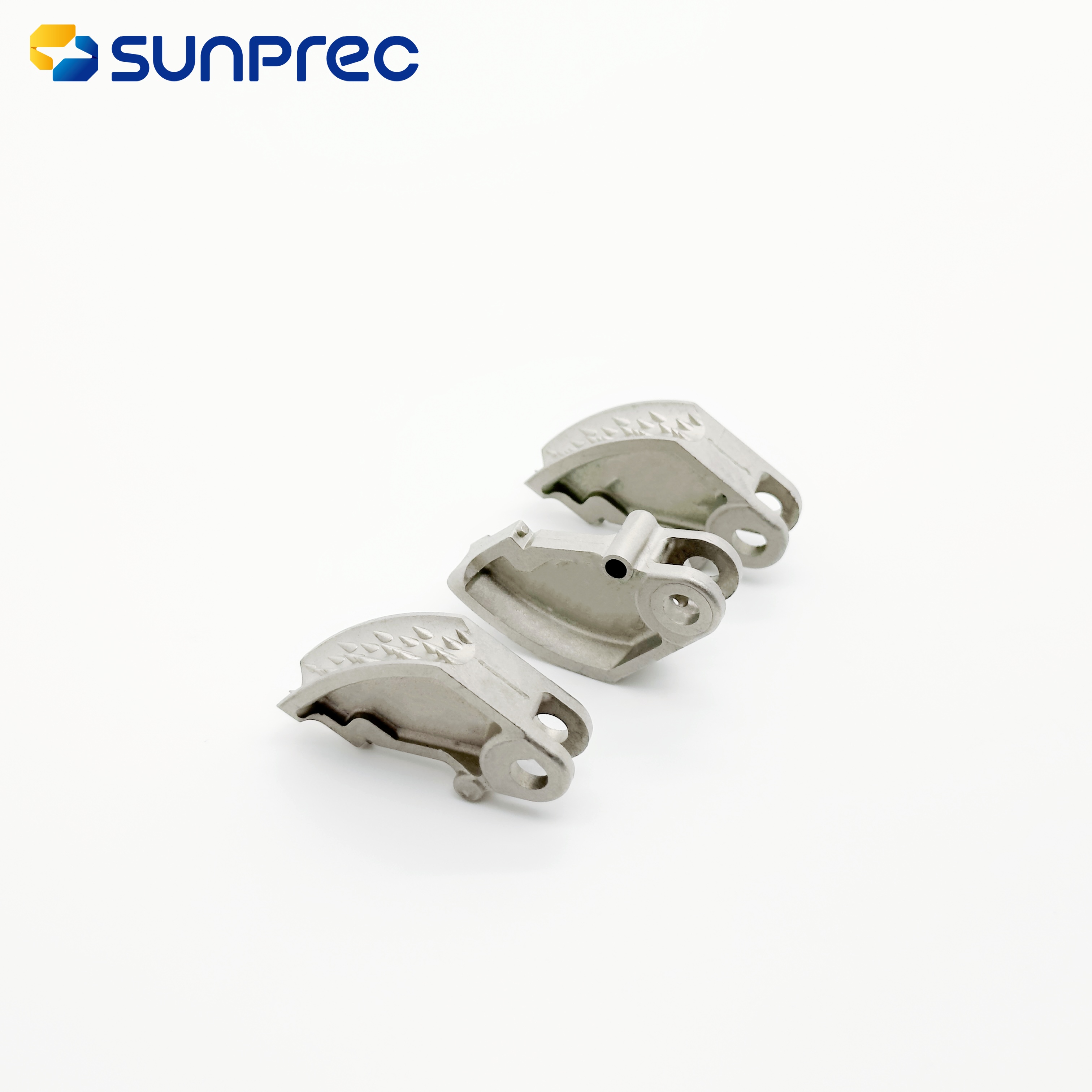
When manufacturing complex metal components, choosing the right production method can significantly impact product quality, cost, lead time, and overall performance.
Two widely used manufacturing processes are investment casting and cnc machining. Both methods can produce high-quality metal parts with excellent accuracy, but they are suitable for different applications.
Investment casting is ideal for producing complex shapes with fine details and excellent surface finishes, while CNC machining provides superior precision, flexibility, and faster production preparation.
For engineers, designers, and purchasing teams, understanding the differences between investment casting vs CNC machining helps determine the most suitable manufacturing solution for a specific project.
As a professional precision metal parts manufacturer, SUNPREC provides integrated manufacturing services including CNC machining, investment casting, die casting, extrusion, sheet metal fabrication, stamping, and surface finishing to support customers from prototypes to production.
What Is Investment Casting?
Investment casting, also known as lost-wax casting, is a precision casting process that creates metal parts by using a wax pattern to form a ceramic mold.
The basic process includes:
- Creating a wax pattern based on the required component design
- Applying ceramic coating to form a mold shell
- Removing the wax from the mold
- Pouring molten metal into the cavity
- Breaking the mold after solidification
- Performing finishing operations if required
Investment casting can produce highly detailed metal components with complex geometries that may be difficult to achieve through traditional manufacturing methods.
Common materials used for investment casting include:
- Stainless steel
- Carbon steel
- Aluminum alloys
- Nickel-based alloys
- Other engineering metals
What Is CNC Machining?
CNC machining is a subtractive manufacturing process that uses computer-controlled machines to remove material from a solid block or workpiece.
Common CNC machining operations include:
- CNC milling
- cnc turning
- Multi-axis machining
- Drilling
- Threading
Unlike casting processes, CNC machining does not require molds. Manufacturers can directly produce parts from CAD models, making it highly flexible for prototypes, customized components, and small-to-medium production runs.
SUNPREC provides CNC machining services including CNC milling and CNC turning for materials such as aluminum, stainless steel, steel, brass, copper, titanium, and other engineering materials.
Investment Casting vs CNC Machining: Key Differences
| Feature | Investment Casting | CNC Machining |
|---|---|---|
| Manufacturing method | Metal forming through molds | Material removal through cutting |
| Tooling requirement | Requires casting patterns and molds | No dedicated mold required |
| Best for | Complex shapes and medium/high volume | Precision parts and prototypes |
| Material waste | Lower | Higher |
| Design flexibility | Limited after mold creation | High flexibility |
| Surface finish | Excellent casting finish | Depends on machining parameters |
| Production volume | Medium to high volume | Prototype to medium volume |
1. Design Complexity Comparison
Investment Casting Advantages
Investment casting is especially effective for parts with:
- Complex internal structures
- Thin walls
- Curved surfaces
- Detailed features
- Irregular geometries
Because molten metal fills a custom mold cavity, investment casting can create shapes that would require multiple machining operations.
Typical investment casting applications include:
- Valve components
- Pump parts
- Aerospace components
- Industrial equipment parts
- Precision mechanical components
CNC Machining Advantages
CNC machining provides greater design flexibility during product development.
It is suitable for:
- Custom prototypes
- Modified designs
- Complex precision features
- Parts requiring tight tolerances
Engineers can quickly adjust CAD files and manufacture updated versions without creating new molds.
This makes CNC machining highly suitable for product development and testing phases.
2. Accuracy and Tolerance Comparison
Precision requirements are one of the most important factors when selecting a manufacturing process.
CNC Machining
CNC machining is generally preferred when extremely tight tolerances are required.
Advantages include:
- High dimensional accuracy
- Excellent repeatability
- Precise feature control
- Ability to machine critical surfaces
SUNPREC's CNC machining capabilities can achieve precision tolerances around ±0.01mm depending on part requirements and equipment capability.
Investment Casting
Investment casting provides excellent accuracy compared with traditional casting methods.
However, some parts may require secondary machining for:
- Precision holes
- Threaded areas
- Assembly surfaces
- Critical dimensions
For many industrial components, combining investment casting with CNC machining creates an optimized manufacturing solution.
3. Production Volume Comparison
Production quantity plays an important role in cost efficiency.
Investment Casting Is Better For:
- Medium-volume production
- Large quantities of identical parts
- Complex components
- Reduced machining requirements
Although tooling costs are higher initially, the cost per piece decreases as production volume increases.
CNC Machining Is Better For:
- Prototypes
- Small batch production
- Customized components
- Low-volume manufacturing
Because CNC machining requires minimal setup, it is faster and more economical for smaller quantities.
4. Material Selection
Both processes support a wide range of metals, but their material advantages differ.
Investment Casting Materials:
Common choices include:
- Stainless steel
- Aluminum alloys
- Carbon steel
- Heat-resistant alloys
Investment casting is often selected when mechanical strength and complex geometry are important.
CNC Machining Materials:
CNC machining supports:
- Aluminum
- Stainless steel
- Brass
- Copper
- Titanium
- Engineering plastics
The wider material compatibility makes CNC machining suitable for more customized applications.
5. Cost Comparison: Investment Casting vs CNC Machining
The total manufacturing cost depends on:
- Production quantity
- Part complexity
- Material selection
- Required tolerance
- Surface finishing requirements
CNC Machining Cost Advantages:
✔ Lower initial setup cost
✔ Faster production preparation
✔ Suitable for prototypes
✔ Easy design modifications
Investment Casting Cost Advantages:
✔ Lower unit cost at higher volumes
✔ Less material waste
✔ Suitable for complex shapes
✔ Reduced machining operations
For a small quantity project, CNC machining is usually more economical. For large production quantities with complex designs, investment casting may provide better cost efficiency.
When Should You Choose Investment Casting?
Investment casting is recommended when you need:
- Complex metal geometries
- Excellent surface finish
- Reduced machining requirements
- Medium or high-volume production
Typical applications include:
Automotive Components
- Engine parts
- Transmission components
- Structural components
Aerospace Parts
- Lightweight precision components
- High-strength alloy parts
Industrial Equipment
- Valves
- Pumps
- Mechanical components
When Should You Choose CNC Machining?
CNC machining is the better option when you need:
- Tight tolerances
- Fast prototypes
- Low-volume production
- Flexible design changes
Typical applications include:
- Robotics components
- Medical equipment parts
- Automation systems
- Precision mechanical assemblies
Can Investment Casting and CNC Machining Be Combined?
In many advanced manufacturing projects, investment casting and CNC machining work together rather than replacing each other.
A common production workflow is:
- Create complex near-net-shape parts through investment casting
- Use CNC machining for critical dimensions
- Apply surface finishing treatments
- Complete quality inspection
This hybrid approach provides:
- Lower material waste
- Improved dimensional accuracy
- Reduced machining time
- Better overall production efficiency
SUNPREC supports multiple manufacturing processes, allowing customers to combine casting, machining, and finishing services through one supplier.
How to Choose Between Investment Casting and CNC Machining?
Consider the following factors:
1. Production Quantity
- Prototype → CNC machining
- Medium/high volume → Investment casting
2. Part Complexity
- Simple precision parts → CNC machining
- Complex shapes → Investment casting
3. Accuracy Requirements
- Extremely tight tolerances → CNC machining
- General precision requirements → Investment casting
4. Budget
- Low initial investment → CNC machining
- Lower long-term cost → Investment casting
5. Development Stage
- Product testing → CNC machining
- Mature production → Investment casting
Why Choose SUNPREC for Custom Metal Parts Manufacturing?
SUNPREC provides complete manufacturing solutions for customers requiring precision metal components.
Capabilities include:
- CNC machining
- Investment casting
- Die casting
- Extrusion
- Sheet metal fabrication
- Stamping
- Surface finishing
With integrated manufacturing capabilities, SUNPREC helps customers simplify supplier management and achieve reliable production quality from prototype development to final manufacturing.
Conclusion
Both investment casting and CNC machining are valuable manufacturing technologies for producing complex metal parts.
CNC machining offers unmatched flexibility, precision, and fast turnaround for prototypes and customized components. Investment casting provides excellent design freedom and cost advantages for complex parts produced at higher volumes.
The right choice depends on your production requirements, including part complexity, quantity, material, tolerance, and budget.
Need complex metal parts manufactured with precision and reliability? Contact SUNPREC's engineering team today for professional manufacturing advice and a customized quotation.