

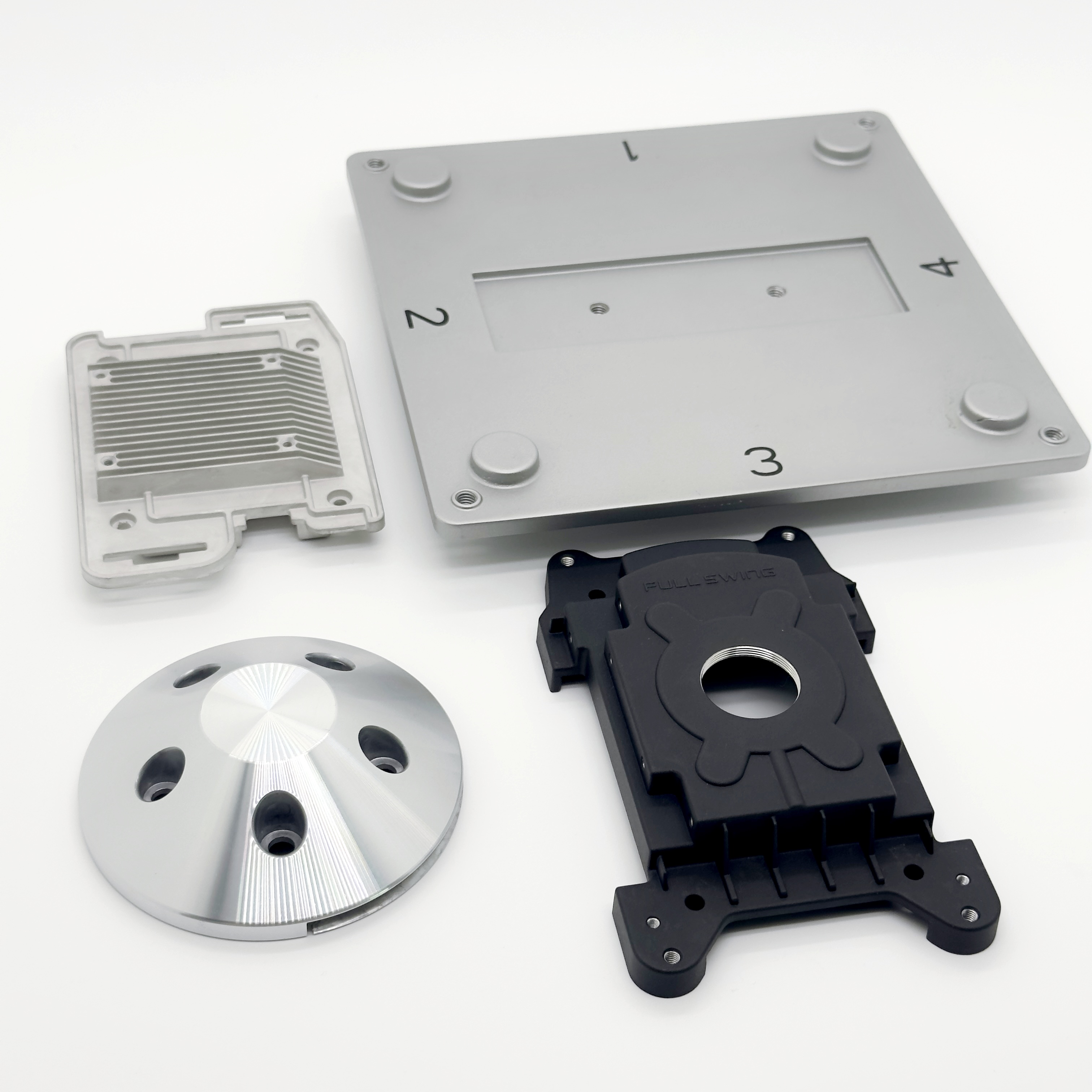
Aluminum die casting is one of the most widely used manufacturing processes for producing lightweight, durable, and complex metal components.
With excellent strength-to-weight ratio, corrosion resistance, thermal conductivity, and dimensional stability, aluminum alloys are widely used in industries such as automotive, electronics, industrial equipment, medical devices, and consumer products.
For companies looking to manufacture high-volume custom metal parts, understanding the aluminum die casting process, its advantages, limitations, and design requirements is essential for selecting the right production solution.
As a professional precision manufacturing supplier, SUNPREC provides complete metal manufacturing solutions including aluminum die casting, cnc machining, extrusion, investment casting, sheet metal fabrication, stamping, and surface finishing services.
What Is Aluminum Die Casting?
Aluminum die casting is a metal forming process that uses high pressure to inject molten aluminum alloy into a precision-designed steel mold cavity.
After the molten aluminum fills the mold, it rapidly cools and solidifies into the required component shape. The finished casting is then removed from the mold and may undergo additional processes such as CNC machining, deburring, and surface finishing.
Compared with traditional casting methods, aluminum die casting offers:
- Higher production efficiency
- Better dimensional accuracy
- Excellent surface finish
- Ability to produce complex geometries
- Reduced machining requirements
This makes it an ideal manufacturing method for producing large quantities of consistent metal components.
How Does the Aluminum Die Casting Process Work?
The aluminum die casting process typically involves several key stages.
1. Mold Design and Tooling Development
The first step is creating a customized die based on the customer's CAD design.
Engineers consider:
- Part geometry
- Wall thickness
- Draft angles
- Cooling channels
- Material flow
- Production requirements
A well-designed mold helps improve part quality, extend mold life, and reduce manufacturing costs.
2. Aluminum Alloy Melting
Aluminum alloys are heated until they reach a liquid state suitable for injection.
Common aluminum die casting alloys include:
- ADC12
- A380
- A356-T6
Different alloys provide different performance characteristics, such as strength, corrosion resistance, thermal performance, and machinability.
3. High-Pressure Injection
The molten aluminum is injected into the steel mold cavity at high speed and pressure.
This process allows manufacturers to create:
- Thin wall structures
- Complex shapes
- Integrated features
- Lightweight components
The high-pressure process also improves repeatability, making die casting suitable for mass production.
4. Cooling and Solidification
After injection, the aluminum cools inside the mold and forms the final part shape.
Cooling efficiency affects:
- Mechanical properties
- Surface quality
- Production cycle time
Proper mold temperature control is essential for maintaining consistent quality.
5. Finishing and Secondary Operations
After casting, additional operations may be required depending on product requirements.
Common secondary processes include:
- CNC machining
- Drilling
- Threading
- Deburring
- Powder coating
- Anodizing
- Painting
By combining die casting with secondary machining and surface finishing, manufacturers can achieve both production efficiency and precision requirements.
Benefits of Aluminum Die Casting
1. Lightweight and Strong Components
One of the biggest advantages of aluminum die casting is its excellent strength-to-weight ratio.
Aluminum components are significantly lighter than steel parts while maintaining good mechanical performance.
This makes aluminum die casting ideal for:
- Automotive lightweight components
- Electronic housings
- Industrial equipment parts
- Transportation applications
2. Excellent Dimensional Accuracy
Die casting uses precision molds to produce highly repeatable components.
Advantages include:
- Consistent part dimensions
- Reduced post-processing requirements
- Stable production quality
For high-volume manufacturing projects, this helps maintain product consistency and reduce production costs.
3. High Production Efficiency
Because the mold can be reused repeatedly, aluminum die casting is highly efficient for large production quantities.
Benefits include:
- Fast production cycles
- Lower cost per component
- Reduced material waste
- Consistent output
This makes it especially suitable for automotive and consumer electronics industries.
4. Complex Part Manufacturing Capability
Aluminum die casting can produce complex components that would be difficult or expensive to manufacture using traditional machining methods.
Examples include:
- Thin-wall housings
- Heat sinks
- Structural brackets
- Motor components
- Electronic enclosures
5. Excellent Surface Finish
Die-cast aluminum parts typically have smooth surfaces directly after molding.
Depending on requirements, parts can also receive additional finishes such as:
- Powder coating
- Painting
- Anodizing
- Electroplating
These treatments improve appearance, corrosion resistance, and product durability.
Common Applications of Aluminum Die Casting
Automotive Industry
Aluminum die casting is widely used for:
- Engine components
- Transmission housings
- Battery housings
- Heat sinks
- Structural parts
The lightweight characteristics of aluminum help improve vehicle efficiency and performance.
Electronics Industry
Applications include:
- Electronic enclosures
- Heat dissipation components
- Communication equipment housings
- Consumer electronics frames
Aluminum's thermal conductivity makes it suitable for products requiring efficient heat management.
Industrial Equipment
Aluminum die casting components are commonly found in:
- Machinery housings
- Motor parts
- Automation equipment
- Industrial fixtures
Medical Equipment
Precision aluminum castings are used for:
- Equipment frames
- Device housings
- Lightweight structural components
Aluminum Die Casting Design Considerations
Good part design is essential for achieving high-quality die casting results.
1. Wall Thickness
Consistent wall thickness helps:
- Improve metal flow
- Reduce defects
- Prevent shrinkage problems
Extremely thick sections may cause uneven cooling and internal defects.
2. Draft Angle
Draft angles allow parts to be easily removed from the mold.
Without sufficient draft angles, the casting process may experience:
- Mold damage
- Longer production cycles
- Higher tooling costs
3. Rounded Corners
Sharp corners can create stress concentration and affect metal flow.
Using proper radii improves:
- Casting quality
- Mold durability
- Mechanical performance
4. Material Selection
Selecting the right aluminum alloy depends on application requirements.
Factors include:
- Strength requirements
- Operating temperature
- Corrosion resistance
- Surface finishing needs
Aluminum Die Casting vs CNC Machining
Both aluminum die casting and CNC machining are valuable manufacturing methods, but they serve different purposes.
| Feature | Aluminum Die Casting | CNC Machining |
|---|---|---|
| Production volume | Medium to high volume | Low to medium volume |
| Tooling cost | Higher initial cost | Lower setup cost |
| Unit cost | Lower for mass production | Higher for large quantities |
| Material waste | Low | Higher |
| Design flexibility | Limited by mold design | Higher flexibility |
For prototypes and small batches, CNC machining is often preferred. For large-volume production, aluminum die casting usually provides better cost efficiency.
Why Choose SUNPREC for Aluminum Die Casting?
SUNPREC provides integrated manufacturing solutions for customers requiring custom metal components.
The company supports:
- Aluminum die casting
- CNC machining
- Extrusion
- Investment casting
- Sheet metal fabrication
- Stamping
- Surface finishing
With complete manufacturing capabilities, SUNPREC helps customers simplify supplier management and achieve consistent quality from prototype development to mass production.
Conclusion
The aluminum die casting process provides an efficient solution for manufacturing lightweight, complex, and durable metal components.
Its advantages in production efficiency, dimensional accuracy, surface quality, and cost control make it an ideal choice for industries requiring large quantities of precision metal parts.
When selecting an aluminum die casting partner, companies should consider manufacturing capabilities, quality systems, engineering support, and secondary processing options.
SUNPREC delivers comprehensive manufacturing services to help global customers develop reliable aluminum components with professional engineering support.
Looking for a reliable aluminum die casting manufacturer for your next project? Contact SUNPREC's engineering team today for a customized manufacturing solution and quotation.