

Introduction
When developing custom metal parts, manufacturing engineers and procurement teams often face a critical decision: cnc machining vs die casting — which process delivers the best balance of cost, quality, and production efficiency for a given project? Both technologies are proven and widely used, yet they serve fundamentally different production scenarios.
Choosing the wrong manufacturing method can lead to higher unit costs, extended lead times, unnecessary tooling investments, or parts that fail to meet dimensional requirements. A part that is ideally suited for CNC machining might be prohibitively expensive to produce via die casting at low volumes, while a high-volume housing design could benefit dramatically from the repeatability and speed of die casting over subtractive machining.
In this guide, we compare CNC machining and die casting across six critical dimensions — process mechanism, accuracy, materials, cost structure, production volume, and practical applications — to help you make a confident, data-driven manufacturing decision. Whether you are sourcing prototypes, scaling to mass production, or evaluating a second-source supplier, this analysis provides the decision framework that OEMs and industrial buyers rely on.
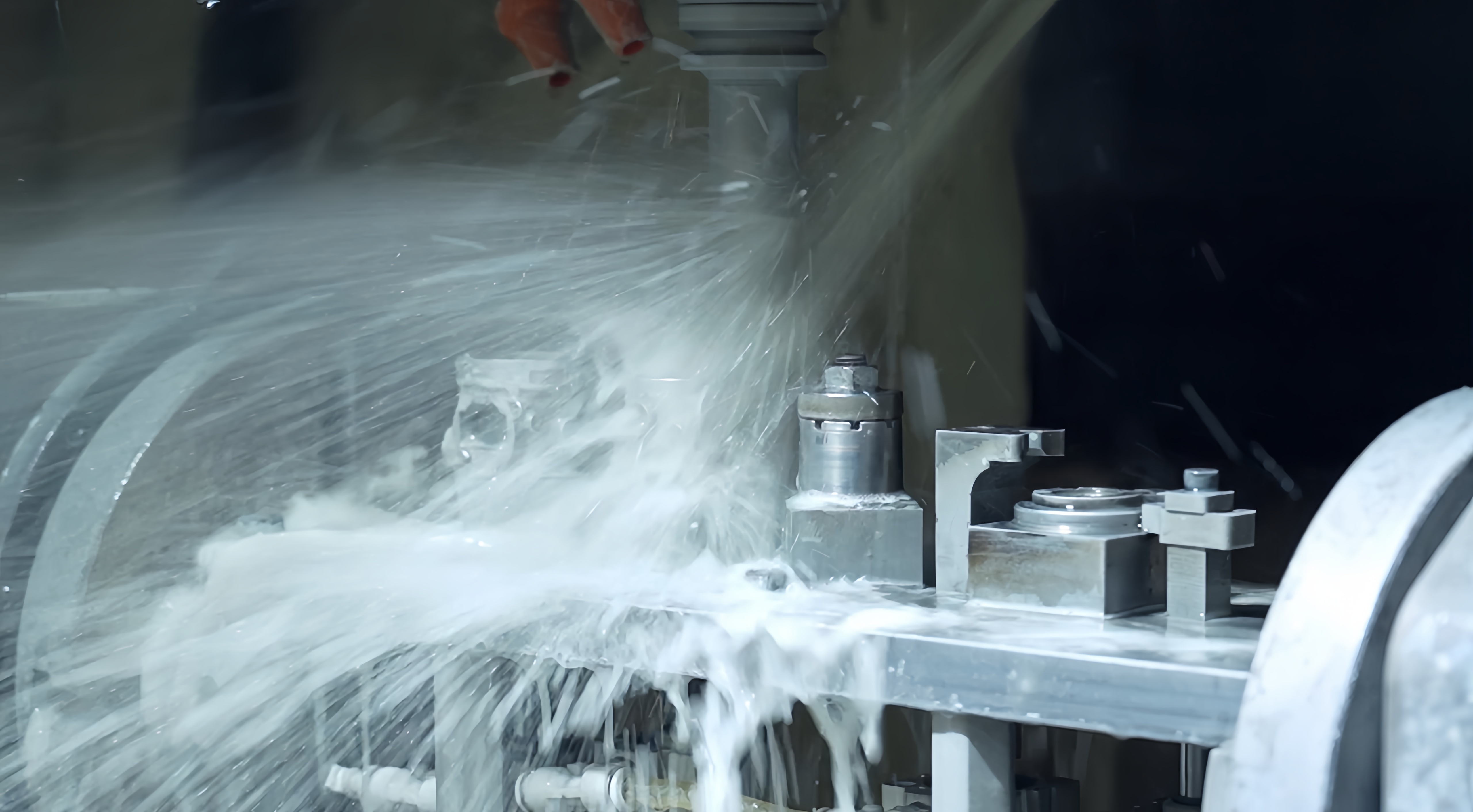
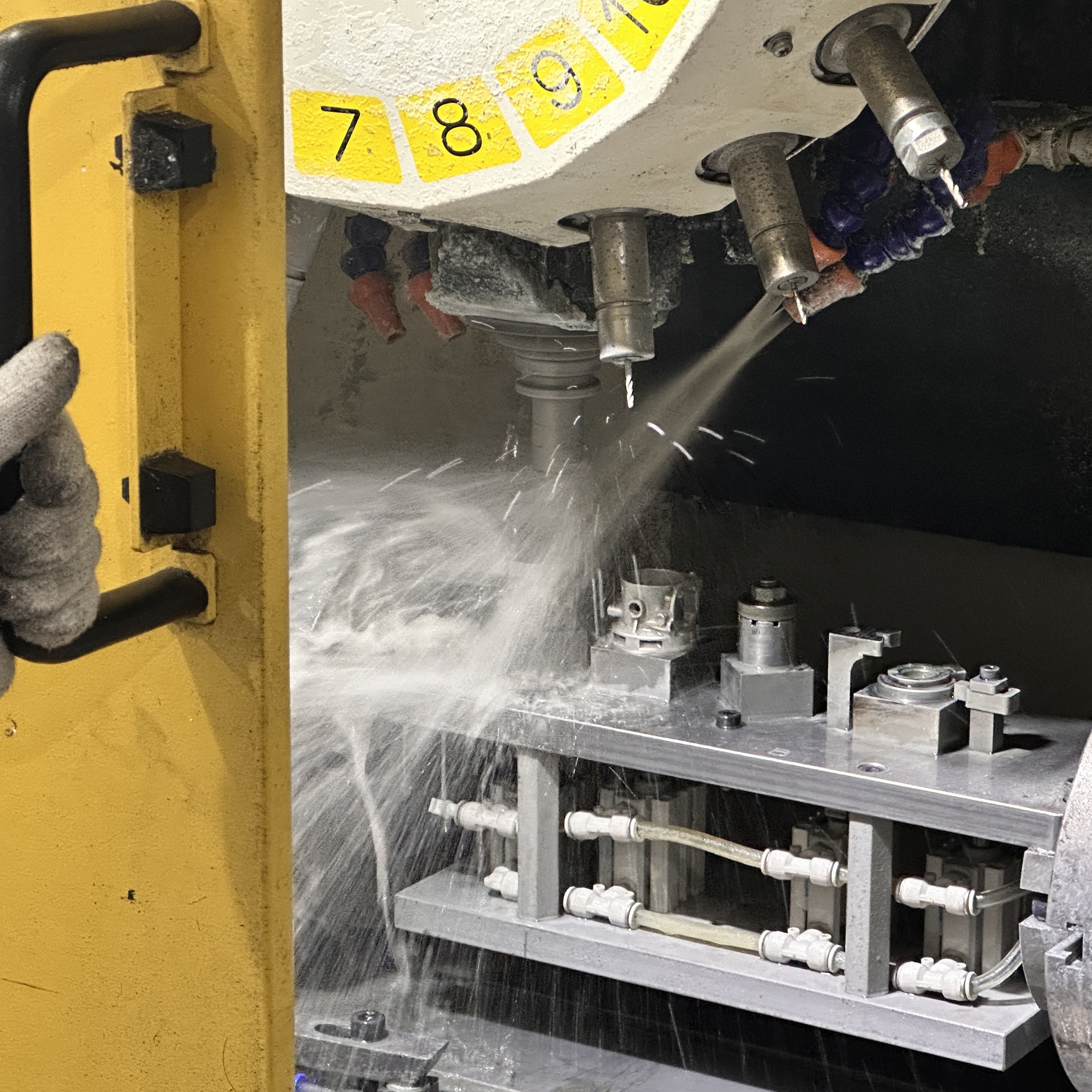
CNC machining in progress — precise material removal for complex geometries and tight tolerances.
1. What Is CNC Machining?
CNC (Computer Numerical Control) machining is a subtractive manufacturing process in which computer-controlled cutting tools systematically remove material from a solid metal or plastic workpiece to create a finished part. Starting from a solid block — also called a billet or blank — multi-axis machine tools execute pre-programmed toolpaths to mill, turn, drill, and grind features into the final geometry.
Unlike casting or molding processes, CNC machining requires no dedicated tooling or molds. The part program is created digitally from a CAD model and can be revised at any time without incurring tooling modification costs. This flexibility makes CNC machining the preferred choice for prototype development, low-volume production, and parts with complex internal features that would be difficult or impossible to form in a casting.
Key Advantages of CNC Machining
- No tooling required — production can begin immediately after CAM programming, with zero mold investment.
- Exceptional precision — capable of achieving tolerances as tight as ±0.005mm on critical features.
- Broad material compatibility — works with virtually any machinable metal or engineering plastic.
- Design flexibility — CAD revisions can be implemented in hours without retooling.
- Excellent surface finishes — as-machined Ra values suitable for many end-use applications without secondary finishing.
Ideal Applications for CNC Machining
- Functional prototypes — design verification and testing before committing to production tooling.
- Low to medium-volume production — typically hundreds to several thousand units per year.
- Complex geometries — deep internal cavities, undercuts, threaded features, and multi-axis contours.
- Tight-tolerance components — aerospace brackets, medical device housings, optical mounts, and instrumentation parts.
- Rapid design iterations — products still in development where geometry may change between batches.
SUNPREC operates a comprehensive fleet of CNC milling and turning centers — including multi-axis FANUC-equipped machines — supporting both prototype and production manufacturing for CNC machining services across aluminum, stainless steel, titanium, brass, and engineering plastics.
2. What Is Die Casting?
Die casting is a high-pressure metal forming process in which molten metal — typically aluminum, zinc, or magnesium alloy — is injected at high velocity into a precision-machined steel mold cavity. The metal solidifies rapidly under maintained pressure, producing a near-net-shape part that replicates the mold geometry with excellent dimensional consistency and smooth surface finish.
Unlike CNC machining, die casting requires a significant upfront investment in mold tooling. However, once the die is built, it can produce tens of thousands to hundreds of thousands of identical parts with repeatable quality and extremely short cycle times — often measured in seconds per shot. This makes die casting the dominant manufacturing method for high-volume production of complex metal housings, brackets, and structural components.
Key Advantages of Die Casting
- Exceptional production speed — cycle times as low as 10–15 seconds per part for small to medium components.
- Excellent repeatability — die cavities maintain consistent dimensions across the entire production run.
- Low per-unit cost at volume — the mold investment is amortized across large quantities, driving unit economics.
- Thin-wall capability — can reliably produce wall sections as thin as 1.5mm, reducing material weight.
- Near-net-shape output — minimal post-processing required compared to sand or investment casting.
Common Die Casting Materials
- Aluminum alloys (A380, ADC12) — lightweight, corrosion-resistant, excellent strength-to-weight ratio.
- Zinc alloys (Zamak 3, Zamak 5) — superior fluidity, ideal for intricate thin-wall designs.
- Magnesium alloys (AZ91D) — the lightest structural metal, widely used in automotive and consumer electronics.
SUNPREC provides die casting solutions with advanced cold-chamber casting machines and in-house mold design capabilities, delivering consistent, high-quality aluminum and zinc alloy components for industrial applications worldwide.
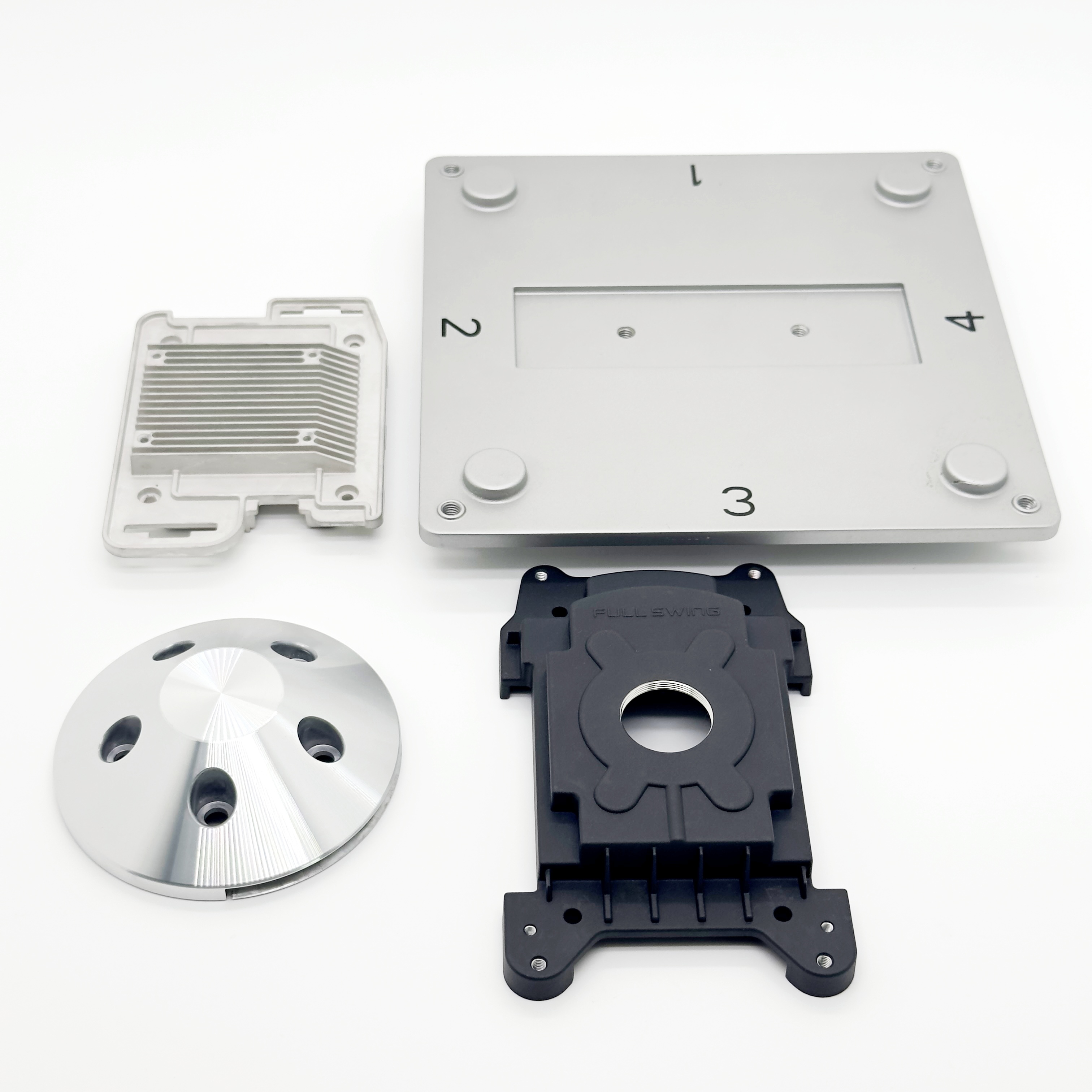
Precision aluminum die cast parts — near-net-shape production with excellent dimensional repeatability for high-volume manufacturing.
3. CNC Machining vs Die Casting: Key Differences at a Glance
Before diving deeper into individual comparison dimensions, the table below provides a concise overview of how CNC machining and die casting differ across the factors that matter most to procurement and engineering teams:
| Factor | CNC Machining | Die Casting |
|---|---|---|
| Manufacturing Method | Subtractive — material removed from solid block | Formative — molten metal injected into mold |
| Tooling Investment | Low — no dedicated tooling required | High — precision steel mold required |
| Production Volume | Low to medium (1–10,000+ units) | Medium to high (5,000–500,000+ units) |
| Design Flexibility | Very high — easy to modify between batches | Limited — mold modifications are costly |
| Tolerance | Very tight — ±0.005 to ±0.01mm achievable | Good — typically ±0.05 to ±0.1mm |
| Lead Time | Short for prototypes (days to weeks) | Longer initial setup (4–8 weeks for tooling) |
| Unit Cost at Scale | Higher — machining time scales with complexity | Lower — cycle time independent of complexity |
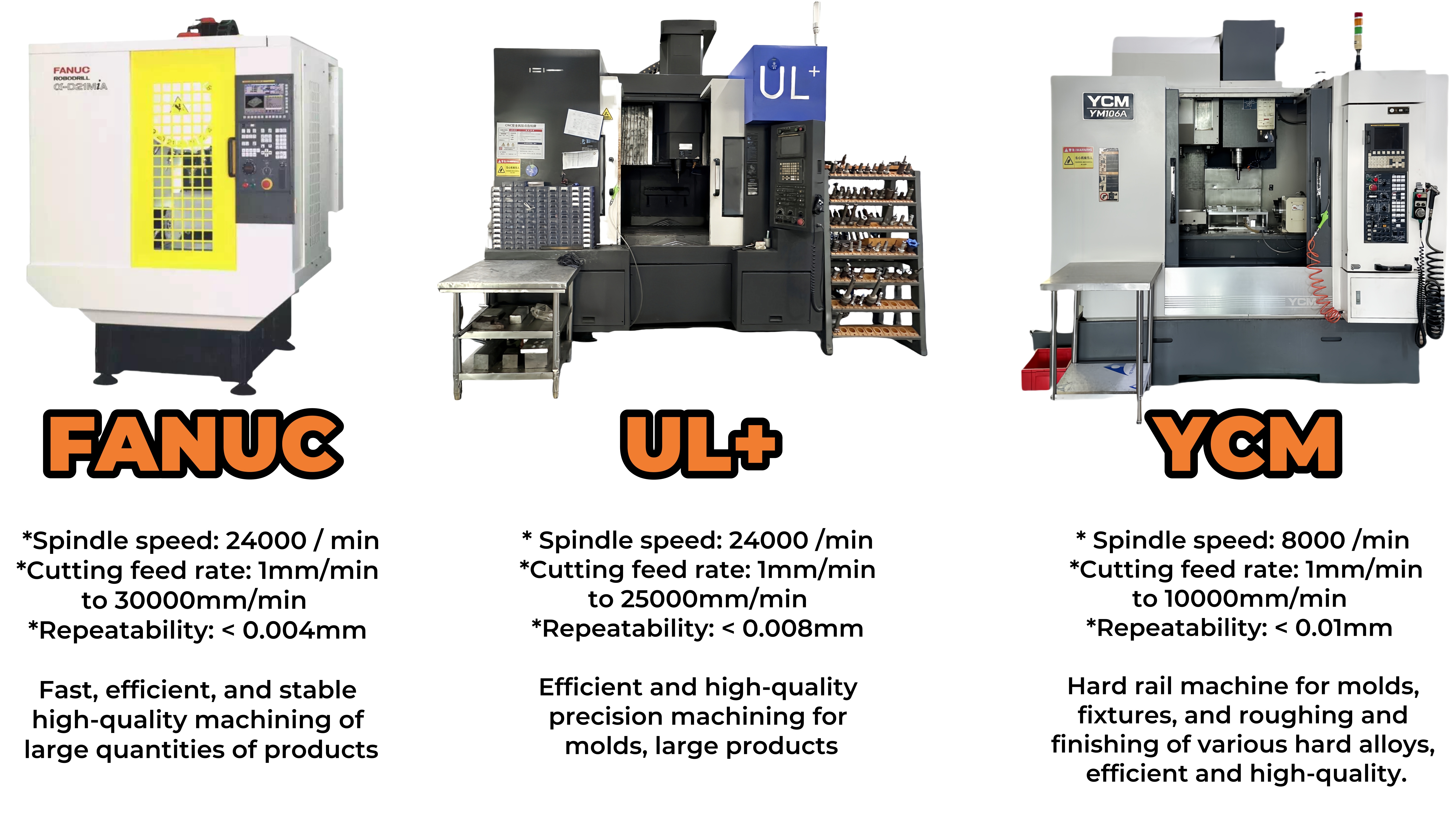
Advanced multi-axis CNC machining centers at SUNPREC — delivering precision and repeatability for demanding industrial applications.
4. Accuracy Comparison: Which Process Delivers Better Precision?
When comparing CNC machining vs die casting on dimensional accuracy, the answer depends on what specific features matter most for your part. Rather than declaring one process universally "more precise," it is more useful to examine how each technology achieves and maintains accuracy across a production run.
CNC Machining Accuracy
CNC machining offers the highest achievable dimensional accuracy among general-purpose metal manufacturing processes. Modern multi-axis CNC machines, equipped with precision ball screws, linear guides, and thermal compensation systems, can reliably maintain tolerances of ±0.01mm or tighter on individual features. This level of control makes CNC machining essential for aerospace structural components, medical implants, optical instrument housings, and semiconductor equipment parts where micron-level precision directly impacts functional performance.
Die Casting Accuracy
Die casting delivers excellent dimensional consistency across high-volume production runs — but the baseline tolerance range is wider than precision CNC machining. Typical die cast tolerances range from ±0.05mm for small features to ±0.2mm across larger dimensions. The steel mold maintains its geometry throughout its service life, meaning part-to-part variation within a single production run is minimal. However, post-casting thermal shrinkage must be accounted for during mold design, and certain features — such as precision bores, threads, and sealing surfaces — are often machined as secondary operations after casting.
At SUNPREC, our precision machining capability supports tolerances up to ±0.01mm on CNC-machined components. For die cast parts requiring tighter tolerances on critical features, we offer integrated CNC secondary machining to achieve the required precision without compromising production efficiency.
5. Cost Comparison: Understanding Total Cost of Ownership
Cost is often the deciding factor when evaluating CNC machining vs die casting — but a simple per-unit comparison can be misleading without accounting for tooling amortization, production volume, and post-processing requirements. The total cost of ownership tells a more complete story.
CNC Machining Cost Structure
The primary cost driver in CNC machining is machine time — the longer a part takes to machine, the higher the cost. Factors that increase machining time include complex geometries, hard materials (titanium, hardened steel), tight tolerances requiring multiple finishing passes, and deep cavities that demand specialized tooling strategies. Material waste is another consideration: subtractive processes remove material from a solid block, and the waste material — especially for titanium and high-grade stainless steel — represents a meaningful cost component.
However, CNC machining carries zero tooling investment. There is no mold to design, fabricate, or maintain. For low to medium volumes, this absence of upfront tooling cost often makes CNC machining the more economical choice, even if the per-unit machining cost is higher than a die cast equivalent at scale.
Die Casting Cost Structure
Die casting economics are dominated by the mold investment. A precision steel die can cost anywhere from several thousand to tens of thousands of dollars, depending on part size, complexity, number of cavities, and expected tool life. However, once the mold is built, the incremental cost per part drops dramatically — cycle times measured in seconds, minimal material waste (runners and sprues are recycled), and little to no machining labor per unit.
The Break-Even Point
As a general guideline:
- 1 to 5,000 units: CNC machining is typically more cost-effective — no mold investment, faster ramp-up.
- 5,000 to 50,000 units: Both processes can be competitive; the decision depends on part complexity, material, and tolerance requirements.
- 50,000+ units: Die casting generally delivers the lowest per-unit cost, provided the mold investment can be amortized over the production volume.
Importantly, the "right" answer depends on your specific project economics, not a universal rule. We recommend obtaining quotes for both processes at your target volume before committing to a manufacturing strategy.
6. When Should You Choose CNC Machining?
CNC machining is the optimal manufacturing choice when one or more of the following conditions apply to your project:
1. Prototype Development and Design Verification
Before committing to a die casting mold — which can take 4–8 weeks and require significant capital — CNC machining allows you to produce functional prototypes in days. Engineers can test fit, form, and function, then iterate on the design without incurring mold modification costs. This "fail fast, iterate quickly" approach de-risks the transition to production tooling.
2. Low to Medium-Volume Production
For annual volumes under approximately 5,000 units, the absence of mold investment typically makes CNC machining the more economical choice. Industries such as aerospace, medical devices, and industrial automation — where production runs are often in the hundreds rather than millions — rely heavily on CNC machining for production parts.
3. Parts with Complex Internal Features
Deep pockets, internal threads, undercuts, and cross-drilled holes are challenging or impossible to produce in a single die casting operation. CNC machining — particularly with 5-axis capability — can access these features from multiple angles without requiring additional tooling or secondary operations.
4. Frequent Design Changes
If your product design is still evolving — whether due to customer feedback, regulatory changes, or iterative improvement — CNC machining allows you to update the CAD model and CAM program with zero tooling penalties. For die casting, each design change could require mold modification or a completely new mold.
7. When Should You Choose Die Casting?
Die casting becomes the preferred manufacturing process when your project aligns with these scenarios:
1. High-Volume Production
When annual production quantities exceed tens of thousands of units, die casting's rapid cycle times and minimal per-unit processing deliver the lowest total cost per part. Automotive engine components, consumer electronics housings, and power tool bodies are classic examples where die casting economics dominate.
2. Stable Product Design
Once a design is finalized and unlikely to change — for instance, a generation of an automotive component that will remain in production for 3–5 years — the upfront mold investment is fully justified. The die will produce hundreds of thousands of consistent parts over its service life.
3. Complex Thin-Wall Housings and Enclosures
Die casting excels at producing intricate, thin-walled geometries that would be slow and wasteful to machine from solid stock. The process can fill walls as thin as 1.5mm, creating lightweight yet structurally rigid components — particularly valuable for portable electronics, automotive sensor housings, and drone components.
4. Lightweight Aluminum and Magnesium Components
For applications where weight reduction is critical — electric vehicle powertrains, aerospace brackets, handheld tools — die cast aluminum and magnesium offer the best combination of low density, good mechanical properties, and high-volume manufacturability.
8. Can CNC Machining and Die Casting Be Used Together?
Many successful manufacturing programs do not treat CNC machining vs die casting as an either-or decision. Rather, the most efficient supply chains combine both processes — and often additional technologies — into a coherent manufacturing strategy that evolves with the product lifecycle.
A typical product development and production sequence might look like this:
Prototype Phase → CNC machining (fast, flexible, no tooling)
Pilot Production → CNC machining or low-volume die casting (design validation at scale)
Mass Production → Die casting (lowest per-unit cost at volume)
Post-Processing → CNC secondary machining for tight-tolerance features on cast parts
Finishing → Surface treatment — anodizing, powder coating, plating
This integrated approach — CNC for prototyping and tight-tolerance features, die casting for high-volume production, plus surface finishing services for final appearance and corrosion protection — is exactly the kind of one-stop manufacturing solution that reduces supply chain complexity, shortens overall lead time, and ensures consistent quality from prototype to mass production.
Explore Your Manufacturing Options
Tell us about your project — we will recommend the optimal process for your requirements.
Explore Your Manufacturing Options →9. How to Choose the Right Manufacturing Process: A Decision Checklist
To help structure your evaluation, here is a practical decision framework that engineers and procurement teams can use when comparing CNC machining vs die casting for a specific project:
1. What Is Your Target Production Quantity?
Low volumes (under ~5,000/year) favor CNC machining; high volumes (50,000+/year) favor die casting. The middle range requires a detailed cost analysis.
2. What Tolerances Are Required?
If critical features need ±0.01mm or tighter, CNC machining — either as the primary process or as a secondary operation on cast parts — is the appropriate choice.
3. How Complex Is the Part Geometry?
Deep internal features, threaded holes, and undercuts are CNC-friendly but difficult to cast. Thin-wall, shell-like geometries with uniform wall thickness are well-suited for die casting.
4. What Material Do You Need?
CNC machining can process virtually any metal or plastic. Die casting is limited to specific alloys with good fluidity — primarily aluminum, zinc, and magnesium.
5. What Is Your Budget and Timeline?
Factor in both upfront investment (tooling cost for die casting) and ongoing per-unit cost. Also consider ramp-up time: CNC prototypes can ship in days, while die cast first articles may take 6–10 weeks.
10. SUNPREC: Integrated Manufacturing Capabilities for Custom Metal Parts
At SUNPREC, we understand that selecting the right manufacturing process is not a theoretical exercise — it is a business decision that affects your product cost, quality, and time-to-market. That is why we offer a comprehensive suite of manufacturing technologies under one roof, enabling our engineering team to recommend the most appropriate process — or combination of processes — for each project.
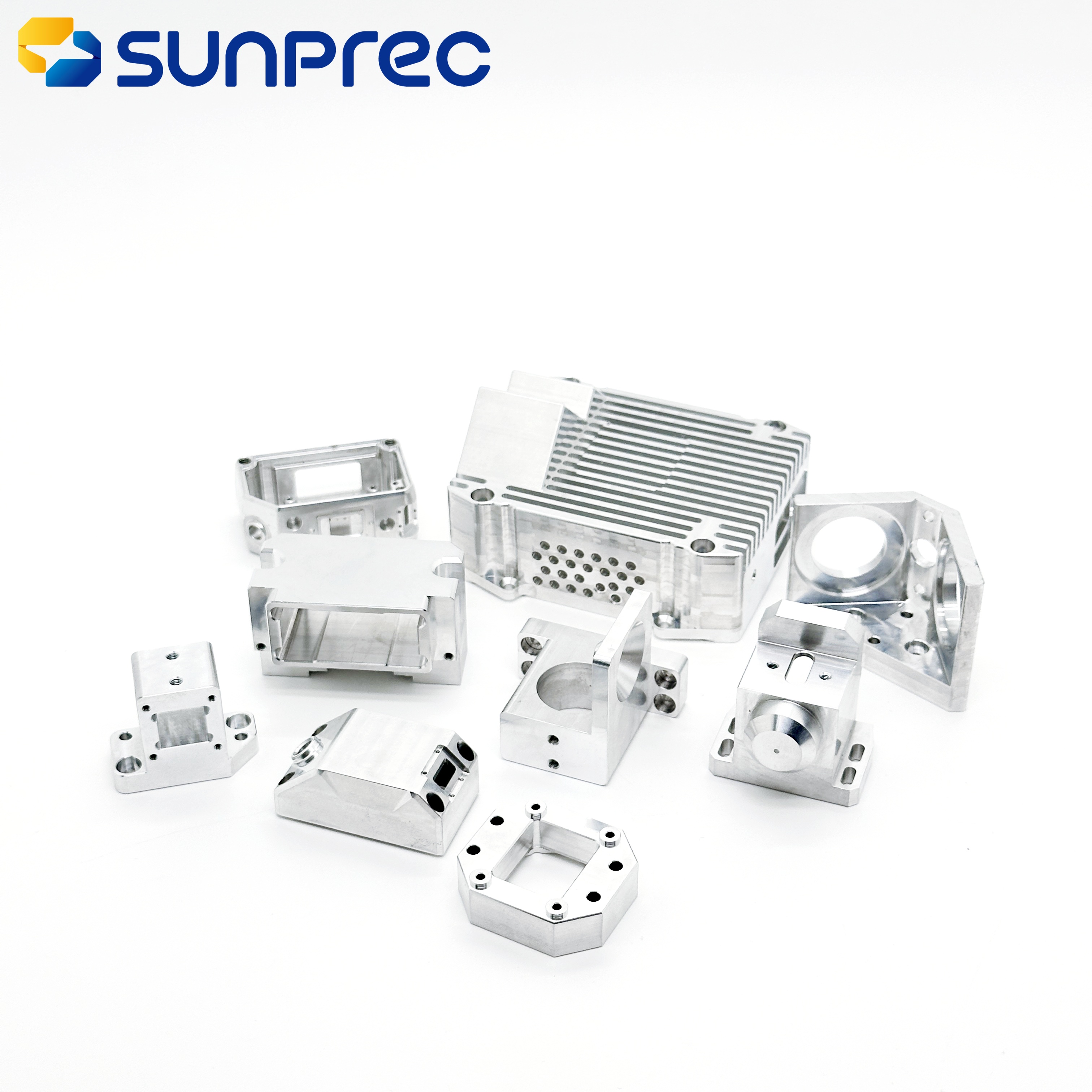
A selection of precision CNC machined components — SUNPREC supports multiple materials and complex geometries across diverse industries.
Our Manufacturing Capabilities
- CNC Machining — multi-axis milling and turning, tolerances to ±0.01mm, wide material range including aluminum, stainless steel, titanium, brass, and engineering plastics.
- Die Casting — cold-chamber aluminum and zinc die casting, in-house mold design, suitable for medium to high-volume production.
- Extrusion — aluminum profile extrusion with precision cutting, drilling, and tapping.
- Investment Casting — precision casting for complex geometries with excellent surface finish.
- Sheet Metal Fabrication — laser cutting, bending, welding, and assembly for enclosures, brackets, and chassis.
- surface finishing — anodizing, powder coating, electroplating, passivation, and other post-processing treatments.
Why Global OEMs Choose SUNPREC
- ISO-certified quality management — rigorous incoming, in-process, and final inspection protocols.
- Engineering-driven approach — DFM feedback, material recommendations, and process optimization before production begins.
- Prototype to mass production — seamless transition from CNC prototypes through pilot runs to full-scale manufacturing.
- Global logistics — reliable shipping to North America, Europe, Asia-Pacific, and beyond.
- Long-term partnership — 300+ clients in 50+ countries trust SUNPREC for consistent quality and on-time delivery.
Ready to Start Your Project?
Send your drawings or 3D files — our engineering team will recommend the best manufacturing approach for your parts.
Ready to Start Your Project? →Frequently Asked Questions
Q1: Is CNC machining better than die casting?
Neither process is universally "better" — each excels under different conditions. CNC machining offers superior precision and design flexibility with no tooling cost, making it ideal for prototypes, low volumes, and complex geometries. Die casting delivers lower per-unit costs at high volumes with excellent repeatability. The right choice depends on your production quantity, tolerance requirements, material, and budget.
Q2: Is die casting cheaper than CNC machining?
At high production volumes, die casting is generally cheaper per unit because the mold investment is amortized across many parts and cycle times are very short. At low volumes, CNC machining is usually more economical because there is no mold cost. The break-even point depends on part complexity and size, but typically occurs between 3,000 and 10,000 units for aluminum components.
Q3: Can die casting achieve tight tolerances?
Die casting can achieve good dimensional consistency with typical tolerances of ±0.05–0.1mm, but it cannot match the ±0.01mm or tighter tolerances achievable with precision CNC machining. For cast parts that require tighter tolerances on specific features — such as bearing bores, sealing surfaces, or threaded holes — CNC secondary machining is a common and effective solution.
Q4: Which process is better for prototypes?
CNC machining is almost always the better choice for prototypes. It requires no tooling, can produce functional parts in days rather than weeks, and allows design changes to be implemented immediately at no additional tooling cost. This makes CNC machining the standard approach for prototype development across industries.
Q5: Can the same manufacturer provide both CNC machining and die casting?
Yes, integrated manufacturers like SUNPREC offer both CNC machining and die casting — plus additional processes such as extrusion, investment casting, sheet metal fabrication, and surface finishing. Working with a single supplier that offers multiple manufacturing technologies simplifies supply chain management, ensures consistent quality standards, and enables a more flexible manufacturing strategy from prototype through mass production.
Get a Tailored Manufacturing Recommendation
Contact our engineering team with your project details — we will help you choose the right process.
Get a Tailored Manufacturing Recommendation →