


For OEM manufacturers, product engineers, and industrial buyers sourcing custom metal components, finding a dependable cnc machining manufacturer involves far more than comparing unit prices online. A truly reliable manufacturing partner must demonstrate consistent quality, engineering depth, and the ability to support your project from prototype validation through production ramp-up. Poor supplier selection leads to delayed deliveries, inconsistent part quality, and costly redesign cycles—all of which erode margins and damage relationships with your own customers.
Before choosing a custom CNC machining supplier, engineers and procurement teams should evaluate several critical factors: manufacturing capability across part sizes and geometries, precision and tolerance control, material experience, engineering support including Design for Manufacturing (DFM) feedback, quality management systems, and production capacity. This guide walks through these evaluation criteria, equipping you with the framework to identify a CNC machining manufacturer capable of becoming a long-term strategic partner rather than a transactional vendor.
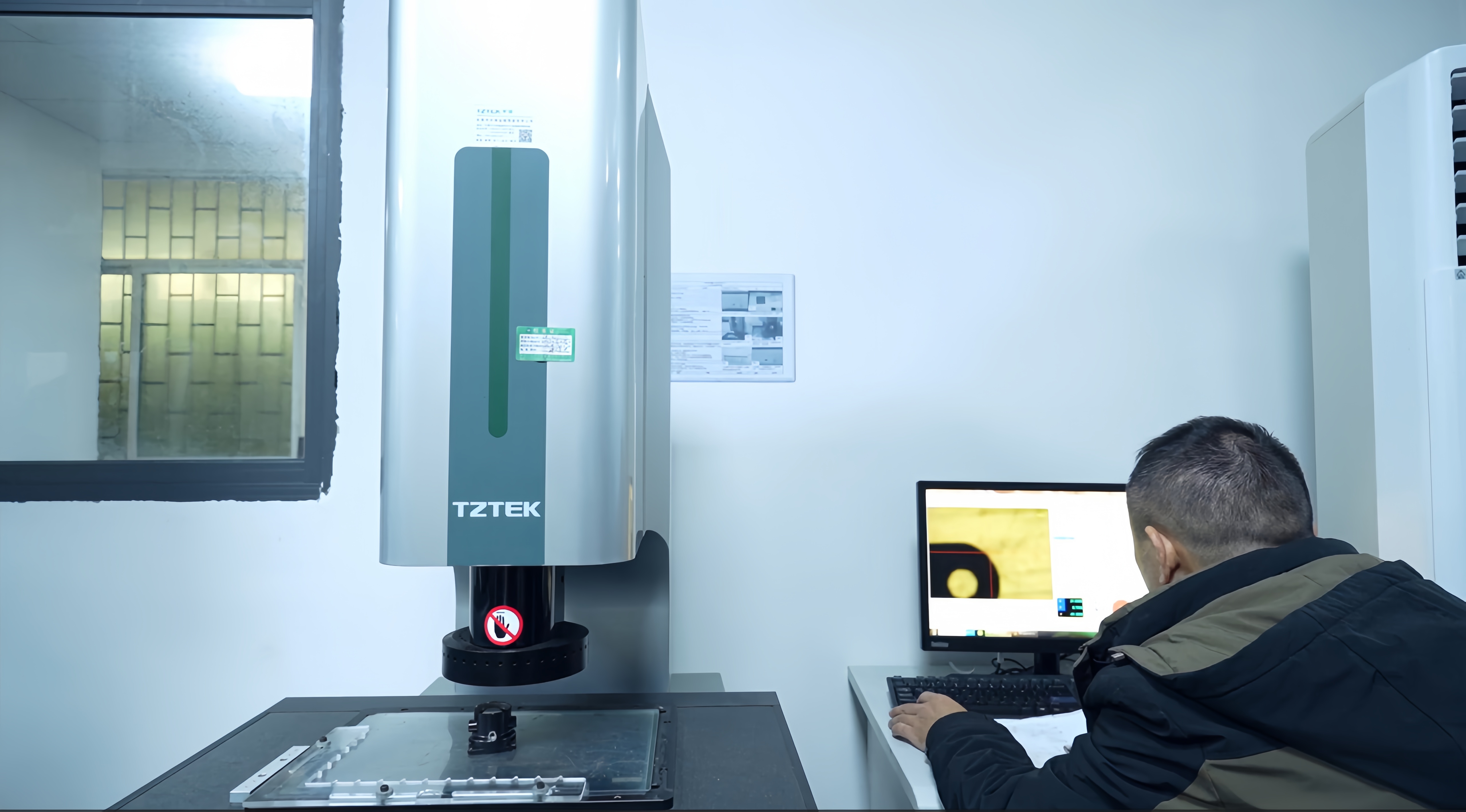
A reliable CNC machining manufacturer should combine engineering expertise with advanced production capability
1. Evaluate the Manufacturer’s CNC Machining Capabilities
The first filter when assessing any CNC machining supplier is straightforward: can their equipment and expertise actually produce your parts? A manufacturer’s capability profile spans machine types, axis count, part size range, and production volume flexibility.
Machine Capability. A well-equipped CNC machining manufacturer should operate CNC milling centers, cnc turning centers, and multi-axis machines—ideally 4-axis and 5-axis—that enable complex geometries to be machined in fewer setups. Multi-axis capability reduces cumulative tolerance error and improves feature-to-feature accuracy. When evaluating suppliers, confirm which machine brands they run (e.g., FANUC, YCM) and whether regular maintenance and calibration programs are in place.
Part Size Capability. Different manufacturers handle different work envelopes. Some are optimized for small, high-precision medical or electronic components; others accommodate large structural parts for industrial equipment or aerospace structures. Before engaging a CNC machining manufacturer, verify that their machine bed size and tooling support your largest envisioned part dimensions—this avoids process fragmentation across multiple vendors.
Production Capability. Does the supplier support the full spectrum—prototype machining, low-volume production, and mass production? A partner that can handle prototype-to-production transitions under one roof eliminates the revalidation overhead that occurs when switching shops between development phases. At SUNPREC, our CNC machining services cover prototype development, low-volume runs, and scaled production across aluminum, stainless steel, brass, titanium, and engineering plastics.
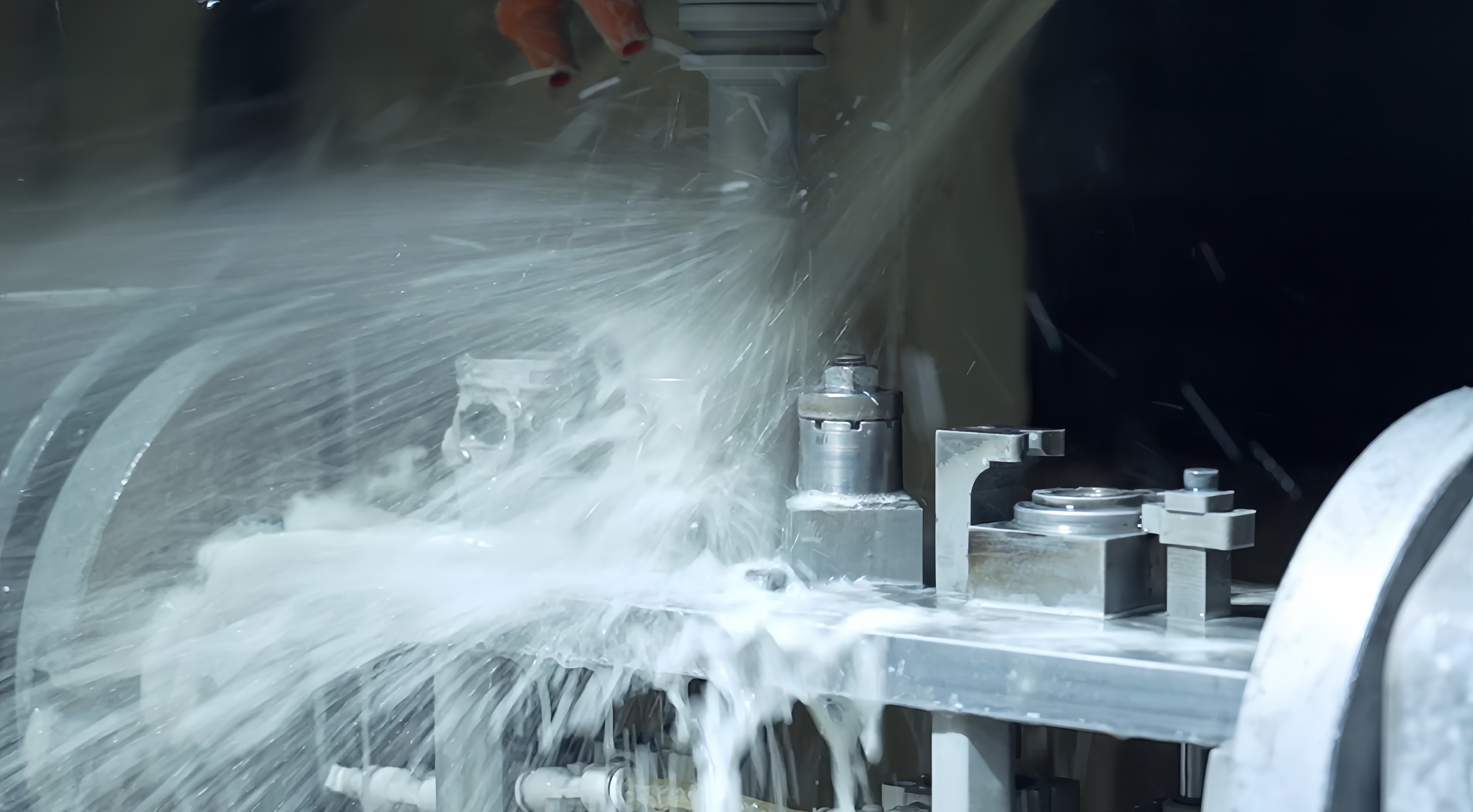
Advanced CNC milling centers delivering precision metal components with consistent quality
2. Check Precision and Tolerance Control
Every CNC machining manufacturer claims “high precision,” but procurement professionals need verifiable tolerance data—not marketing language. When assessing precision CNC machining capability, focus on three measurable dimensions: achievable tolerance ranges, the inspection equipment used to verify them, and the documented quality processes that govern consistency.
Machining Tolerance. A capable supplier should specify standard and achievable tolerance bands rather than vague superlatives. For general CNC milling and turning operations, tolerances of ±0.05 mm are common; a manufacturer pushing precision CNC machining boundaries should deliver ±0.01 mm on critical features. At SUNPREC, our machining tolerance reaches up to ±0.01 mm, verified through a comprehensive inspection workflow that includes Coordinate Measuring Machines (CMM), precision micrometers, and surface profilometers.
Inspection and Measurement Equipment. A manufacturer’s precision claims are only as credible as the equipment behind them. When evaluating a CNC machining supplier, ask about their inspection lab: Do they use CMM equipment from recognized brands (e.g., HEXAGON, TESA)? Do they perform in-process inspection or only final checks? Do they provide dimensional inspection reports with each shipment? These questions separate suppliers who genuinely control quality from those who merely hope for it.
3. Review Material and Manufacturing Experience
Material selection drives machining parameters, tooling choices, surface finish outcomes, and ultimately part cost. An experienced CNC machining manufacturer should demonstrate deep familiarity with the materials your design requires—not just claim to work with them.
Metal Materials. The most frequently machined metals include aluminum alloys (6061, 7075, 5052)—valued for their strength-to-weight ratio and machinability; stainless steel (304, 316, 17-4 PH)—chosen for corrosion resistance and mechanical strength; steel and alloy steel for structural applications; brass for electrical conductivity and aesthetic requirements; titanium for aerospace and medical implants; and magnesium alloys for ultra-lightweight applications. Each material demands specific cutting speeds, feed rates, coolant strategies, and tooling—a manufacturer without this nuanced experience will produce suboptimal parts or waste valuable material through trial-and-error.
Plastic and Engineering Materials. Beyond metals, many CNC machining services extend to engineering plastics including PEEK, PTFE (Teflon), Delrin (POM), nylon, and polycarbonate. These materials serve applications where electrical insulation, chemical resistance, weight reduction, or FDA compliance are required. A supplier with dual metal-and-plastic capability can support a broader range of your component needs.
SUNPREC maintains extensive experience across all listed metal and plastic materials. Our engineers can recommend material substitutions when cost or availability becomes a constraint—helping you maintain production continuity without compromising performance. For projects requiring secondary processes, our integrated surface finishing solutions—anodizing, passivation, plating, and powder coating—are applied under the same quality management system.
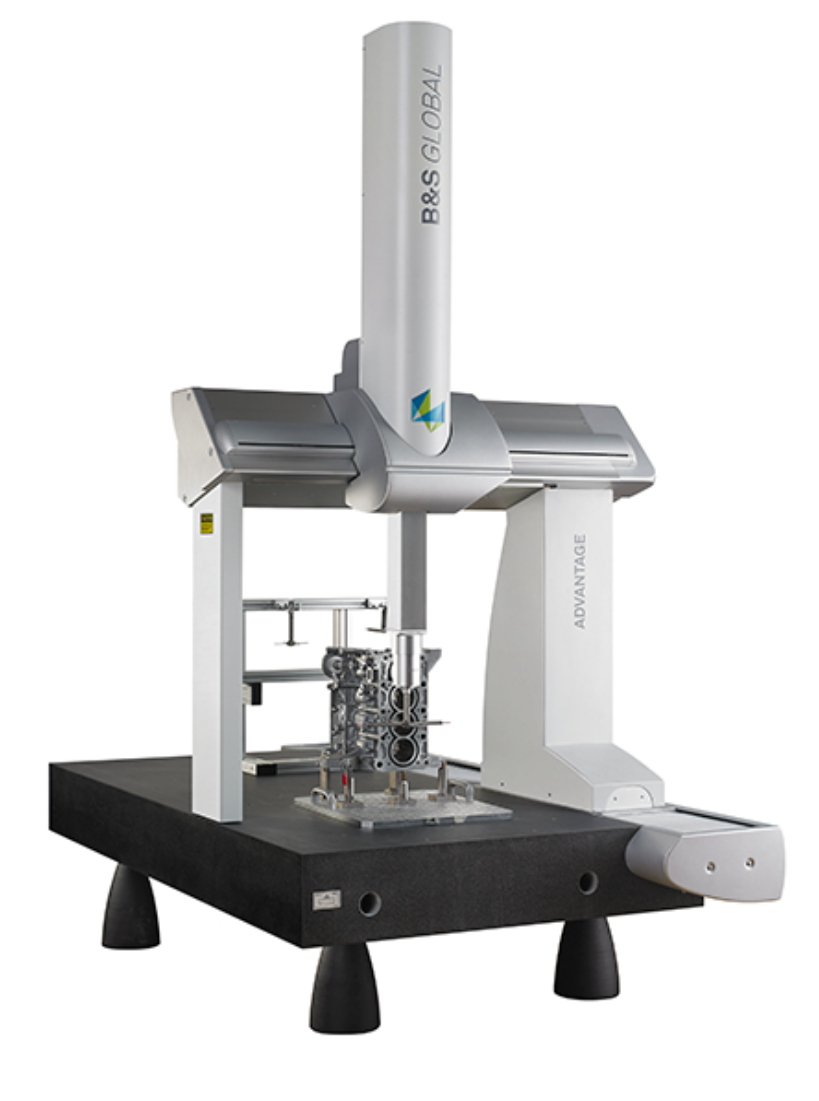
Coordinate Measuring Machine (CMM) inspection ensures every part meets dimensional specifications
4. Consider Engineering Support and DFM Capability
The best CNC machining manufacturers contribute more than machine hours—they contribute engineering insight that improves your design before a single chip is cut. Design for Manufacturing (DFM) feedback is one of the strongest signals of a supplier’s technical maturity.
Design Review and DFM Feedback. When you submit a drawing or CAD model to a custom CNC machining partner, their engineering team should review it with a manufacturing lens: Are there unnecessary tight tolerances that drive cost without functional benefit? Can features be consolidated to reduce setups? Would a slight geometry adjustment eliminate the need for specialty tooling? A supplier that proactively raises these questions is thinking about your project’s total cost and producibility, not just accepting an order.
Material Recommendations and Tolerance Optimization. Experienced CNC machining suppliers often suggest material alternatives that meet the same performance requirements at lower cost or with better machinability. They also identify where tolerances can be relaxed without affecting function—reducing machining time and inspection burden. For multi-part assemblies, engineering support extends to fit verification and stack-up analysis, ensuring components mate properly upon delivery.
These collaborative behaviors signal a supplier that functions as a manufacturing partner rather than a job shop. When evaluating potential CNC machining manufacturers, include questions about their DFM process and request a sample DFM report during qualification.
5. Evaluate Quality Control and Certifications
For procurement managers and quality engineers, a CNC machining manufacturer’s quality system is non-negotiable. Without rigorous quality control, even the most advanced machines produce unreliable output—and rejected shipments overseas create cascading costs that far exceed any initial price savings.
Quality System Certification. The minimum threshold for a professional precision CNC machining supplier is ISO 9001 certification, which establishes a documented quality management framework covering process control, corrective action, and continuous improvement. This certification signals that the manufacturer operates with standardized procedures rather than ad-hoc practices.
Inspection Equipment and Process. Beyond certification, examine the inspection workflow: Does the manufacturer perform incoming material inspection to verify raw material certifications? Is there in-process inspection between machining operations to detect issues before further value is added? Does final inspection include dimensional verification (CMM), surface finish measurement, and visual inspection? Do inspection reports accompany each shipment?
SUNPREC maintains ISO-certified quality management across all manufacturing processes. Our inspection regime includes incoming material verification, in-process checks, and final dimensional confirmation using HEXAGON CMM equipment and precision measurement tools—ensuring every batch meets or exceeds customer specifications.
6. Confirm Production Capacity and Lead Time
Price competitiveness means nothing if the CNC machining manufacturer cannot deliver on time. For OEMs and industrial buyers, supply chain reliability hinges on whether the supplier can absorb repeat orders, scale output when demand increases, and maintain stable lead times quarter after quarter.
Capacity Planning. When assessing a custom CNC machining supplier, ask directly about their machine utilization rates, shift structure, and contingency plans. A manufacturer running at 95% utilization may struggle to accommodate your production ramp-up. Conversely, a shop with balanced capacity can slot your work without disrupting existing orders.
Order Management and Communication. Reliable CNC machining suppliers provide production schedules, status updates, and proactive communication when delays arise. They maintain raw material inventories for commonly specified alloys and have backup tooling strategies to minimize downtime. These operational habits sometimes reveal more about a manufacturer’s reliability than their equipment list alone.
When you place repeat orders with SUNPREC, our production scheduling system ensures consistent delivery performance, supported by systematic capacity planning that accommodates both steady-state demand and volume fluctuations.
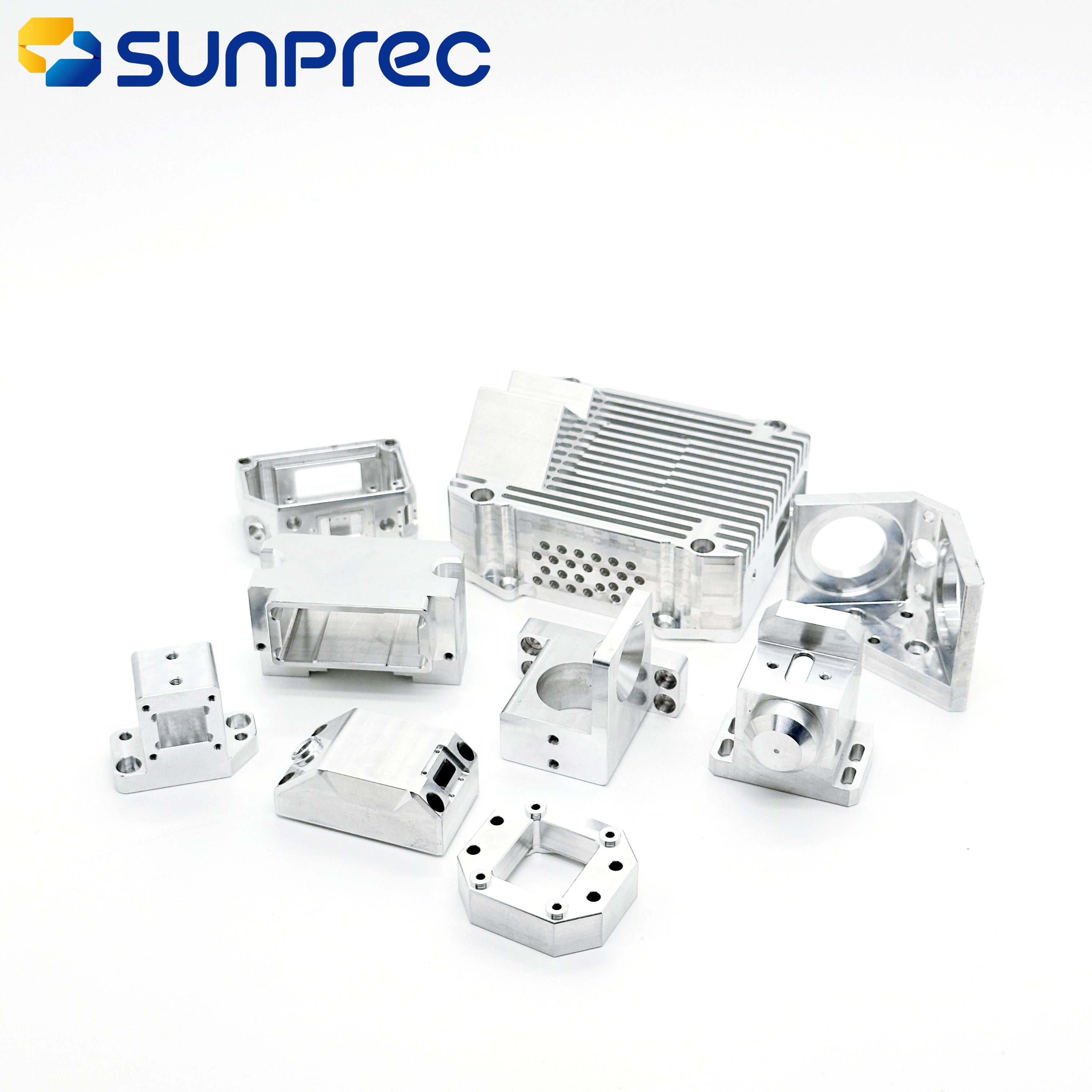
Precision CNC machined components across multiple materials—aluminum, stainless steel, brass, and titanium
7. Compare More Than Just CNC Machining Prices
When procurement teams request quotes from multiple CNC machining manufacturers, the natural instinct is to rank by unit price. However, price alone is a dangerously incomplete comparison metric—several cost drivers explain why quotes for the same drawing can vary significantly between suppliers.
| Factor | Impact on CNC Machining Cost |
|---|---|
| Material | Raw material cost differences between aluminum, stainless steel, and titanium are substantial; stainless and titanium also require slower cutting speeds, increasing machine time. |
| Part Complexity | Complex geometries with deep pockets, thin walls, or multiple setups increase machining time and programming effort; simpler parts machine faster at lower cost. |
| Tolerance Requirements | Tight tolerances (±0.01mm) demand slower feed rates, additional inspection, and potentially specialty tooling—each adding cost; standard tolerances are more economical. |
| surface finishing | Post-machining processes—anodizing, plating, powder coating, passivation—add processing steps and handling time; a supplier quoting without finishing may appear cheaper but delivers incomplete parts. |
| Order Quantity | Higher volumes amortize setup and programming costs across more units, reducing per-part cost; prototype quantities carry a unit-price premium due to one-time setup overhead. |
A CNC machining manufacturer offering the lowest quote may be cutting corners—using substandard materials, skipping in-process inspection, or running uncalibrated machines. Instead of defaulting to the lowest price, evaluate quotes against the quality and capability factors discussed throughout this guide. The true cost of a failed supplier relationship always exceeds the apparent savings from a low bid.
8. Why Choose SUNPREC as Your cnc machining partner
SUNPREC Hardware CO., Ltd. brings together the capabilities, quality systems, and engineering support that procurement professionals and engineers require from a long-term CNC machining manufacturer. Serving 300+ clients across 50+ countries, we have earned trust through consistent delivery of precision metal and plastic components for demanding applications in aerospace, medical devices, automotive, robotics, semiconductor equipment, and industrial machinery.
Comprehensive Manufacturing Capability. Our CNC machining operations include multi-axis milling, precision turning, drilling, and tapping—supported by complementary processes: die casting, investment casting, extrusion, sheet metal fabrication, and surface finishing. This breadth means we can handle multi-process projects without fragmenting supply chains across multiple vendors.
Precision You Can Measure. We deliver machining tolerances up to ±0.01 mm, verified through CMM inspection and supported by an ISO-certified quality management system. Every shipment includes dimensional inspection documentation.
Engineering Partnership. Our engineering team provides DFM feedback, material selection guidance, and tolerance optimization—helping you reduce cost and improve manufacturability before production begins. We support prototype development through mass production under a single quality framework.
When you’re ready to discuss your next project, contact our team to discuss your requirements, or learn more about SUNPREC and how we help OEMs and industrial manufacturers bring precision components to market.
Frequently Asked Questions
Q1: What should I look for in a CNC machining manufacturer?
When evaluating a CNC machining manufacturer, assess five critical dimensions: machining capability (equipment types, axis count, part size range), precision and tolerance control (achievable tolerances and inspection equipment), material experience (familiarity with your specified alloys and plastics), engineering support (DFM feedback, design review), and quality management (certifications, inspection workflow, documentation). A manufacturer that scores well across all five areas is better positioned for long-term partnership than one that competes on price alone.
Q2: What tolerance can CNC machining manufacturers achieve?
Tolerances depend on material, part geometry, and equipment capability. Standard CNC machining operations typically achieve ±0.05 mm, while precision-focused manufacturers can deliver ±0.01 mm on critical features. At SUNPREC, our advanced CNC machining centers combined with comprehensive CMM inspection enable tolerances up to ±0.01 mm across aluminum, stainless steel, brass, titanium, and engineering plastics.
Q3: Can CNC machining manufacturers support prototype and mass production?
Yes. A full-service CNC machining supplier should support the complete spectrum: rapid prototyping for design validation, low-volume production for market testing or bridge manufacturing, and scaled mass production for established products. Choosing a manufacturer that handles all three phases eliminates the need to re-qualify a different supplier when transitioning from prototype to production. SUNPREC provides OEM machining services across prototype, low-volume, and high-volume production runs.
Q4: How do I choose between different CNC machining suppliers?
Avoid the trap of comparing only unit prices. Instead, create a weighted evaluation that considers: capability match to your parts, quality certifications and inspection data, engineering support quality, material experience, lead time reliability, communication responsiveness, and total landed cost (including shipping, duties, and potential rework risk). Request sample DFM reports and inspection documentation during qualification. A custom metal parts manufacturer that performs well on these qualitative dimensions typically delivers lower total cost of ownership than the lowest-price bidder.
Q5: What materials can CNC machining manufacturers process?
Professional CNC machining manufacturers routinely process aluminum alloys (6061, 7075, 5052), stainless steel (304, 316, 17-4 PH), carbon and alloy steel, brass, copper, titanium, and magnesium alloys. Many also offer engineering plastic machining for PEEK, PTFE, Delrin, nylon, and polycarbonate. When selecting a supplier, verify their specific experience with your target material—machining parameters and tooling strategies differ significantly between material families. SUNPREC maintains demonstrated expertise across all listed metals and plastics, supporting material selection decisions with engineering consultation when needed.
Ready to Find Your CNC Machining Partner?
Share your drawings with SUNPREC and receive a detailed quote within 24 hours.
Request a Free Quote Now →