

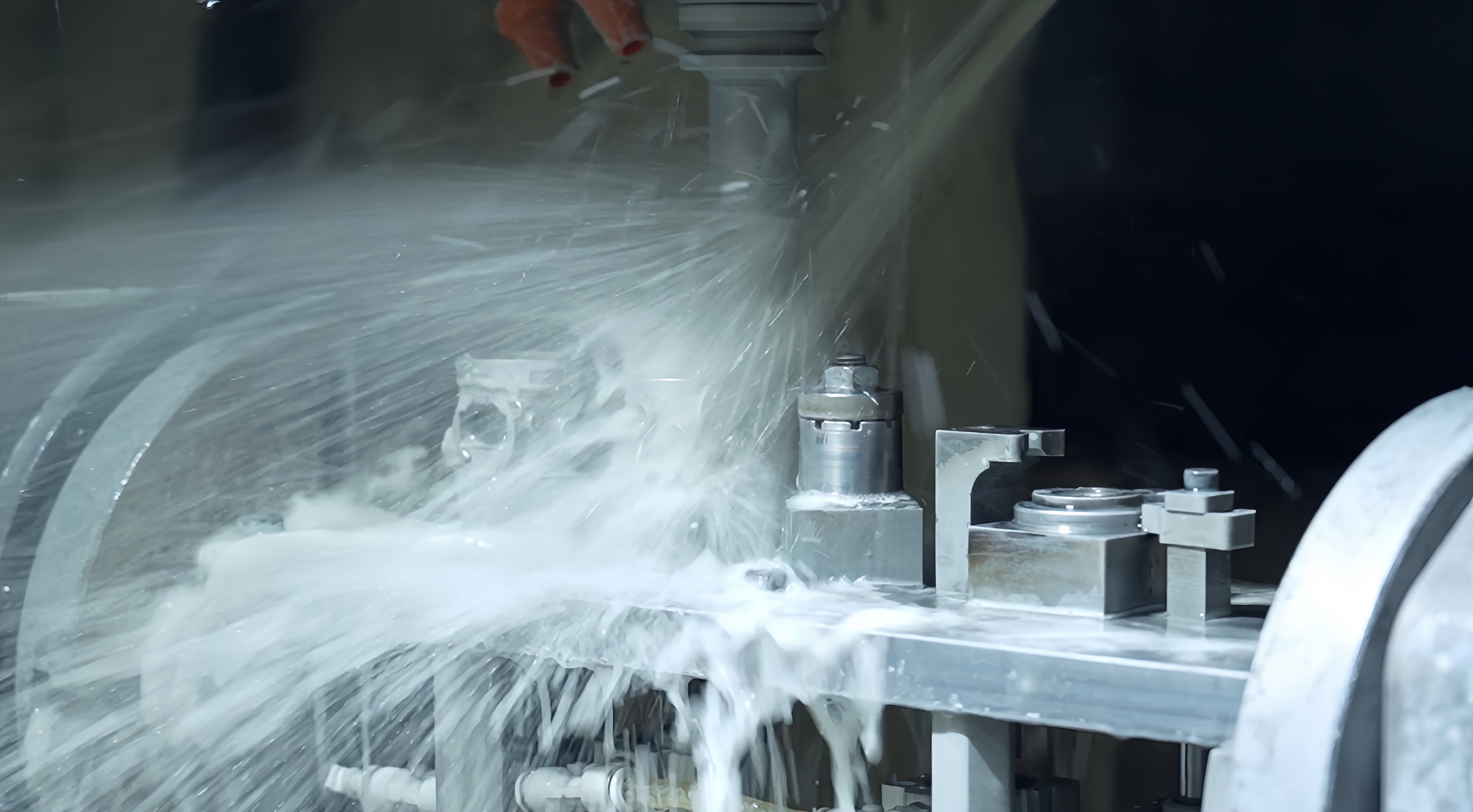
In modern manufacturing, precision and consistency are essential for producing reliable components used in industries such as automotive, aerospace, medical equipment, robotics, and industrial machinery.
Precision cnc machining has become one of the most widely used manufacturing solutions for producing custom metal parts with complex geometries, tight tolerances, and excellent repeatability.
Unlike traditional machining methods, CNC machining uses computer-controlled equipment to achieve highly accurate cutting, milling, and turning operations. This allows manufacturers to produce everything from prototypes to high-volume production parts with stable quality.
As a professional precision metal parts manufacturer, SUNPREC provides one-stop CNC machining solutions including CNC milling, cnc turning, die casting, investment casting, extrusion, sheet metal fabrication, and surface finishing services.
What Is Precision CNC Machining?
Precision CNC machining is an advanced manufacturing process that uses computer numerical control (CNC) machines to remove material from a workpiece and create customized components according to digital CAD designs.
The machining process is controlled by programmed instructions that guide cutting tools along precise paths. This enables manufacturers to achieve high dimensional accuracy and consistent production results.
Compared with conventional machining, precision CNC machining offers:
- Higher machining accuracy
- Improved production consistency
- Faster manufacturing efficiency
- Ability to produce complex designs
- Better repeatability for mass production
For industries requiring strict dimensional requirements, CNC machining provides a reliable solution for manufacturing high-performance metal components.
How Does Precision CNC Machining Work?
The CNC machining process typically includes several important stages.
1. CAD Design and Engineering Review
The process begins with a 3D CAD model or technical drawing provided by the customer.
Engineers analyze:
- Part geometry
- Material selection
- Machining requirements
- Tolerance specifications
- Production volume
At this stage, manufacturers can provide Design for Manufacturing (DFM) recommendations to improve manufacturability and reduce production costs.
2. CNC Programming
After reviewing the design, engineers convert the CAD model into CNC machine instructions.
The program controls:
- Tool movement
- Cutting speed
- Feed rate
- Machining sequence
- Tool selection
Advanced CNC systems allow multi-axis machining, enabling the production of complex components with fewer setups.
3. Material Preparation
Precision CNC machining can process various materials, including:
Metals:
- Aluminum
- Stainless steel
- Carbon steel
- Brass
- Copper
- Titanium
- Zinc alloys
Plastics:
- ABS
- POM
- Nylon
- Acrylic
- Polycarbonate
SUNPREC provides CNC machining services for multiple engineering materials to meet different performance requirements.
4. CNC Milling and Turning
The two most common CNC machining methods are CNC milling and CNC turning.
CNC Milling
CNC milling uses rotating cutting tools to remove material from a stationary workpiece.
It is suitable for producing:
- Complex shapes
- Flat surfaces
- Slots
- Holes
- Precision mechanical parts
CNC Turning
CNC turning rotates the workpiece while cutting tools remove material.
It is commonly used for:
- Shafts
- Bushings
- Cylindrical components
- Threaded parts
By combining CNC milling and turning capabilities, manufacturers can produce a wider range of custom components.
Key Advantages of Precision CNC Machining
1. High Accuracy and Tight Tolerances
One of the biggest advantages of precision CNC machining is its ability to achieve extremely tight tolerances.
Depending on equipment and design requirements, CNC machining can achieve tolerances suitable for demanding applications such as aerospace, medical devices, and automation systems.
SUNPREC provides high-precision CNC machining capabilities with tolerances reaching approximately ±0.01mm for precision components.
2. Complex Part Manufacturing
Traditional manufacturing methods may struggle with complicated designs.
CNC machining can produce:
- Complex curves
- Deep cavities
- Thin walls
- Multi-angle features
- Precision assembly components
Multi-axis CNC machines further expand design possibilities by allowing machining from multiple directions.
3. Fast Prototyping and Production Flexibility
Precision CNC machining is ideal for both prototype development and production manufacturing.
It allows engineers to:
- Quickly test product designs
- Modify components easily
- Produce small batches
- Scale production after validation
This makes CNC machining especially valuable during new product development.
4. Wide Material Compatibility
Unlike some manufacturing processes that are limited by material selection, CNC machining supports a broad range of materials.
Common applications include:
| Material | Typical Applications |
|---|---|
| Aluminum | Lightweight structural parts, electronics housings |
| Stainless Steel | Medical and industrial components |
| Brass | Electrical and precision components |
| Titanium | Aerospace and high-performance parts |
| Plastic | Prototypes and lightweight components |
Precision CNC Machining Applications
Precision CNC machining is widely used across multiple industries.
Automotive Industry
Applications include:
- Engine components
- Transmission parts
- EV components
- Custom fixtures
Aerospace Industry
Applications include:
- Aircraft components
- Drone parts
- Lightweight structural components
Medical Industry
Applications include:
- Surgical instruments
- Medical equipment parts
- Precision devices
Robotics and Automation
Applications include:
- Robot joints
- Mechanical structures
- Automation equipment components
SUNPREC supplies custom precision metal components for industries including aerospace, medical, robotics, and industrial equipment.
Precision CNC Machining vs Other Manufacturing Methods
CNC Machining vs Die Casting
CNC machining:
- Better for low and medium production volumes
- Higher dimensional accuracy
- More material flexibility
Die casting:
- Better for large-scale production
- Lower cost per part at high volumes
- Suitable for repeated complex shapes
CNC Machining vs Sheet Metal Fabrication
CNC machining:
- Creates solid precision components
- Suitable for complex 3D geometries
Sheet metal fabrication:
- Better for thin metal structures
- Common for enclosures and brackets
Choosing the right process depends on part design, production quantity, and performance requirements.
How to Choose a Precision CNC Machining Manufacturer?
When selecting a CNC machining supplier, consider the following factors:
Manufacturing Capability
A reliable supplier should provide:
- CNC milling
- CNC turning
- Multi-axis machining
- Surface finishing
- Inspection services
Quality Control
Look for manufacturers with:
- ISO-certified quality systems
- Professional inspection equipment
- Experienced engineering teams
Material and Finishing Options
A complete supplier should support:
- Multiple materials
- Custom finishes
- Prototype and production services
Engineering Support
The best cnc machining partners can provide:
- Design optimization
- Process recommendations
- Cost reduction suggestions
Why Choose SUNPREC for Precision CNC Machining?
SUNPREC provides integrated manufacturing solutions for customers requiring high-quality custom metal parts.
With capabilities covering:
- Precision CNC machining
- CNC turning
- CNC milling
- Die casting
- Investment casting
- Extrusion
- Sheet metal fabrication
- Surface finishing
SUNPREC supports customers from initial prototype development to final production manufacturing.
The company combines advanced machining technology, strict quality control, and engineering expertise to deliver reliable components for demanding industries.
Conclusion
Precision CNC machining is a critical manufacturing technology for producing accurate, complex, and reliable custom metal parts.
With advantages including high precision, material flexibility, rapid prototyping capability, and consistent production quality, CNC machining continues to play an essential role in modern manufacturing.
For companies looking for dependable custom metal component solutions, choosing an experienced CNC machining manufacturer can significantly improve product quality, production efficiency, and overall project success.
Need custom precision CNC machining services for your next project? Contact SUNPREC's engineering team for professional support and a customized manufacturing solution.