

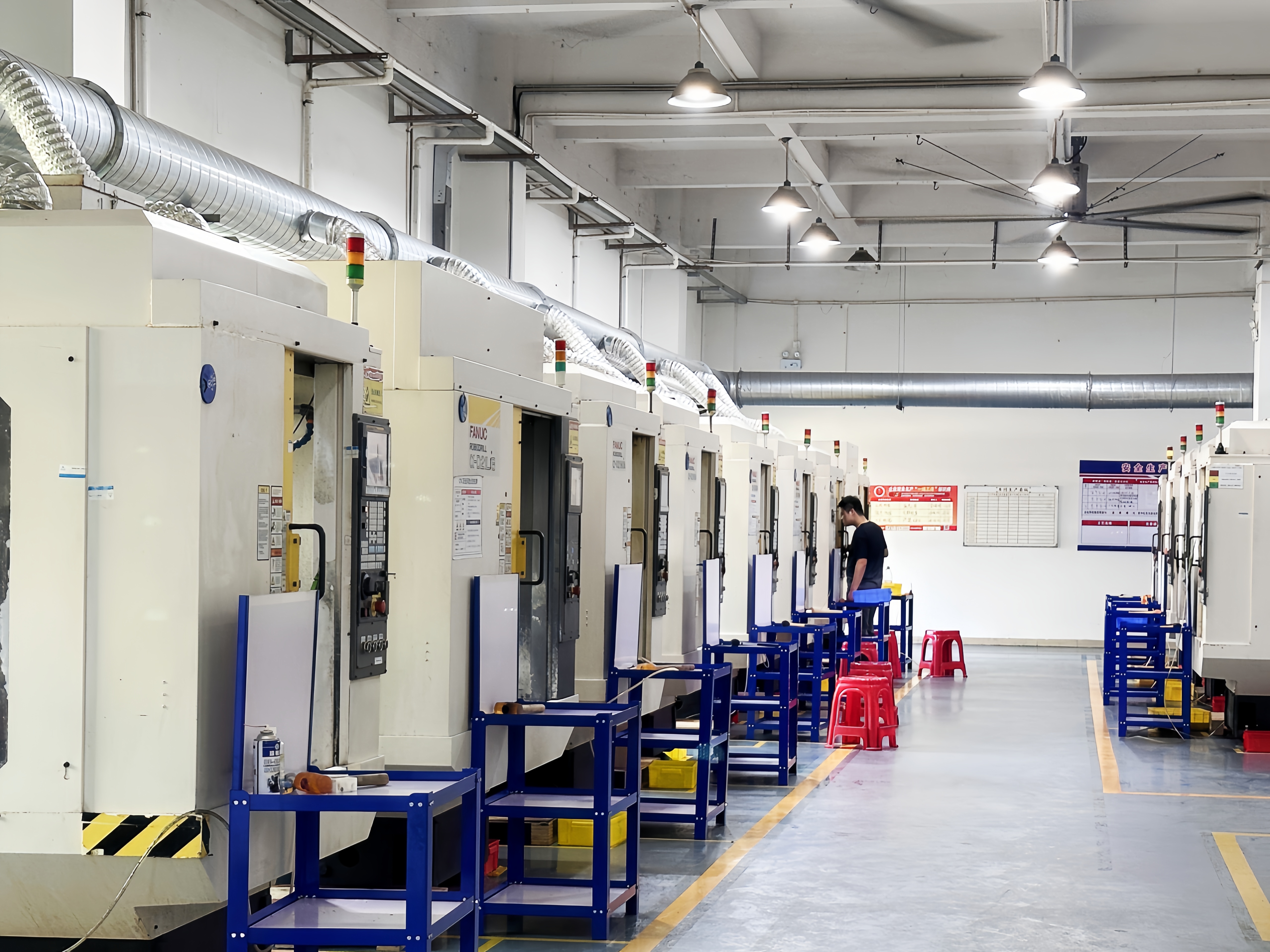
Tooling is the line on a quotation that surprises buyers most: a part that quotes beautifully at sample quantities suddenly carries a four-figure-plus one-time charge the moment volume enters the conversation. That charge is not padding — it is a steel asset that will make every subsequent part cheaper. Whether it is a good deal depends entirely on how the amortization is structured and how many parts will actually run. This article explains what tooling cost really covers, how it is spread over volume, who owns the tool at the end, and what to check before you approve it.
What "tooling" actually covers
On a metal parts quotation, the tooling line bundles several different assets, and it is worth asking which ones you are paying for:
- Production tools. die casting dies, stamping dies, extrusion dies and injection-style mold inserts — hardened steel assemblies with cavities, slides, ejector systems. These are the big numbers, and they are built to run tens or hundreds of thousands of cycles.
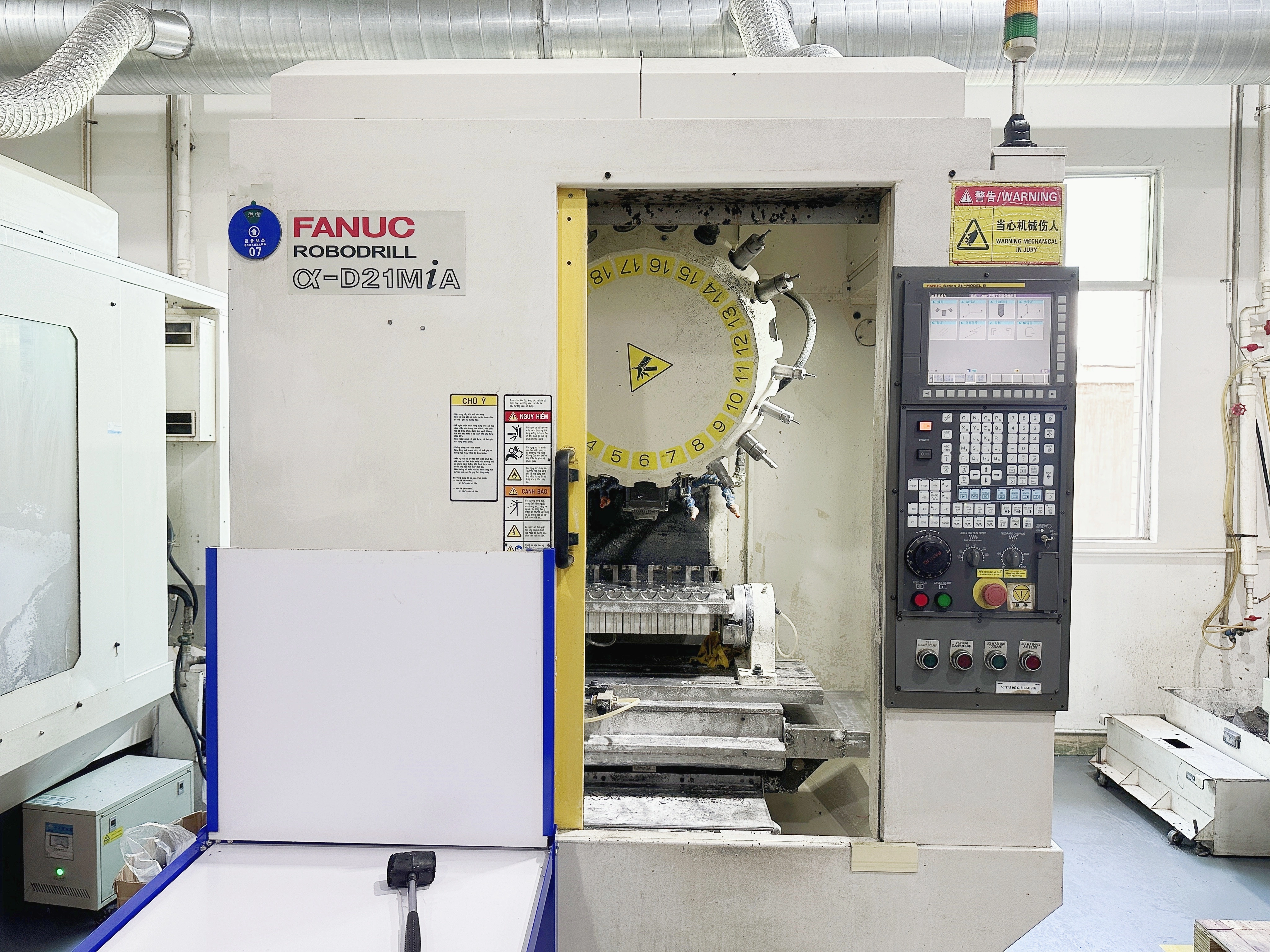
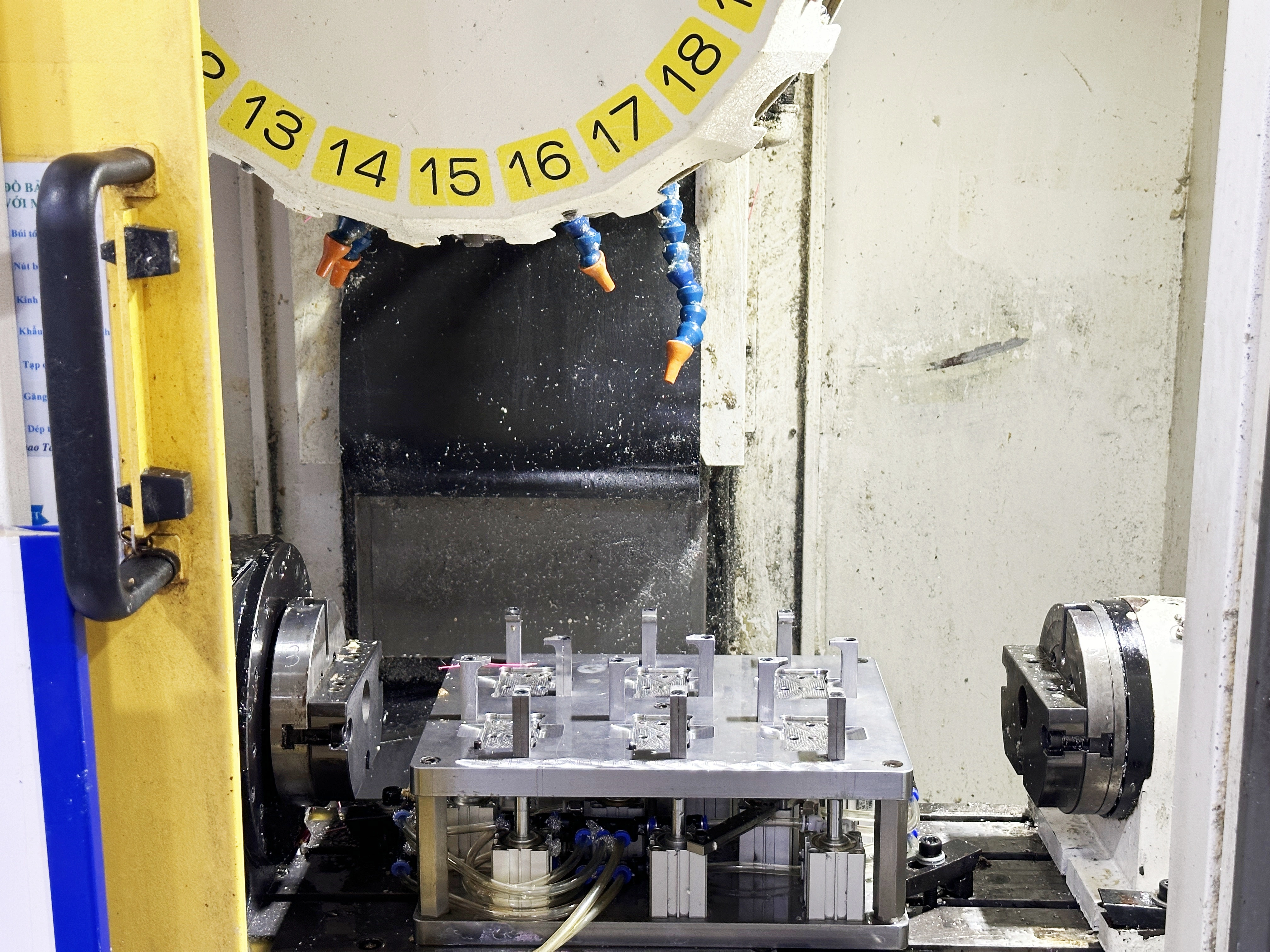
- Workholding and fixtures. Custom jigs, clamps and pallets that hold a part through its machining operations. Far cheaper than production tools, but they decide how fast and how repeatably the machining runs.
- Gauges and checking fixtures. Dedicated gauges for high-volume inspection of critical dimensions.
- Program and setup engineering. Sometimes listed as tooling, sometimes as non-recurring engineering (NRE): CAM programming, first-article development, process documentation.
The distinction matters because the assets behave differently: a die casting die is a durable, transferable asset with real residual value; a machining fixture is tied to one machine and one process route and is worth little outside your programme. Ask for the tooling charge itemised, not as one lump.
Why tooling exists as a separate line
Machining from stock has almost no tooling barrier: the same vises, cutters and CAM station serve every part. Casting and stamping are the opposite — the process is fast and cheap per part precisely because the shape is frozen into steel first. The tooling charge is the price of that freezing. This is also why the CNC machining versus die casting decision is mostly a volume question: below a few thousand pieces the tooling never pays for itself; above it, each cast part costs a fraction of a machined one.
Rule of thumb: tooling is not a cost, it is a prepayment. The question to ask is not "how much is the tool?" but "over how many parts, at what unit price, and who owns the steel at the end?"
The amortization logic, step by step
Amortization simply means spreading the one-time tooling cost across the parts it produces. Three numbers decide whether the resulting unit price is good:
- Tooling cost (T). The quoted one-time charge, including design, steel, cutting, trials and first articles.
- Expected lifetime volume (V). How many parts the tool will realistically produce over the programme — annual volume times programme years, minus obsolescence risk.
- Unit price at that volume (U). The per-part processing price the tool makes possible.
The amortized unit cost is T/V added on top of U. Two quotes with the same total unit price can hide very different structures: one may assume a large V that never materialises (leaving you paying off a tool across a volume that never came), the other a modest V with honest break-even math. When you compare quotes, rebuild that arithmetic yourself — the method is the same one used to read any metal part quote, and it sits on top of the cost blocks from machining basics.
A worked example with index numbers
Take a representative aluminium bracket, die cast then finish machined. The figures below are illustrative indices, not prices — the first scenario is set to 100 — but the relationship between them is what matters:
| Scenario | Annual volume | Unit cost index (excl. tooling) | Tooling index | Tooling per part (index) |
|---|---|---|---|---|
| Machined from stock | 500 | 100 | none | — |
| Cast + machined, tool paid upfront | 5,000 | 35–45 | 300–500 | 6–10 spread over year one |
| Same, second year | 5,000 | 35–45 | 0 | 0 |
| Cast + machined, volume shortfall | 800 | 35–45 | 300–500 | 38–63 — worse than machining |
The last row is the whole lesson: amortization only works if the volume arrives. A casting decision made on year-two economics is a good decision; the same decision made on hoped-for volumes that shrink to hundreds is how tooling gets a bad name. Ask the supplier to show the break-even volume against machining, and sense-check it against your real forecast — not the optimistic one.
Which processes carry tooling — and how much
Not every route asks for the same upfront commitment. Before comparing numbers, be clear about which tooling class each process needs:
| Route | Tooling asset | Relative upfront cost | What it buys |
|---|---|---|---|
| Die casting | Hardened die with cavities, slides and ejectors | High | Net-shape complexity at very low unit cost, tight as-cast repeatability |
| Metal stamping | Progressive or transfer die set | Medium to high | Extremely fast per-part cost on thin-gauge parts at volume |
| Extrusion | Profile die (shared across the whole profile length) | Low to medium | Constant cross-sections; the die serves every metre of the run |
| Investment casting | Wax injection die (the ceramic mould itself is single-use) | Medium | Complex geometry with no parting-line draft; the wax die sets the per-part shape |
| CNC from stock | Fixtures and jigs only | Minimal | No barrier to start; unit cost stays flat with volume |
The extrusion row is worth dwelling on because it inverts the usual intuition: an extrusion die is often the cheapest tool in the building, but it is committed to one profile. If the profile changes, the die is scrap. That makes extrusion die decisions unusually sensitive to design freeze — more so than volume. For high-volume casting programmes, our note on high-volume die casting production shows how tool structure and cavity count scale with annual quantity.
What drives the tooling number up front
Before quoting, a die or stamping tool supplier estimates cost from a handful of design features. Each of these is visible on your drawing, which means each is a chance to reduce the tooling charge before it exists:
- Number of cavities. More cavities, more steel, more cutting, more trial time — but lower unit cost at high volume. Right-size to annual volume, not to ambition.
- Slides, lifters and threads. Undercuts and side features mechanically move the price. Every slide is a mechanism that wears and needs maintenance; eliminating undercuts at the design stage (see the geometry rules in our die casting process guide) is tooling money saved before the first chip is cut.
- Parting line and draft. A parting line that snakes across a cosmetic face, or draft angles that fight the geometry, adds tool complexity. Draft is the cheapest insurance in casting; its absence is the most common cause of tool rework.
- Steel grade. Standard hot-work steel suits most aluminium programmes; premium grades buy life at high shot counts. Paying premium steel for a 20,000-shot programme is wasted money; paying standard steel for a million-shot programme is a maintenance debt.
- Prototype versus production tooling. Soft or prototype tools (including rapid alternatives) prove the design at a fraction of the price but with shorter life. For a new product, prototyping before committing to a production tool is the standard de-risking move — our prototype metal part fabrication guide covers the routes.
Tool life, maintenance and the second-year price
A tool is a wearing asset. Die casting dies live a defined number of shots before refurbishment; stamping dies need sharpening and die-section replacement; fixtures wear at clamping surfaces. Honest suppliers state expected tool life and the maintenance plan; the quote should say what happens at shot-count milestones. Two clauses to expect:
- Included maintenance. Routine cleaning, minor repair and periodic inspection within the quoted unit price for an agreed period or volume.
- Major refurbishment. Welding, re-cutting or replacing worn sections — normally a separate, quoted event, ideally forecast against shot count rather than discovered as a surprise.
Ask what the unit price does in year two: with the tool paid and maintenance routine, the second-year price should drop or hold — not silently carry amortization again. If two quotes differ because one re-amortizes and one does not, you are comparing different contracts, not different prices.
Ownership: the clause that decides your negotiating position
The most important sentence in any tooling agreement is the one that says who owns the tool. Where the buyer has paid the tooling charge (upfront or amortized), the standard expectation is buyer ownership on full payment, with the supplier holding it in custody for production. Why it matters:
- Transfer. If the programme moves to another supplier — capacity, price, or geography — a tool you own goes with you. A tool the supplier owns does not.
- Allocation. A buyer-owned tool cannot be quietly run for another customer's parts without agreement.
- Access and audits. Ownership usually carries the right to inspect the tool, see its shot-count record, and know its location.
Where the supplier funds the tool and amortizes it inside the unit price, ownership typically stays with the supplier until a contracted volume or payment milestone — that is a legitimate structure, but understand that it locks the programme to that supplier while the balance stands. Either way, get the ownership, custody, transfer and buy-out terms in writing before the purchase order, not after the first dispute.
Three ways tooling shows up in a quotation
| Structure | How it works | Watch for |
|---|---|---|
| Paid upfront | Tooling invoiced as a separate line; unit price is pure processing | Confirm ownership transfers on payment; cleanest for cost transparency |
| Amortized into unit price | Tooling recovered per part over an agreed volume; no upfront line | Ask the assumed volume and the buy-out terms; second-year price should fall |
| Supplier-funded | Supplier invests the tool against a volume commitment | Usually requires annual volume commitments and a contract period; read the exclusivity |
None of the three is wrong. What matters is that the assumptions are explicit, so the quote comparison in our quotation guide stays apples-to-apples.
Buyer checklist before approving a tooling charge
| # | Check |
|---|---|
| 1 | Tooling charge itemised: production tool vs fixtures vs gauges vs NRE |
| 2 | Break-even volume against the machining alternative, at quoted unit prices |
| 3 | Assumed amortization volume matches a real forecast, not an optimistic one |
| 4 | Number of cavities right-sized to annual volume |
| 5 | Draft angles and parting line agreed on the print before tool build |
| 6 | Steel grade matched to programme shot count |
| 7 | Expected tool life and maintenance terms stated in writing |
| 8 | Ownership, custody, transfer and buy-out clause in the PO terms |
| 9 | Second-year unit price stated (tool paid, no re-amortization) |
| 10 | Prototype step agreed for new designs before committing to production steel |
Questions we get asked
At what volume does tooling start to make sense?
It depends on part size and complexity, so treat any single number as a guess. The honest method is the break-even calculation: tooling cost divided by the saving per part. For small die cast parts the crossover often sits in the low thousands of pieces; for large, complex parts it moves higher, and for parts with heavy machining content after casting it moves lower because the casting removes so much cutting time. Ask the supplier to run the calculation for your part specifically.
Can I avoid tooling on a casting project entirely?
For real production quantities, no — the economics of casting are the tool. But you can avoid committing early: prototype by machining from stock, or use soft tooling, until the design is proven. For low volumes that never justify a tool, machining remains the right route; the trade-offs are set out in our comparison of machining versus casting.
What happens to my tool if the programme pauses?
That is what the custody clause is for. A buyer-owned tool should be stored, protected and insured by the supplier for the contract period, with the shot-count record kept current. Agree storage terms and any idling fees in the original PO, and state what notice period applies if you move the tool elsewhere.
Why do two suppliers quote tooling costs so differently for the same part?
Usually because they assumed different things: cavity counts, steel grades, tool life, or how much of the part is cast versus machined afterwards. Ask each to state the assumptions alongside the number. A lower tooling quote with a higher unit price is not automatically cheaper — run both through the same amortization arithmetic before comparing.
Send the part — we will show you the break-even
Send your drawing with annual volume. Where casting or stamping tooling beats machining for your quantity, we state the break-even volume and the amortization assumptions explicitly — and where it does not, we will quote the machining route instead.
Request a Quotation