

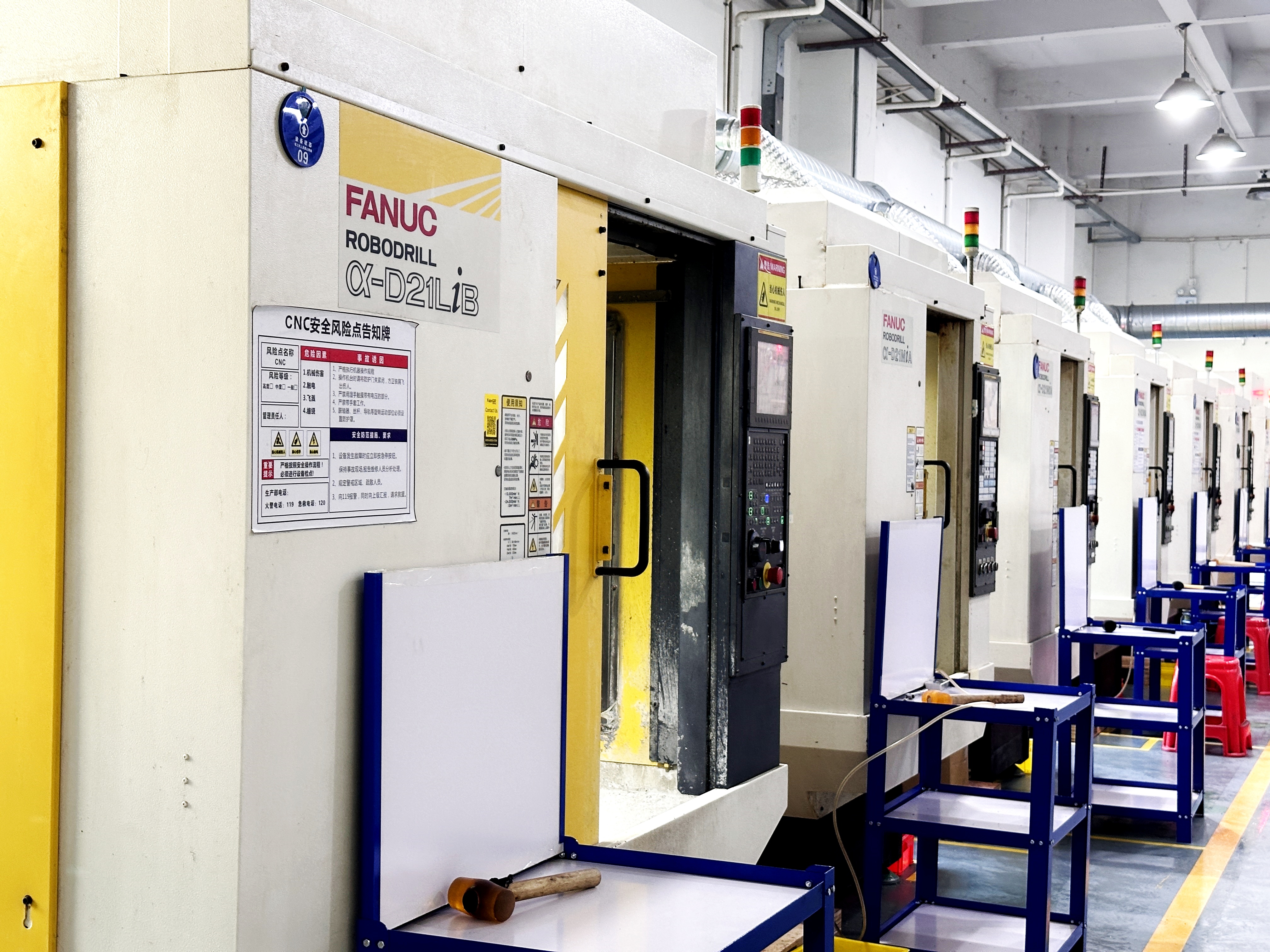
Ask three suppliers for a metal part price and one question comes back before any of them looks at the drawing: how many pieces? It is not small talk. Volume decides which cost blocks dominate the quote, which process is even on the table, and where your negotiation has leverage. Buyers who understand how unit price really behaves between 50 pieces and 500,000 pieces stop comparing quotes on the wrong axis — and stop being surprised when a price that looked high at 200 pieces is unbeatable at 20,000. This article walks through the economics of both regimes, the crossover between them, and the batch-size lever most buyers never touch.
Why quantity is the first question every supplier asks
Every metal part quote is built from the same blocks — material, machine time, setup, finishing, inspection, overhead, margin — but the blocks do not scale equally with quantity. Material and cutting time are roughly proportional to the number of pieces. Setup, programming, first-article inspection and tooling are fixed: they happen once per order no matter how many parts follow. The quoted unit price is the sum of both, divided by quantity, and that division is where all the volume behaviour comes from.
This is also why a supplier who quotes without asking volume is guessing. The same part can carry three very different price structures at 100, 5,000 and 50,000 pieces per year, and the cheapest route at one quantity can be the most expensive at another. Our guide to what CNC machining actually costs shows the block structure; this article is about how the blocks shift as quantity grows.
The unit price curve: fixed cost divided by quantity
Plot unit price against quantity for a machined part and you get a curve that falls steeply, then flattens. The steep early section is the fixed content diluting: when a two-hour setup plus programming spreads across 50 pieces, each piece carries a heavy share; across 5,000 pieces it is a rounding error. The flat tail is the variable floor — material plus cutting time plus handling — which no quantity can push lower without changing the process itself.
The practical consequence: at low volume you are buying the supplier's setup. At high volume you are buying their cycle time and machine utilization. Different assets, different negotiations, different price structures.
Two quotes at the same quantity can also sit on different points of the curve because of batch strategy, which we come back to below. And the curve's floor is exactly where process-switching decisions live: once the variable floor of machining is higher than the amortized cost of a die, casting takes over — the arithmetic is the one laid out in our tooling amortization guide.
Low-volume cost behaviour: you are paying for the changeover
Below a few hundred pieces, the quote is dominated by one-off costs:
- Setup and programming. CAM programming, fixturing, tool selection, first-article proving — typically a few hours of skilled work per part family before the first chip flies for production.
- First-article inspection. A full dimensional report on the first piece; the report effort is the same whether 10 or 10,000 pieces follow.
- Material in stock lengths or minimum order quantities. Small orders often cannot buy the exact billet size economically, so material content per part rises.
- Finishing minimums. Anodizing, plating and powder-coating lines charge minimum lot fees; on 30 parts, the finishing minimum can rival the machining itself.
This is why low-volume unit prices look aggressive to buyers who benchmark against catalogue parts or high-volume expectations. The correct mental model is that the first piece funds the changeover and every piece after gets cheaper within the batch. It is also why consolidating several low-volume orders of the same part family into one release genuinely moves the price — the setup is paid once, not three times. For new designs that are not yet frozen, machining is usually the right route at any quantity precisely because there is no tooling commitment to unwind — the trade-off against casting is set out in our machining versus die casting comparison.
High-volume cost behaviour: cycle time and utilization take over
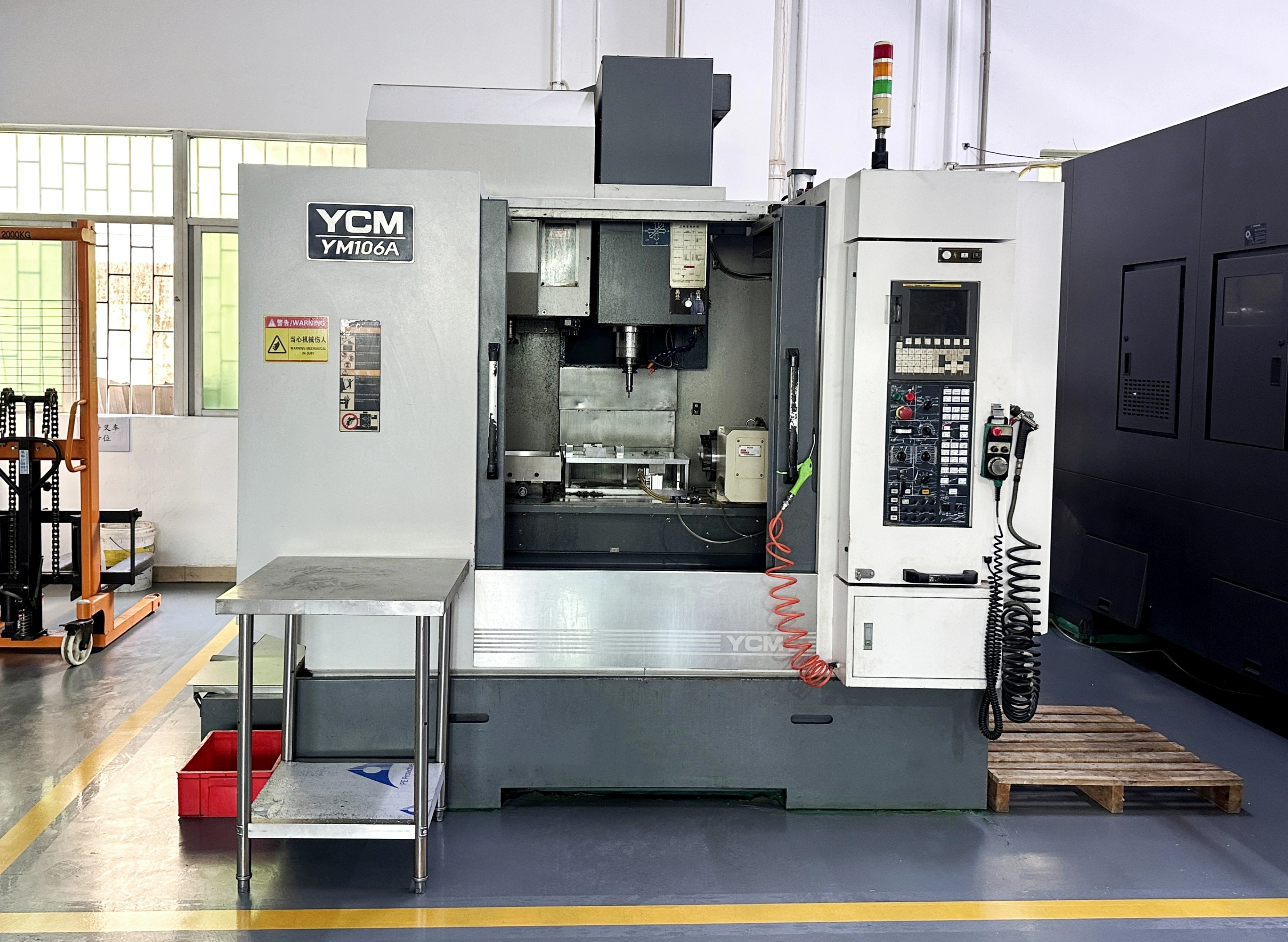
Above a few thousand pieces per year, the fixed costs have diluted and the price is decided by three things: cycle time per part, machine utilization, and unattended running. This changes what buyers should look at in a high-volume quote:
- Fixturing for speed, not just holding. At volume, suppliers invest in dedicated fixtures, pallet systems and quick-change setups so the machine cuts instead of waiting. The fixture cost is trivial against the cycle-time saving.
- Unattended operation. Bar feeders, robot tending and lights-out running move labour from per-part to per-shift. A part that can run overnight unattended prices very differently from one that needs an operator every cycle.
- Tool life engineering. Cutting parameters tuned for tool life rather than maximum speed, with scheduled tool changes, because a crash mid-batch costs more than the minutes saved.
- Process capability. Statistical control of critical dimensions replaces 100% inspection; the quote assumes a stable process, which is only honest if the supplier actually runs one.
This is also the regime where casting and stamping enter on their own economics: once annual volume justifies the die, the per-part cost drops below anything machining can reach, which is why our high-volume die casting programmes pair casting with finish machining. The switch point is not a universal number — it comes out of the break-even calculation for your specific part.
A worked comparison with index numbers
The table below compares three sourcing routes for the same aluminium part across two quantity regimes. The numbers are illustrative indices (the low-volume machined unit is set to 100), not prices — the relationships are what matter:
| Route | At 200 pcs (index) | At 10,000 pcs/yr (index) | Fixed cost to start |
|---|---|---|---|
| CNC machined from stock | 100 | 52–60 | Minimal |
| Die cast + finish machined (tool paid) | not offered — volume never pays the die | 25–35 | High |
| Die cast + finish machined (volume shortfall) | — | 45–70 if real volume is 1,500, not 10,000 | High |
Read the rows together and three lessons emerge. First, machining does get meaningfully cheaper at volume — the "CNC is only for prototypes" assumption leaves money on the table. Second, casting wins at high volume only if the volume actually arrives; the third row is the expensive one, where a die amortizes over a fraction of its planned volume and the unit cost quietly climbs back toward the machined price. Third, the crossover point is part-specific: complex geometry with heavy machining content favours casting earlier; simple thick-section parts can stay machined surprisingly far up the volume curve.
Batch size: the lever most buyers never touch
Annual volume and batch size are different decisions, and confusing them costs money. A programme with 10,000 pieces a year can still run in ten batches of 1,000 — and pay ten setups — or in one release with call-offs from stock. Between the extremes sits the real question: what does each additional batch cost in setup, versus what does holding inventory cost in cash and risk?
- Splitting releases. Frequent small batches maximise flexibility and minimise inventory, but each batch re-pays the setup. If the setup dominates, consolidate.
- Single large release. The lowest unit price, but cash is tied up in stock and any engineering change mid-stock becomes scrap risk.
- Blanket order with call-offs. Price is set once against the annual quantity (so the setup dilutes on paper across the full programme), parts are produced to a schedule, and you take delivery in call-offs. For stable designs this usually combines both advantages: high-volume pricing without a warehouse full of parts.
When you receive a quote, check which volume it assumes: annual quantity or per-release quantity. A quote on 1,000-piece releases and a quote on a 10,000-piece annual blanket are different offers, not a price disagreement.
When the process should change with volume
Volume does not just change prices within a process — it changes which process is rational. The crossover points below are order-of-magnitude guides; the honest number always comes from running the break-even on your drawing:
| Annual volume | Usually rational | Why |
|---|---|---|
| 1–500 | CNC machining from stock | No tooling barrier; setup dominates but stays small; design still flexible |
| 500–5,000 | Machining, or casting if geometry suits and programme is stable | Tooling break-even sits here for small, cast-friendly parts |
| 5,000–50,000 | Die casting / stamping with finish machining; extrusion for constant sections | Per-part cost of the die route beats the machining floor |
| 50,000+ | Dedicated tooling, multi-cavity dies, automated cells | Utilization and automation dominate; every second of cycle time is money |
Extrusion deserves its own note: for constant cross-sections it behaves unusually, because the die is cheap and serves every metre — see the process table in our tooling cost guide. And where a design is not yet frozen, none of these thresholds should trigger tooling yet; the standard sequence is to prove the part machined first, as covered in our prototype fabrication guide.

Quality and risk shift with volume as well
The cost conversation is not only about unit price. Quality regime and risk profile change with quantity, and they should change what you ask for:
- At low volume, expect full first-article inspection and often 100% checks of critical dimensions. The per-part quality cost is high but the exposure is small — a dimensional escape affects dozens of parts, not thousands.
- At high volume, sampling plans and statistical process control replace 100% inspection, and the quote gets cheaper because of it. But your exposure concentrates: a process drift that survives a sampling plan ships thousands of times. Ask which dimensions are statistically controlled, what the reaction plan is, and how capability is reported over the programme.
- Design freeze matters more at volume. A change order at 200 pieces costs a setup; the same change with 40,000 pieces of committed stock, or a die in the building, costs a die modification and scrap. Freeze the print before the volume decision, using the checks in our design-to-cost guide.
How to read a volume-dependent quotation
Armed with the curve, a volume-based quote can be read in about five minutes:
- Confirm the basis. Annual quantity, per-release quantity, or blanket order? The three are different contracts.
- Isolate the fixed content. Ask for setup, programming and first-article costs separately — the method is the same one used to read any metal part quote.
- Compute your own marginal price. (Unit price × quantity + fixed costs) ÷ quantity tells you what the next batch would actually cost to add.
- Ask where the floor is. At what quantity does this price stop falling, and what would it take to go lower — batch consolidation, fixturing investment, or a process switch?
- Stress-test the volume. Re-run the numbers at 70% of forecast volume. If the route only works at 100% of plan, it is a bet, not a price.
Buyer checklist: before you commit a volume
| # | Check |
|---|---|
| 1 | Quote basis stated: annual quantity vs per-release quantity |
| 2 | Setup, programming and FAI costs itemised separately |
| 3 | Unit price curve shown at 2–3 quantity points, not a single number |
| 4 | Break-even volume calculated if a die route is proposed |
| 5 | Break-even re-checked at 70% of forecast volume |
| 6 | Batch strategy agreed: consolidated releases vs blanket with call-offs |
| 7 | Design frozen before tooling commitment; change-order terms understood |
| 8 | Quality regime matched to volume: FAI at low volume, SPC evidence at high volume |
| 9 | Second-year price stated for amortized tooling (no silent re-amortization) |
| 10 | Finishing minimums checked against low-volume batch sizes |
Questions we get asked
What is the minimum quantity worth quoting?
There is no floor that applies to every part — we quote single pieces for spares and prototypes regularly. What changes is the price structure: below roughly a hundred pieces, the setup and first-article work dominate the unit price, so it is worth checking whether several needs can ship in one batch, or whether standard stock sizes can replace custom dimensions to cut material cost.
At what volume should I switch from machining to die casting?
The honest answer comes from your part, not a rule of thumb: divide the tooling quote by the per-part saving casting offers against the machined price, and compare that break-even volume with your realistic annual forecast — realistic, not optimistic. For small aluminium parts the crossover often sits in the low thousands of pieces per year; heavy machining content after casting moves it lower, because casting removes so much cutting time.
Can I get high-volume pricing without committing to high volume upfront?
A blanket order with scheduled call-offs is the standard instrument: the price is set against the annual programme quantity, parts are produced to your release schedule, and inventory stays at the factory until called. Suppliers accept it because the programme is committed; buyers like it because cash is not buried in stock. What makes it work is a frozen design — the commitment is real on both sides.
Why is my small-batch re-order more expensive per piece than the original batch?
Almost always because the fixed costs returned. If the first order amortized programming, fixturing and first-article work across a large quantity and the re-order is a small batch, the per-piece share of those costs rises. Asking the supplier to hold the program, fixtures and inspection records on file — and quoting repeat orders against that saved setup — usually narrows the gap substantially.
Send the drawing and the real volume — we will show both routes
Send your part with annual quantity and release pattern. We quote the machining route, and where a casting or stamping route beats it at your volume, we show the break-even calculation and the assumptions behind it — so the volume decision is yours to make with numbers, not guesses.
Request a Quotation