

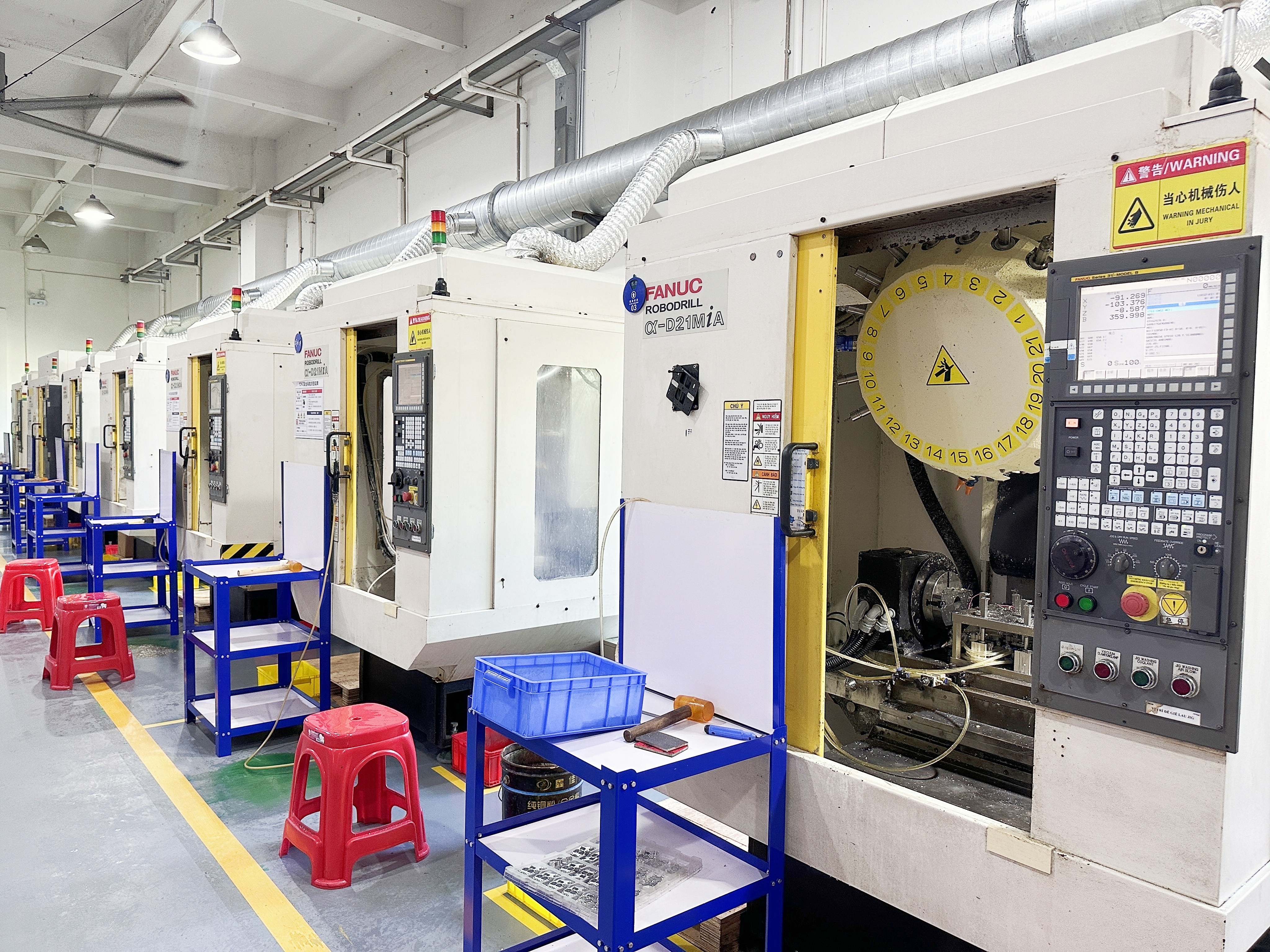
Send the same aluminium bracket drawing to nine industries and you will get back nine different questionnaires. Nothing about the geometry changes; the tolerance block barely moves. What changes is what the part has to prove — and that is where most sourcing problems start.
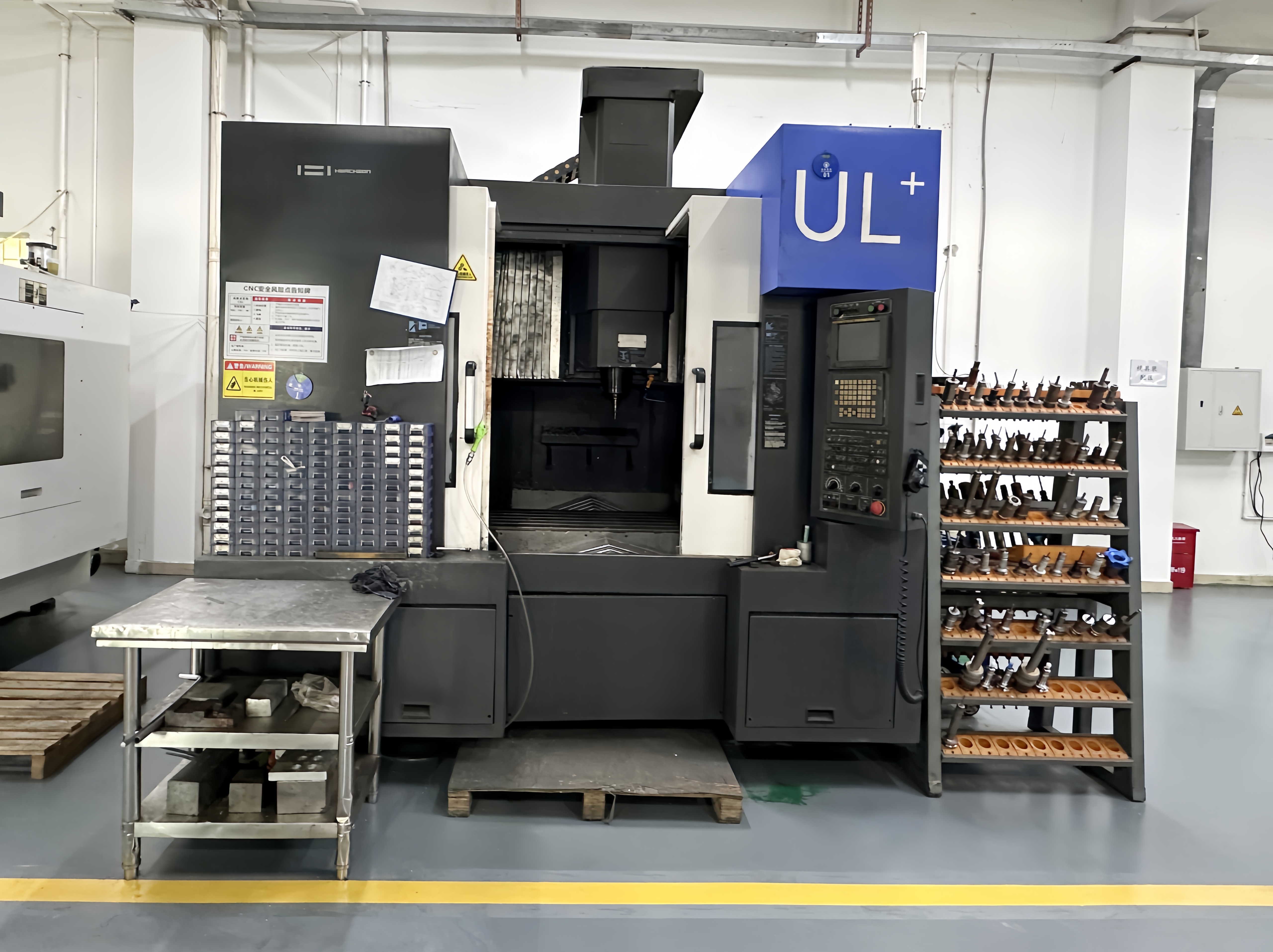
Use this page two ways. Scan the sector summaries to see where your own programme's demands come from, then follow the link for the sector where your product ships — each one covers the acceptance criteria, the common drawing mistakes and the documentation for that industry specifically.
The four variables that change with every industry
Strip the sector language away and four things actually move:
| Variable | How it changes | Where it bites hardest |
|---|---|---|
| Tolerance | Not the number on the block, but which features carry it — sealing faces, optical datums, press fits, wear surfaces | Semiconductor, medical, robotics |
| Material | From commercial-grade stock to certified heats with full chemistry and mechanicals | Aerospace, rail, oil and gas |
| Documentation | From a packing note to first article reports, material certificates and lot traceability on every delivery | Rail, medical, aerospace |
| Volume and lifecycle | From one-offs to six-figure annual volumes — and from no spares to a ten-year spare parts obligation | Automotive, rail, new energy |
Nine sectors, condensed
Automotive
Volumes and repeatability dominate. A part that is right in the sample batch but drifts in month three is the failure mode, so process control evidence matters as much as the parts themselves. Price pressure is permanent, which pushes design toward cast or stamped forms with machining reserved for functional faces. Our note on machining automotive components covers what buyers actually audit.
Medical devices
Cleanability, surface finish and material paperwork outrank raw precision. Threads and cavities that trap contaminants, and finishes that cannot survive repeated cleaning cycles, are the usual rejection reasons — not an out-of-tolerance dimension. See machining for medical devices.
Aerospace
Traceability end to end: certified material, first article, revision control, and a paper trail that survives an audit years later. Weight drives material choices toward aluminium and titanium alloys, and every substitution is a documented event. More in machining aerospace components.
New energy
Battery, inverter and charging hardware mixes thermal management, sealing and aggressive volume ramps. Designs change fast, so a supplier who can revise a programme without resetting the whole process earns their place. New energy metal parts has the detail.
Semiconductor
Flatness, cleanliness and particle behaviour matter as much as dimensions; vacuum-compatible materials and low-outgassing finishes come with their own rules. See semiconductor equipment components.
Oil and gas
Corrosion-resistant alloys, pressure integrity and documentation for third-party inspection dominate. The part is often simpler than in other sectors; the material and the paperwork are not. Oil and gas components.
Rail
A traceability chain from heat number to installed part, batch consistency that has to survive a decade of spare parts orders, and material fire-performance rules where they apply. Rail transit components walks through the full chain.
Robotics and automation
Accuracy is lost at interfaces: mounting face flatness, perpendicularity, dowel fit. The machined part decides whether the robot meets its published repeatability after installation. Robotics and automation parts.
Instrumentation
Appearance consistency across batches and assembly fit at the hundredth unit are the acceptance criteria; colour-matched finishes and finish-aware tolerancing decide repeat orders. Instrument and test equipment parts.
What never changes between industries
- Material that can be traced to a source, whatever the certificate level.
- A first article before a batch runs, and a defined change-notification process after it.
- Measurement with calibrated equipment, recorded as values rather than pass/fail.
- A supplier who says which parts of a requirement they will meet with their own process and which involve a partner — agreed at quotation, not discovered on delivery.
These four are the backbone of the ISO 9001-style quality system that sits behind every sector's requirements. Industries differ in how far they push each element and what evidence they expect — not in the underlying logic. That is why the four questions below can be reused across sectors almost unchanged, and why a supplier's answers to them tell you more than any logo on a website.
Four questions that settle most of the brief
- Which features are functional and which are cosmetic? They are controlled by different mechanisms and mixing them is the most common drawing error.
- What documentation must travel with each delivery — and who assembles it?
- What is the lifetime volume, including spares? It changes the economic process, not just the price.
- Which standards does the end product carry, and which of them actually apply to the machined part's scope of supply?
Practical rule: if your product spans several industries — a controller sold into both medical and industrial markets, for example — design and source to the strictest requirement of the set. Retrofitting traceability or finish control after launch costs far more than specifying it from the start.

Choosing the process the same way the industry would
| Process | Strongest fit | Typical sectors |
|---|---|---|
| CNC machining | Precision features, low-to-mid volumes, fast revisions | All nine |
| Die casting | Complex thin-wall enclosures at volume | Automotive, new energy, instrumentation |
| Investment casting | Complex geometry in steels and cobalt/nickel alloys | Medical, oil and gas, aerospace |
| Extrusion | Constant-section profiles and heat sinks | New energy, instrumentation, industrial |
| Sheet metal fabrication | Enclosures, chassis and brackets | All nine |
| Stamping | Flat and formed parts at high volume | Automotive, new energy |
Questions we get asked
Which industries do you supply?
We manufacture machined and cast hardware components for programmes in automotive, medical, new energy, semiconductor, oil and gas, rail, robotics and automation, and instrumentation. What we can hold on a specific drawing is confirmed at quotation.
Our product is sold into two industries with different expectations. Which spec wins?
The stricter one, applied from the start. It is normally cheaper to satisfy the tougher requirement on every unit than to run two variants, and it removes the risk of a part shipping to the wrong market.
Do documentation requirements really differ that much?
Yes. The same part can ship with a packing note in one industry and a first article plus material certificates in another. Agreeing the document list at quotation is what prevents delivery disputes later.
Can one supplier cover several of these processes?
That is usually the point: where casting, machining and finishing share one quality system, traceability follows the part across the chain instead of breaking at each handover.
Not sure which requirements apply to your part?
Send the drawing and tell us which industry it ships into. We will tell you which requirements drive the process, what documentation comes with each delivery, and quote against the drawing revision.
Start your enquiry