


A quotation looks like a single number, but it is really a compressed description of a manufacturing plan: which machines, which stock, how many setups, what inspection, and whose schedule. Two suppliers looking at the same PDF are usually pricing two different plans — which is why comparing quotes on the total line alone tells you very little. This article walks through how a metal part quote is actually built, so you can see the plan behind the price and compare quotes on what matters.
What happens between your RFQ and the quoted price
Inside a machining or casting supplier, an RFQ passes through a short but decisive sequence:
- Drawing review. An engineer reads the print for feasibility: tolerances against machine capability, wall thicknesses, thread callouts, finish requirements, and anything ambiguous that needs a question rather than an assumption.
- Process routing. The part is assigned a route — machining from stock, or casting then finishing, or sheet metal fabrication — and a machine type, a number of setups, and a stock form.
- Time estimation. Cycle time per part is estimated from the geometry and tolerances, then loaded with the shop's effective rate.
- Purchased items. Material (plus certification level), outsourced finishing, and bought-in components are priced.
- Overhead, margin, review. Setup and non-recurring costs are spread, margin is applied, and a second person usually reviews the number before it leaves.
Every step contains judgment calls, and each judgment becomes an assumption baked into your price. A buyer who can read those assumptions can compare quotes properly — and can also tell a carefully-built quote from a guesses-in-an-email quote.
The seven variables that move the number
Almost every difference between quotes, and every question a supplier asks, traces back to seven variables. If your RFQ states them, the quote comes back faster and closer to final.
| Variable | How it moves the price | What to state in the RFQ |
|---|---|---|
| Quantity & annual volume | Sets how fixed costs are spread and which process is economic | Order quantity, expected annual usage, likely repeat pattern |
| Material specification | Alloy and temper set stock cost; certification adds premium | Full spec (e.g. 6061-T6), certificate requirement, acceptable substitutions |
| Tolerances | Tight features add passes, gauging, and sometimes a second process | Which features are truly critical, not just the tightest number |
| Surface finish | Each finishing step is a purchased batch with minimums and masking | Finish type, thickness or colour, which faces are cosmetic |
| Inspection & documents | CMM scope and report formats are real hours | Required reports (dimensional, material, CoC) and sampling expectations |
| Delivery & lead time | Compressed schedules buy overtime, air freight or split batches | First delivery date, ongoing cadence, whether dates are firm |
| Commercial terms | Incoterms, payment terms and currency all live inside the unit price | Destination, Incoterm, payment expectation |
A quote built on unstated versions of these seven is not wrong — it is just a quote of a part you did not describe. The more precisely the RFQ pins them down, the fewer surprises sit between quotation and first delivery.
Process routing: the same drawing, three different prices
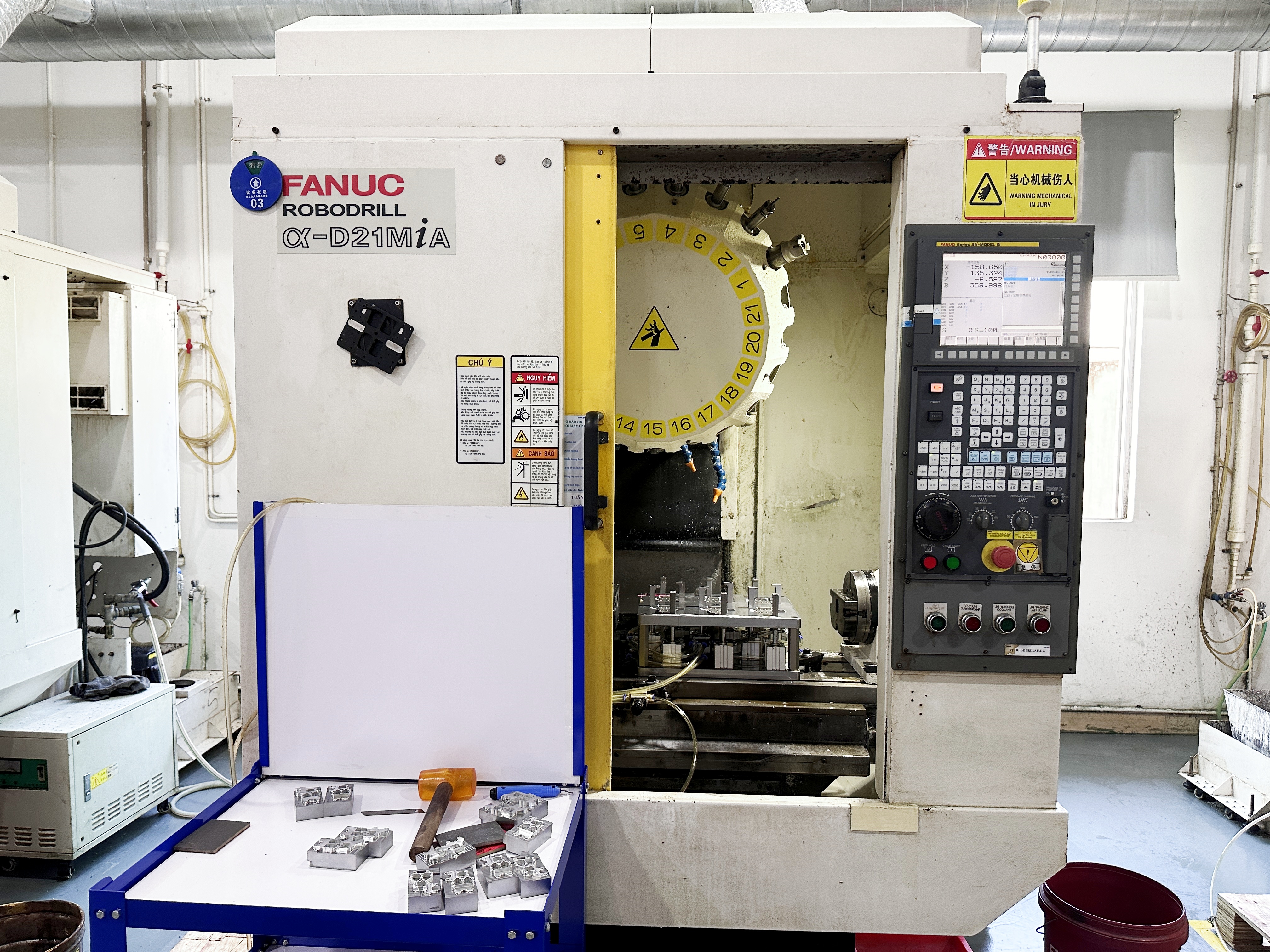
The most consequential decision inside a quote is invisible on it: the routing. A bracket with a pocket and four bores can be made at least three ways — machined entirely from plate, cast to near-net shape and then finish-machined, or fabricated from sheet with machined bosses bonded or fastened on (the routes behind our die casting and sheet metal fabrication capabilities). Each route produces a different unit price, a different tooling charge, and a different cost curve as quantity grows.
Routing is also why a supplier's question ("could this pocket be opened up?" or "is this bore truly positional-critical?") is not noise — it is routing selection in progress. A supplier who asks nothing is choosing a route silently, and you are paying for the choice without seeing it. If a quote looks expensive, ask what route it assumes and whether a different stock form or process would change it. Our article on choosing between machining and die casting shows how dramatically that one routing decision reshapes the economics.
Quantity breaks: where the staircase bends
Unit price falls with quantity, but not smoothly — it bends at the points where the supplier changes plan. A typical profile looks like this:
| Quantity band | What changes inside the quote |
|---|---|
| 1–10 | Engineering hours dominate; supplier prices "make one good part" and carries risk on scrap |
| 25–100 | Setup amortises; cycle time and material become the story; first quantity break usually lands here |
| 250–1,000 | Fixture investment becomes worthwhile; batch finishing prices improve; scrap allowance shrinks |
| 5,000+ | Alternative routings (casting, stamping, dedicated fixtures) start beating the machined route outright |
Two practical consequences. First, the useful question is not "what is your price at 1,000?" but "at what quantity does the plan change?" — the bend points tell you where real money moves. Second, state your annual volume even when the order is small: a supplier planning for 5,000 units a year routes the part differently from one quoting a one-off, and often the difference favours you at the smaller order too. The cost mechanics behind these bends are unpacked in our breakdown of what CNC machining actually costs.
Non-recurring costs: the lines that do not repeat
Separate from the unit price sit the one-time charges, and how they appear on a quote matters as much as their size:
- Programming and proving. CAM work and first-piece validation, charged once per revision.
- Fixtures and special tooling. Dedicated jigs and non-standard cutters, either billed outright or amortised into the unit price across an agreed quantity.
- First article inspection. A documented first article report, charged per drawing revision.
Ask any supplier to separate these from the unit price, even if you end up accepting an amortised structure. A quote that hides a fixture inside "the price" makes every future quantity negotiation opaque — you cannot see what falls away if volume doubles, and you do not know whether the fixture is yours to move if you change suppliers. The same applies to reorders: if revision two arrives six months later, which charges recur and which do not? That answer should be in the quote, not discovered on the invoice.
Three ways quotes are structured
Beyond the numbers, quotes differ in structure, and the structure shapes every later conversation about price:
- Fixed price per order. The commonest model: a firm unit price at a stated quantity, valid for a period. Simple to compare, but every quantity or drawing change reopens the quotation.
- Framework price with call-offs. One quotation covers an annual volume; you release batches against it as needed. Better unit prices and stable planning for both sides, but it needs a trustworthy volume forecast — a framework built on an inflated forecast usually renegotiates painfully.
- Open-book or cost-plus. The supplier shows material, hours and margin separately. Rarer, and it demands more from the buyer, but it removes most of the guesswork from change management: when the drawing moves, you see exactly which line moves.
Knowing which structure a quote uses prevents a common mismatch: comparing a framework price against a one-off fixed price, or expecting call-off flexibility from a quote that was priced for a single release. If your volumes are recurring, say so in the RFQ and ask which structure the supplier would price on — the answer is often the difference between a tolerable price and a good one.
Inspection, documents and the scope behind them

Quality requirements are quoted as scope. Full CMM on every part, sampling plans, gauge-only checks, and report formats each carry different hours, and a quote that does not state the scope has chosen one for you. Tolerances interact directly with this: features held near what the process can comfortably deliver need in-process measurement, which is why tolerance and inspection should be read together, as our note on what CNC accuracy really means explains.
The practical move is to nominate which dimensions are critical and agree how they are verified, rather than leaving "inspect everything" in the RFQ. The questions worth settling before the purchase order — which documents, what sampling, who keeps records — are the same ones listed in our guide to the questions to ask a metal parts manufacturer before committing.
The lines hiding outside the unit price
Buyers compare unit prices and miss the commercial wrapper around them. Before accepting any number, locate each of these:
- Validity. How long the price holds — material markets move, and so do quotes.
- Incoterms and freight. Ex-works and DAP quotes can differ by the whole shipping leg.
- Payment terms. Terms are priced in; longer terms sometimes cost points.
- Currency. Which currency, and who carries exchange movement.
- Packaging. Export-grade packing for precision parts is a real line, especially for finished surfaces.
- Expediting. What a compressed lead time adds, and whether it is a split batch or overtime.
- MOQ effects. Small orders sometimes carry minimum charges that a larger consolidated order would erase.
None of these are tricks; they are ordinary business terms. The problem is only when they are unstated and two quotes are compared as if they matched.
What to send so the quote comes back fast — and comparable
A complete RFQ does two jobs at once: it gets you a firmer price, and it forces every supplier to quote the same job. Before sending, check your package against this list:
- 2D drawing with revision number, plus 3D model if available
- Full material specification, including certificate requirement
- Order quantity and expected annual volume
- Surface finish specification per face, with cosmetic faces identified
- Critical dimensions nominated, with the rest at standard tolerance
- Required documents: dimensional report, material certificate, CoC
- Delivery date and ongoing cadence
- Destination port or city, Incoterm expectation, and target unit-price band if you have one
Suppliers notice the difference. A complete RFQ usually comes back with fewer assumptions, fewer questions — or better questions — and a price that survives contact with the purchase order. Our checklist on choosing a CNC machining manufacturer extends this to evaluating the supplier behind the quote.
Five questions to put to every quote
When two or three quotes sit in front of you, put the same five questions to each supplier before comparing totals:
- What route does this price assume? Stock form, machine class, number of setups.
- What is included in inspection? Which dimensions, on how many parts, with which reports.
- Which charges are one-time, and do they recur on reorders?
- What would change the price? Quantity bands, material substitutions, relaxed tolerances.
- What assumptions would you revisit if the design changed? This reveals how much engineering judgement is priced in.
The answers turn a number into a plan. A supplier who answers them quickly and specifically has already done the engineering; a supplier who answers vaguely has quoted from the unit price backwards. Either way, you learn more from five questions than from one more round of discounts — and the conversation itself is the fastest screen for whether this is a supplier worth a trial order.
Questions buyers ask about quotations
Why does the supplier keep asking questions before quoting?
Because every unanswered question becomes an assumption, and every assumption becomes either a padded price or a later dispute. A supplier asking about stock form, tolerances and finish scope is building a quote of your part, not of a statistical average.
Can I get a useful quote from a photo or a sample part?
For a budget range, sometimes. For a firm price, no — tolerances, finishes and critical features are invisible in a photo, and they are exactly what the price is built from. Send the drawing; the number will be tighter and it will hold.
Why is the quote for my repeat order different from last time?
Usually material markets, quantity changes, a drawing revision, exchange movement, or a change in the supplier's own load. Ask which — the answer is normally short, and it tells you whether to negotiate, split the order, or lock a longer-term price.
Should I share my target price with the supplier?
Sharing a realistic target saves quotation rounds and lets the supplier adjust routing or scope to meet it honestly. Sharing an unrealistic one just ends the conversation early. State it as a target with the basis for it, not as an ultimatum.
Send the drawing, get the plan behind the price
Send us your part with quantity and annual volume. Our quotation states its routing, inspection scope and one-time charges separately, so you can compare it against any other quote line by line.
Request a Quotation