

Modern vehicles are built from thousands of precision metal components, and each one has to meet demanding requirements: dimensional accuracy, repeatability across production batches, mechanical strength, durability, weight targets, corrosion resistance, and consistent quality. Automotive OEMs, Tier 1 and Tier 2 suppliers, and EV manufacturers all depend on manufacturing processes that can hold these requirements while remaining practical in cost and lead time.
cnc machining for automotive parts plays a central role in that landscape. It can produce prototypes, precision components, customized parts, and secondary-machined features, and it adapts quickly to design changes during development. At the same time, the most appropriate manufacturing process always depends on the component's geometry, material, production volume, and required tolerances — which is what this guide sets out to explain.
The sections below cover where CNC machining fits in an automotive program, which components and materials are commonly involved, how prototyping and production volumes change the picture, and how tolerances, quality control, and surface finishing come together. The goal is practical: help engineers and buyers decide when automotive CNC machining is the right choice, and when it should be combined with another process.
Why Is CNC Machining Used for Automotive Parts?
Precision
Many automotive features require strict dimensional control, including mounting surfaces, holes, shafts, threads, bearing seats, and mating surfaces. Subtractive machining generates these features directly from solid stock under programmed control, which makes it well suited to components where position and fit are critical.
Repeatability
Automotive production depends on stable batch-to-batch consistency. Machining supports this through controlled cutting parameters, tool management, scheduled inspection, and documented process control — so parts produced weeks apart still assemble the same way.
Complex Geometries
CNC machining handles pockets, holes, slots, contours, threads, and complex 3D surfaces that would be difficult to produce by other means.
Material Flexibility
A single machining center can work across aluminum, steel, stainless steel, brass, copper, titanium, magnesium and zinc alloys, and engineering plastics — useful when one vehicle program spans many material families.
Prototyping Flexibility
CNC machining does not require the dedicated production tooling that die casting does, which makes it valuable during development, when engineers need functional parts before committing to production tooling. See this guide to precision CNC machining for a broader process overview.
What Automotive Parts Can Be Made with CNC Machining?
Typical automotive applications include the following categories.
Engine Components
Engine brackets, mounting components, covers, housings, and precision fittings frequently involve machined features where flatness, bore accuracy, or thread quality matter.
Transmission Components
Transmission housings, shafts, bushings, mounting components, and precision interfaces often rely on machining for critical surfaces and fits.
Suspension and Steering Components
Brackets, mounting components, and suspension- or steering-related precision parts can be machined where geometry and dimensional control are demanding. SUNPREC's site lists automotive engine, transmission, control arm, knuckle, and body structure among its automotive industry applications.
EV Components
Electric vehicles introduce battery-related components, motor housings, cooling components, structural brackets, connectors, and mounting components — many of which need tight tolerances, sealing surfaces, or good thermal performance.
Automotive Electronics and Sensor Components
Sensor housings, connectors, mounting brackets, electronic enclosures, and heat dissipation components are common machined parts in modern vehicles.
Interior and Exterior Components
Brackets, mounting parts, structural components, and decorative metal components round out the picture — often produced in smaller volumes where machining is efficient.
Across all of these categories, the choice of CNC machining for automotive parts is driven by three factors: whether the geometry needs machined accuracy, whether the material is practical to cut, and whether the production volume justifies machining versus a dedicated forming process. Parts with critical machined features or modest volumes are strong candidates; parts that will run in very high numbers with simple geometry are usually formed first and machined second.
Material choice for automotive components balances mechanical performance, weight, corrosion resistance, machinability, and cost. The most common families are summarized below.
Common Materials for CNC Machined Automotive Parts
None of these materials is universally best. The right grade depends on the load case, the environment, the required finish, and the production volume — which is why material selection should happen alongside process selection rather than after it.
Aluminum
Aluminum offers low weight, good machinability, corrosion resistance, a strong strength-to-weight ratio, and good thermal performance. It suits housings, brackets, heat management components, and structural parts, and is the most common machined automotive material.
Steel
Steel can be useful where higher strength, durability, or wear resistance is required, such as load-bearing brackets and structural hardware.
Stainless Steel
Stainless steel adds corrosion resistance and durability, and is often chosen for harsh environments or components that must retain appearance over time.
Brass and Copper
Brass and copper combine excellent electrical and thermal conductivity with good machinability, making them suitable for connectors, electrical components, and thermal components.
Titanium
Titanium offers a high strength-to-weight ratio and corrosion resistance for specialized applications. It involves higher material and machining costs, so it should be selected when its performance advantages justify the additional cost.
CNC Machining Processes Used for Automotive Parts
Automotive components are produced by several complementary machining operations, often combined on a single part.
CNC Milling
Milling suits brackets, housings, mounting plates, pockets, and complex surfaces, cutting in multiple directions from a secured workpiece.
cnc turning
Turning is the natural process for shafts, bushings, pins, cylindrical components, and threaded components, where features share a rotational axis. SUNPREC's CNC turning services cover both conventional and complex axial parts.
Multi-Axis CNC Machining
3-, 4-, and 5-axis machining handle complex geometries and multiple orientations, reducing setups and improving access to difficult features. Multi-axis machining is often the practical answer for parts combining several angled or curved features.
Drilling and Threading
Many automotive parts require precise holes and threaded features, produced as dedicated operations or integrated into a milling or turning cycle.
Secondary CNC Machining
Die-cast or otherwise formed automotive parts frequently require secondary CNC machining to finish critical features that cannot be held reliably as-formed. This is where machining and casting support each other rather than compete.
CNC Machining for Automotive Prototypes
During vehicle development, engineers need real parts to validate concepts long before production tooling exists. CNC machining serves concept validation, functional prototypes, fit and assembly testing, and engineering validation, and it lets designers revise a CAD model without cutting a new die for every iteration. The typical path is prototype → testing → design revision → production, with machining providing the flexibility in the early stages. Because no casting die or stamping tool is required, prototype lead times are driven mainly by machining and inspection capacity, and test parts can be reworked or re-cut as the design evolves. For a closer look at this stage, see prototype metal part fabrication.
CNC Machining for Low-Volume and Production Automotive Parts
Low-Volume Production
Machining is well suited to specialty vehicles, replacement components, engineering programs, initial production, and customized components, where volumes do not justify dedicated tooling.
Medium-Volume Production
At medium volumes, the focus shifts to cycle time, tool life, machine utilization, automation, and inspection — factors that determine whether machining stays economical.
High-Volume Production
CNC machining is not unsuitable for high volumes — it remains valuable for critical or complex features. But high-volume automotive part production typically combines machining with die casting, stamping, extrusion, forging, or injection molding, followed by secondary CNC machining.
CNC Machining vs Die Casting for Automotive Parts
| Factor | CNC Machining | Die Casting |
|---|---|---|
| Prototypes | Excellent | Less suitable |
| Tooling investment | Low | High |
| Design changes | Flexible | More difficult after tooling |
| Complex machined features | Excellent | Often requires secondary machining |
| High-volume production | Can be less economical for some parts | Highly suitable |
| Material removal | Subtractive | Near-net-shape forming |
| Production flexibility | High | Lower after tooling |
| Secondary machining | Can be the primary process | Often used for critical features |
CNC machining and die casting are not necessarily competing processes. A die-cast automotive component may still require CNC machining for precision holes, threads, bearing seats, mating surfaces, and other critical dimensions — which is why a manufacturer able to perform both processes under one quality system has a practical advantage. For a process-level comparison, see CNC machining vs die casting.
CNC Machining for Automotive Parts: Tolerances and Quality Requirements
Automotive drawings combine dimensional tolerances with geometric tolerances such as concentricity and flatness, plus requirements for surface roughness, hole accuracy, thread accuracy, and position accuracy. Not every feature requires the same tolerance. Critical dimensions should be clearly identified on the drawing, because over-specifying tight tolerances on non-critical features increases machining time, inspection requirements, tooling demands, and manufacturing cost without improving function. For a fuller discussion of achievable accuracy, see this guide to precision CNC machining accuracy.
Tolerances should also be matched to production volume and function. On a functional prototype, machining can meet demanding tolerances that would be expensive to hold across large volumes; in series production, the same tolerance must be sustainable cycle after cycle. Where a dimension does not affect assembly, sealing, or motion, a looser tolerance keeps cost and inspection effort proportionate. Clear GD&T on the drawing lets the manufacturer plan tooling, fixturing, and inspection correctly from the start.
Quality control for automotive machining typically combines first article inspection, in-process inspection, and final inspection, using CMM measurement, optical measurement, and height measurement alongside documented process monitoring. A structured quality inspection process is what keeps parts consistent once production is running.
Surface Finishing for CNC Machined Automotive Parts
Automotive finishes commonly include anodizing, powder coating, painting, electroless and electroplating, chemical film, black oxidation, and electropolishing. Each serves a purpose — corrosion protection, wear resistance, appearance, electrical performance, surface hardness, or environmental durability — and no single treatment is right for every automotive part. The alloy, the required function, and the operating environment determine which finish applies, so the finish specification should be settled alongside the material choice — not added at the end. Our surface finishing capabilities cover the treatments most automotive components require.
How to Choose a CNC Machining Supplier for Automotive Parts
Manufacturing Capability
Confirm the supplier offers CNC milling, CNC turning, multi-axis machining, secondary machining, and surface finishing, so the part is not split across multiple vendors.
Material Capability
Verify experience with aluminum, steel, stainless steel, brass, copper, titanium, and engineering plastics — and with the specific grade your drawing calls out.
Quality System
Look for an ISO-certified quality management system, suitable inspection equipment, first article and in-process inspection, and clear quality documentation.
Engineering Support
The supplier should review drawings, provide DFM feedback, recommend materials and processes, and flag potential manufacturing issues before production.
Production Scalability
Check that prototype, small-batch, medium-volume, and mass production can all be supported within one supplier.
Supply Chain Capability
Weigh communication, production consistency, packaging, delivery coordination, and global customer support — especially for cross-border programs.
In practice, few suppliers excel at every dimension of this list. The most useful first step is to share a complete drawing or CAD model with the intended material, tolerances, finish, and volume, and ask the supplier to explain how they would manufacture it. A supplier that can discuss process selection, not just quote a price, is usually the better long-term partner for automotive work.
Why Choose SUNPREC for CNC Machined Automotive Parts?
SUNPREC is a one-stop precision metal parts manufacturer. Its capabilities include precision CNC machining, CNC turning, 3-, 4-, and 5-axis machining, die casting, extrusion, investment casting, and surface finishing, with support from prototype production through mass production, backed by engineering support and documented manufacturing capability. Its site lists Automotive among its served industries, alongside engine, transmission, control arm, knuckle, and body structure application categories.
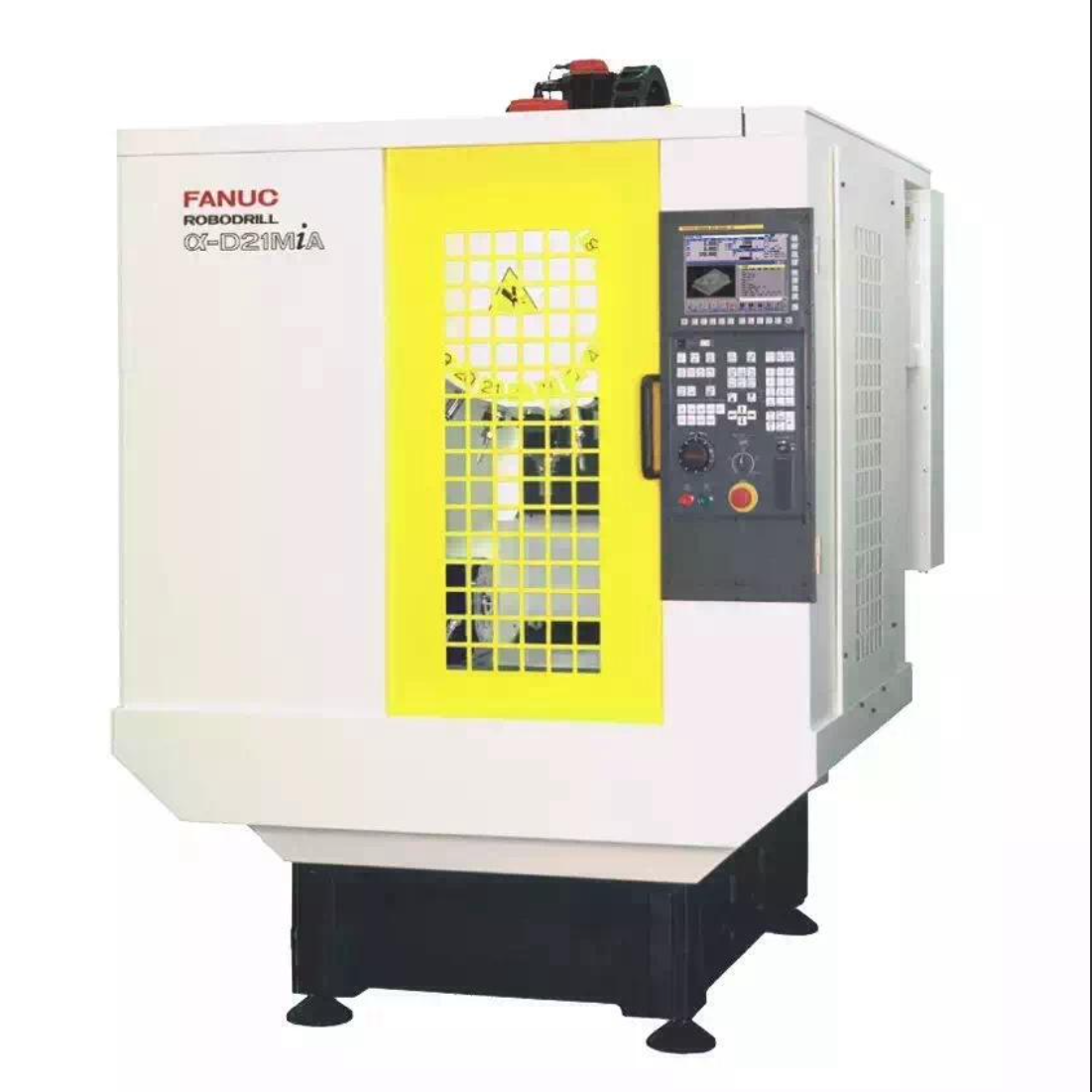
Documented equipment and quality capabilities include FANUC CNC equipment, an ISO-certified quality management system, and precision measurement equipment. Regarding accuracy, SUNPREC's site states CNC machining capability of approximately ±0.01 mm, with machine tolerance on many FANUC machining centers stated at approximately 0.005 mm. These figures should not be read as a universal guaranteed tolerance for every automotive component — achievable tolerance depends on part geometry, material, machine, tooling, workholding, process, inspection method, and drawing requirements. By combining machining with casting, extrusion, and finishing, SUNPREC helps customers evaluate different production approaches for automotive components within one supplier and one quality system.
Conclusion
CNC machining for automotive parts is an important manufacturing technology because it delivers precision, repeatability, material flexibility, design flexibility, prototype capability, and support for complex features. It is not automatically the best process for every automotive component, though. Manufacturers should weigh part geometry, material, production volume, tolerance, functional requirements, surface finish, and total cost together. During prototyping, CNC machining provides flexibility; during production, it can serve as the primary process or be combined with die casting, stamping, extrusion, or other processes. The right manufacturing process should always be selected according to the specific automotive component and its production requirements.
Put another way:
- Prototyping and low volume → CNC machining offers flexibility and no tooling commitment.
- Medium volume → machining can remain economical when the process is engineered for cycle time and tool life.
- High volume → machining is often combined with die casting, stamping, or extrusion, with secondary CNC machining on critical features.
Developing or Sourcing Custom Automotive Metal Parts?
Send SUNPREC your 2D drawings or 3D CAD files together with the material requirements, tolerance specifications, surface finish requirements, and estimated production volume. Our engineering team will review the requirements and recommend an appropriate manufacturing process.
Request a Quote from SUNPREC →FAQ
1. What automotive parts can be made with CNC machining?
Typical applications include engine and transmission housings and brackets, shafts, bushings, suspension and steering components, EV motor and battery-related parts, sensor housings and connectors, and interior or exterior structural brackets.
2. What materials are commonly used for CNC machined automotive parts?
Aluminum is the most common, followed by steel and stainless steel for strength and corrosion resistance, brass and copper for conductive parts, and titanium for specialized high-performance applications.
3. Is CNC machining suitable for automotive prototypes?
Yes. Machining requires no dedicated production die, so prototypes can be produced quickly and revised as designs change — ideal for concept validation, fit testing, and engineering validation.
4. Can CNC machining be used for high-volume automotive production?
It can, particularly for critical or complex features, but high-volume production usually combines machining with die casting, stamping, or extrusion, followed by secondary CNC machining of critical dimensions.
5. What should I look for in an automotive CNC machining supplier?
Look for broad machining and finishing capability, material experience, an ISO-certified quality system with proper inspection, DFM and engineering support, and the ability to scale from prototypes to production.