

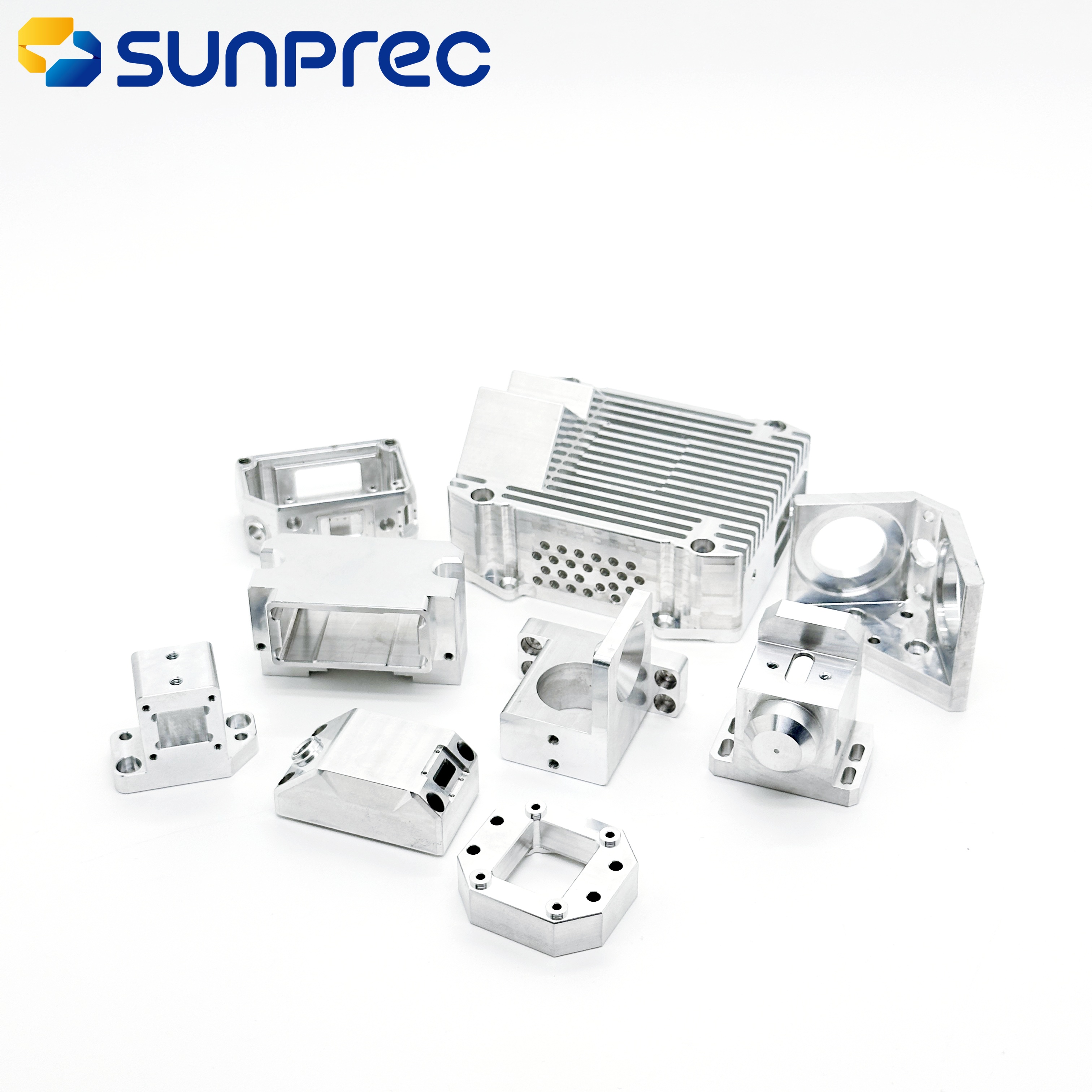
A buyer or engineer sourcing a custom aluminum part is actually making two decisions at once: which aluminum alloy to specify, and which manufacturing process should produce the part. The two decisions are closely connected — an alloy that machines beautifully on a cnc machining center may be a poor fit for a die casting die, while a die casting alloy designed to fill complex tooling reliably may not be the grade you would first choose for a machined component.
Aluminum is used throughout precision metal parts manufacturing for good reason: low density, a favorable strength-to-weight ratio, natural corrosion resistance, excellent machinability, good thermal conductivity, and broad versatility. But "aluminum" is not a single material. Different aluminum alloys differ significantly in mechanical properties, machinability, corrosion resistance, thermal performance, casting characteristics, surface finishing behavior, and cost.
This guide addresses the two questions buyers ask most often: How do I choose the right aluminum alloy for a custom part? and Should the part be CNC machined or die cast? The answer to both is the same — it depends on the application, the geometry, the performance requirements, the production volume, the surface finish, and the total cost.
Why Aluminum Alloy Selection Matters
The alloy choice directly affects part performance, manufacturing efficiency, machining cost, die casting behavior, surface finishing results, dimensional stability, and product lifespan. A housing in the wrong alloy may warp during finishing, corrode in the field, or cost far more to machine than necessary.
The most important principle: material selection should not be separated from manufacturing process selection. Wrought alloys such as 6061 and 7075 are supplied as bar, plate, and sheet stock for machining; casting alloys such as A380 and ADC12 are formulated to flow into dies. Choosing alloy and process together, early in development, avoids redesigning a finalized part around a different material system. If you are new to the processes themselves, this comparison of CNC machining and die casting covers the fundamentals.
Key Properties to Consider When Selecting an Aluminum Alloy
Strength
Strength is discussed in terms of tensile strength and yield strength, both matched to the structural and load requirements of the component. Higher strength does not automatically mean a better material: higher-strength alloys cost more, can be harder to machine, and may be unnecessary for a lightly loaded bracket or enclosure. Specify the strength the application requires, then verify it against the alloy's datasheet values in the required temper.
Weight
Aluminum's low density matters most in automotive, aerospace, robotics, electronics, and portable equipment, where every gram affects performance, energy use, or payload. In these applications, strength-to-weight ratio can be more important than strength alone. Because density varies only slightly across common grades, the weight decision usually comes down to alloy strength versus section thickness.
Corrosion Resistance
Aluminum resists corrosion through a stable oxide film, but protection varies by alloy and environment — moisture, humidity, outdoor exposure, salt, chemicals, and industrial atmospheres all change the picture. High-strength copper-containing alloys are generally less corrosion-resistant than the magnesium and magnesium-silicon families. Because alloy chemistry and protective surface treatments work together, alloy selection and surface finishing should be considered together.
Machinability
Machinability is often described loosely, but its impact is concrete: an alloy's machining characteristics influence achievable cutting speeds, tool wear, machining time, surface finish, and therefore production efficiency and cost per part. For high-volume machined parts, a machinable alloy meaningfully reduces unit cost. This is why an experienced CNC machining partner reviews material choice alongside the drawing.
Thermal Conductivity
Thermal requirements can drive alloy selection on their own. Heat sinks, electronics enclosures, LED housings, and power electronics depend on the alloy's ability to move heat away from a source, and thermal conductivity varies meaningfully between alloy families and tempers. For such components, thermal performance belongs in the material specification, not as an afterthought.
Surface Finishing Compatibility
Alloys respond differently to anodizing, powder coating, painting, and polishing — some anodize to a uniform decorative finish, others develop uneven tones, and high-silicon casting alloys present their own considerations. If a specific cosmetic or protective finish is required, evaluate it before the final alloy is locked in.
Common Aluminum Alloys for CNC Machining
Wrought aluminum alloys — supplied as bar, plate, rod, and sheet stock — dominate CNC machined aluminum parts. Four grades cover most practical applications.
6061 Aluminum
6061 is the most widely used general-purpose alloy for machined components. It combines good machinability, balanced strength, good corrosion resistance, wide availability, and reasonable cost, and it welds and anodizes well. Typical applications include brackets, housings, frames, fixtures, and mechanical components. Without a specific reason to choose another grade, 6061 is usually the correct starting point for a machined aluminum part.
7075 Aluminum
7075 is one of the highest-strength aluminum alloys, with an excellent strength-to-weight ratio, and is widely used in aerospace and other high-performance applications. The trade-offs: higher cost, different machining considerations such as greater tool load, and lower general corrosion resistance. 7075 is not simply "better" than 6061 — if the application does not need the extra strength, it adds cost and machining effort without adding value.
2024 Aluminum
2024 is another high-strength alloy, best known for its fatigue performance, which explains its long history in aerospace structures and other cyclically loaded components. Its corrosion resistance is lower than 6061-family alloys, so 2024 parts often receive protective treatments.
5052 Aluminum
5052 is recognized for corrosion resistance — including marine environments — and excellent formability, making it a common choice for sheet metal and fabricated components such as panels and enclosures. It is a useful reminder that not every aluminum alloy is optimized for every manufacturing process: 5052 belongs naturally to sheet fabrication, just as 6061 and 7075 belong to machining and A380 and ADC12 belong to die casting.
Common Aluminum Alloys for Die Casting
Die casting uses dedicated casting alloys formulated for die filling and solidification behavior rather than for machining stock. Two designations cover most industrial applications.
A380 Aluminum
A380 is one of the most widely used aluminum die casting alloys. It offers good castability, a good balance of mechanical and thermal properties, and reliable performance across industrial applications. Its casting behavior suits complex die-cast components such as housings, enclosures, brackets, and thermal components, making it a frequent default proposal for new die cast parts. This overview of the aluminum die casting process covers the process in more detail.
ADC12 Aluminum
ADC12 is another widely used die casting alloy, particularly common in Asian supply chains, offering good castability and good dimensional stability for complex components where consistent as-cast dimensions matter. In practice, A380 and ADC12 often serve similar part categories. One note for global buyers: alloy naming and material standards vary by region, so always confirm the required specification and equivalent grade with the manufacturer before production.
CNC Machining vs Die Casting for Aluminum Parts
Once the alloy direction is clear, the process question follows. The table below summarizes how the two processes compare for aluminum parts.
| Factor | CNC Machining | Aluminum Die Casting |
|---|---|---|
| Tooling | Low / minimal dedicated tooling | Requires dedicated die |
| Prototype suitability | Excellent | Less flexible |
| Low-volume production | Highly suitable | Tooling cost may be significant |
| High-volume production | Can become more expensive | Highly suitable |
| Design changes | Relatively easy | More difficult after tooling |
| Material waste | Material removal creates waste | Generally lower material waste |
| Production flexibility | High | Lower after tooling |
| Complex geometry | Highly flexible | Excellent for suitable cast geometries |
| Unit economics | Strong for lower volumes | Strong at higher volumes |
Three points deserve emphasis. First, neither process is universally better — machining wins on flexibility and low upfront commitment; die casting wins on unit economics at volume. Second, the alloy systems differ: machined parts use wrought grades such as 6061 and 7075, while die cast parts use casting grades such as A380 and ADC12. Third, the two are frequently combined — a die-cast component often receives secondary CNC machining for critical holes, threads, or precision surfaces that cannot be held reliably as-cast.
When Should You Choose CNC Machining for Aluminum Parts?
CNC machining is usually the better choice for prototypes, low-volume production, design validation, parts undergoing frequent design changes, components with tight-tolerance features, highly customized one-offs, and parts with complex machined features such as deep pockets, precise bores, or fine threads.
The reason is economic as much as technical: CNC machining requires no dedicated die. A machined aluminum part starts from standard stock with only workholding and tooling, so product development, prototyping, and small production runs proceed without a large upfront commitment — and a revised CAD file can be on the machine the same week. SUNPREC's CNC machining services cover exactly this stage, with 3-, 4-, and 5-axis machining of aluminum and other engineering materials from single prototypes to production batches.
When Should You Choose Aluminum Die Casting?
Aluminum die casting becomes attractive with medium-to-high production volume, a stable product design, and geometry that suits casting — complex housings, thin-wall enclosures, components with internal cavities or ribs, and any part produced repeatedly over a long production life.
Die casting requires upfront tooling investment, and that shapes the economics: as volume increases, tooling cost is distributed across more parts, cycle times can be very efficient, repeatability is strong, and unit cost can become highly attractive. However, there is no universal production volume threshold at which die casting automatically becomes cheaper. The break-even depends on tooling cost, part geometry, required machining on the cast part, material cost, volume, and secondary operations — so have the manufacturer quote the part both ways at your real volume.
How Production Volume Affects Aluminum Manufacturing Process Selection
Prototype Production
At the prototype stage, CNC machining is almost always the more flexible route: no die to build, quick design iterations, and a part that closely represents the intended component.
Small-Batch Production
For small batches, CNC machining often remains attractive even with a stable design, because casting tooling has too few parts over which to amortize. Many products stay in this phase deliberately, and machining is the correct permanent process for them.
High-Volume Production
At high volumes, die casting may become the more economically attractive process, particularly for thin-wall housings and complex cast features. The key word is may: the actual break-even depends on the specific component and project economics. For more on volume-driven sourcing, see this guide to high-volume metal part production.
How Application Requirements Affect Aluminum Alloy Selection
Automotive
Automotive programs prioritize weight reduction, strength, durability, corrosion resistance, and high-volume manufacturing. These pressures push many automotive aluminum components toward die casting for housings and structural castings, with machined wrought alloys used where tighter tolerances or lower volumes justify them.
Aerospace
Aerospace emphasizes strength-to-weight ratio, fatigue performance, tight dimensional requirements, and corrosion considerations — the territory of high-strength wrought alloys such as 7075 and 2024, machined to precise tolerances with finishing and inspection requirements beyond general industrial use.
Electronics
Electronics concentrates on thermal conductivity, lightweight housings, surface finish, and dimensional stability. Both die-cast enclosures and machined housings are common; alloy choice is driven by heat dissipation and cosmetic requirements.
Robotics and Automation
Robotics values low weight on moving members, sufficient strength, machinability, precision, and repeatability. Machined 6061 and 7075 components — brackets, arms, mounts, frames — are common, and volumes are often small enough that machining remains the natural process.
Industrial Equipment
Industrial equipment stresses durability, corrosion resistance, cost, and production consistency. General-purpose and casting alloys dominate here, and the volume of the specific component — not the industry — usually decides the process.
Aluminum Alloy and Surface Finishing Considerations
Surface finishing is not an afterthought. Anodizing, powder coating, painting, and polishing all interact with the alloy: chemistry affects anodizing color and uniformity, and high-silicon casting alloys behave differently from wrought alloys under the same treatment.
The practical rule: evaluate the alloy, the surface condition of the raw part, the required appearance, the corrosion protection needed, and the final application together. A part that must be clear-anodized to a uniform cosmetic finish may need a different alloy than the same part in powder coat. See how surface finishing improves metal parts for a fuller treatment.
How to Choose the Right Aluminum Alloy for CNC Machining and Die Casting
A workable selection process looks like this:
Step 1: Define Functional Requirements
List what the part must do: strength, weight, operating temperature, corrosion exposure, wear, and thermal performance. These requirements eliminate unsuitable alloy families immediately.
Step 2: Define Part Geometry
Identify the geometry drivers: cylindrical features, thin walls, cavities, pockets, complex shapes, and tight-tolerance features. Thin-wall enclosures point toward casting; pockets, precise bores, and prismatic features point toward machining.
Step 3: Define Production Volume
State the real volume — prototype, small batch, medium volume, or high volume. Volume is the biggest driver of the process decision.
Step 4: Define Critical Tolerances
Not every dimension needs an extremely tight tolerance. Apply tight tolerances only to dimensions that genuinely affect assembly, function, sealing, or movement — over-tolerancing is one of the most common ways to inflate a part's cost.
Step 5: Define Surface Finish
Specify the finish the part actually requires — anodizing, powder coating, painting, or polishing — including cosmetic class and corrosion protection targets, and confirm the alloy is compatible with it.
Step 6: Evaluate Total Cost
Never compare raw material price alone. Total cost includes tooling, machining time, scrap, finishing, inspection, assembly, and logistics across the whole production life of the part — a more expensive alloy that machines faster and scraps less can produce the cheaper part.
Aluminum Alloy Selection Checklist for Buyers
| Requirement | Questions to Ask |
|---|---|
| Strength | What loads will the component experience? |
| Weight | Is weight reduction important? |
| Corrosion | Will the part face moisture or chemicals? |
| Machinability | How complex are the machined features? |
| Thermal performance | Does the component need heat dissipation? |
| Volume | How many parts are required? |
| Geometry | Is CNC machining or die casting more appropriate? |
| Tolerance | Which dimensions are critical? |
| Surface finish | What finish is required? |
| Cost | What is the target total manufacturing cost? |
Why Work With a Manufacturer That Offers Both CNC Machining and Die Casting?
From a procurement perspective, a one-stop manufacturer operating both processes offers real advantages: unbiased process selection advice, an easier prototype-to-production transition, consolidated engineering communication, fewer supplier changes, in-house secondary machining, and finishing under one quality system.
Two scenarios show why. A component may be CNC machined during prototype development and later transition to die casting for volume production — with a dual-capability supplier, both versions are developed by the same engineering team. And a die-cast aluminum component frequently requires secondary CNC machining for critical holes, threads, or precision surfaces; when casting and machining sit in the same facility, machining allowance, datum strategy, and finishing are designed together from the start. When evaluating suppliers, the questions in this metal parts manufacturer selection guide provide a practical checklist.
Why Choose SUNPREC for Custom Aluminum Parts?
SUNPREC is a one-stop precision metal parts manufacturer serving global B2B customers. Its capabilities include CNC machining, cnc turning, die casting, extrusion, investment casting, and surface finishing, with support from prototype development through small-batch production to mass production, backed by engineering support and quality control.
For aluminum parts specifically, the company's website documents 3-, 4-, and 5-axis machining capabilities, FANUC machining equipment with machine tolerance stated at approximately 0.005 mm, and CNC machining capability of approximately ±0.01 mm for custom parts. Machine tolerance describes equipment capability — the tolerance achieved on a finished part depends on part geometry, material, process, tooling, workholding, and inspection requirements. SUNPREC's engineering team works with customers on material, tooling, machining, and finishing decisions under an ISO-certified quality management system — precisely the material-plus-process review this article recommends. The practical benefit: an aluminum part can be prototyped on a machining center, validated, then machined in production or converted to a die-cast design as volumes grow, within one supplier.
Conclusion
Choosing the right aluminum alloy for CNC machining and die casting is not about picking the strongest material or the cheapest material. It is about matching the alloy and the process to the application, where mechanical requirements, weight, corrosion, machinability, thermal performance, geometry, volume, tolerance, surface finishing, and total cost all contribute.
The summary is straightforward:
- CNC machining tends to suit prototypes, low-volume production, high customization, tight-tolerance features, and frequent design changes — typically in wrought alloys such as 6061, 7075, 2024, and 5052.
- Die casting tends to suit stable designs, higher production volumes, complex housings, thin-wall components, and high-volume manufacturing — typically in casting alloys such as A380 and ADC12.
- Combined strategies — machined prototypes converted to castings, or castings finished by secondary machining — are common and often optimal.
The best material and the best manufacturing process should be selected together, early, with input from a manufacturer that can execute both.
Unsure Which Aluminum Alloy or Process Is Right for Your Part?
Send SUNPREC your 2D drawing or 3D CAD file together with the required material, tolerance, surface finish, and estimated production volume. Our engineering team will review the requirements and recommend a suitable aluminum alloy and manufacturing approach.
Request a Quote from SUNPREC →FAQ
1. What is the best aluminum alloy for CNC machining?
There is no single best alloy. 6061 is the most common general-purpose choice, balancing machinability, strength, corrosion resistance, and cost; 7075 and 2024 are preferred when higher strength or fatigue performance justifies their cost; 5052 suits sheet-based fabricated components. The right choice depends on the application.
2. What aluminum alloys are commonly used for die casting?
A380 and ADC12 are two of the most widely used aluminum die casting alloys, both offering good castability for complex components. Regional naming and standards vary, so confirm the exact specification and equivalent grade with your manufacturer.
3. Is 6061 aluminum suitable for CNC machining?
Yes. 6061 is one of the most widely CNC machined aluminum alloys, thanks to good machinability, balanced mechanical properties, good corrosion resistance, and broad availability. It is the standard starting point for brackets, housings, fixtures, and general mechanical components.
4. What is the difference between CNC machining and aluminum die casting?
CNC machining removes material from wrought aluminum stock with no dedicated die, offering flexibility and fast iterations at lower volumes. Die casting injects molten casting alloy into a dedicated die, enabling efficient high-volume production of complex cast geometries after an upfront tooling investment. The two are often combined — castings receive secondary machining on critical features.
5. How do I choose the right aluminum alloy for my application?
Define the functional requirements (strength, weight, corrosion, thermal performance), the part geometry, the production volume, the critical tolerances, the required surface finish, and the total cost target — then match the alloy and process to those constraints, ideally with a DFM review from a manufacturer that offers both machining and casting.