

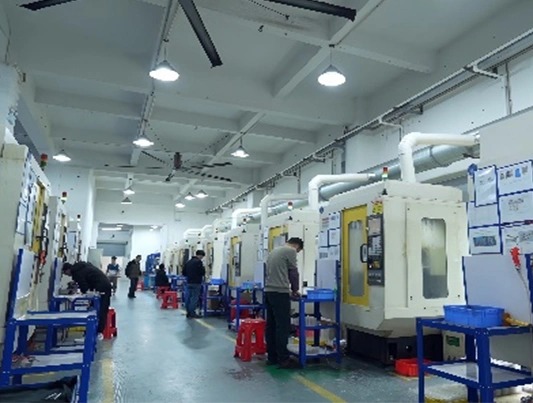
Introduction: Precision Casting for High-Performance Industrial Components
Precision casting, also known as investment casting, is a highly accurate manufacturing process used to create complex metal components with exceptional structural stability. Its capability to reproduce fine details and deliver consistent dimensional accuracy makes it an essential method for industries requiring reliable and durable parts.
Complex Geometry Production with High Accuracy
Precision casting allows manufacturers to produce intricate designs and thin-wall structures that are difficult or impossible to achieve through conventional machining or forging. This capability enables engineers to develop parts that optimize weight, performance, and functionality without compromising strength.
Improved Structural Integrity Through Dense Material Formation
One of the major advantages of precision casting lies in the density and uniformity of the metal structure. During the casting process, molten metal fills the mold completely, forming components with strong internal cohesion. This results in high mechanical strength, minimal internal defects, and long-term stability in demanding industrial environments.
Consistency and Repeatability in Mass Production
Precision casting excels in producing high-volume components with consistent dimensions and stable quality. Once the mold is created, manufacturers can replicate identical parts across multiple production cycles, ensuring reliability and compatibility within assembly systems.
Material Flexibility for Industrial Demands
The process is compatible with a wide selection of metals, including steel, stainless steel, aluminum, and specialized alloys. This versatility allows manufacturers to choose materials tailored to performance requirements such as heat resistance, corrosion protection, or mechanical load-bearing capabilities.
Enhanced Surface Finish for Functional and Aesthetic Performance
Precision-cast components typically feature smooth surfaces and accurate contours, reducing the need for extensive post-processing. Better surface quality also contributes to improved wear resistance, reduced friction, and higher assembly precision. When required, supplementary processes—such as machining, polishing, or coating—can further elevate performance.
Supporting Industrial Applications with High Reliability
From structural brackets to mechanical housings and functional assemblies, precision casting provides the reliability required for heavy-duty and high-precision applications. Its accuracy and durability ensure stable performance across sectors that demand long-term operational dependability.
Conclusion: Precision Casting as a Foundation for Robust Industrial Components
Precision casting delivers exceptional dimensional accuracy, strong internal structure, and excellent versatility. These benefits enhance the structural integrity of industrial components, ensuring long-term performance and stability in complex engineering systems.