

Rail transit parts are not bought on geometry alone. A bracket that measures correctly but cannot be traced back to a heat number is, for most rail buyers, not a usable part. This is what to check before you put a machining supplier on a rail programme.
Why rail work is specified differently from other industries
In most industries the purchase order is about the part: material, dimensions, finish, quantity, date. In rail it is about the part plus the evidence that surrounds it. The reason is simple. A component that fails on a train is not a warranty claim, it is an incident report, and the investigation will ask who made it, from which batch of material, on which machine, inspected by whom, against which revision of the drawing.
That changes what a supplier has to be good at. Dimensional accuracy gets you into the conversation. Traceability, batch consistency and documentation are what keep you on the programme.
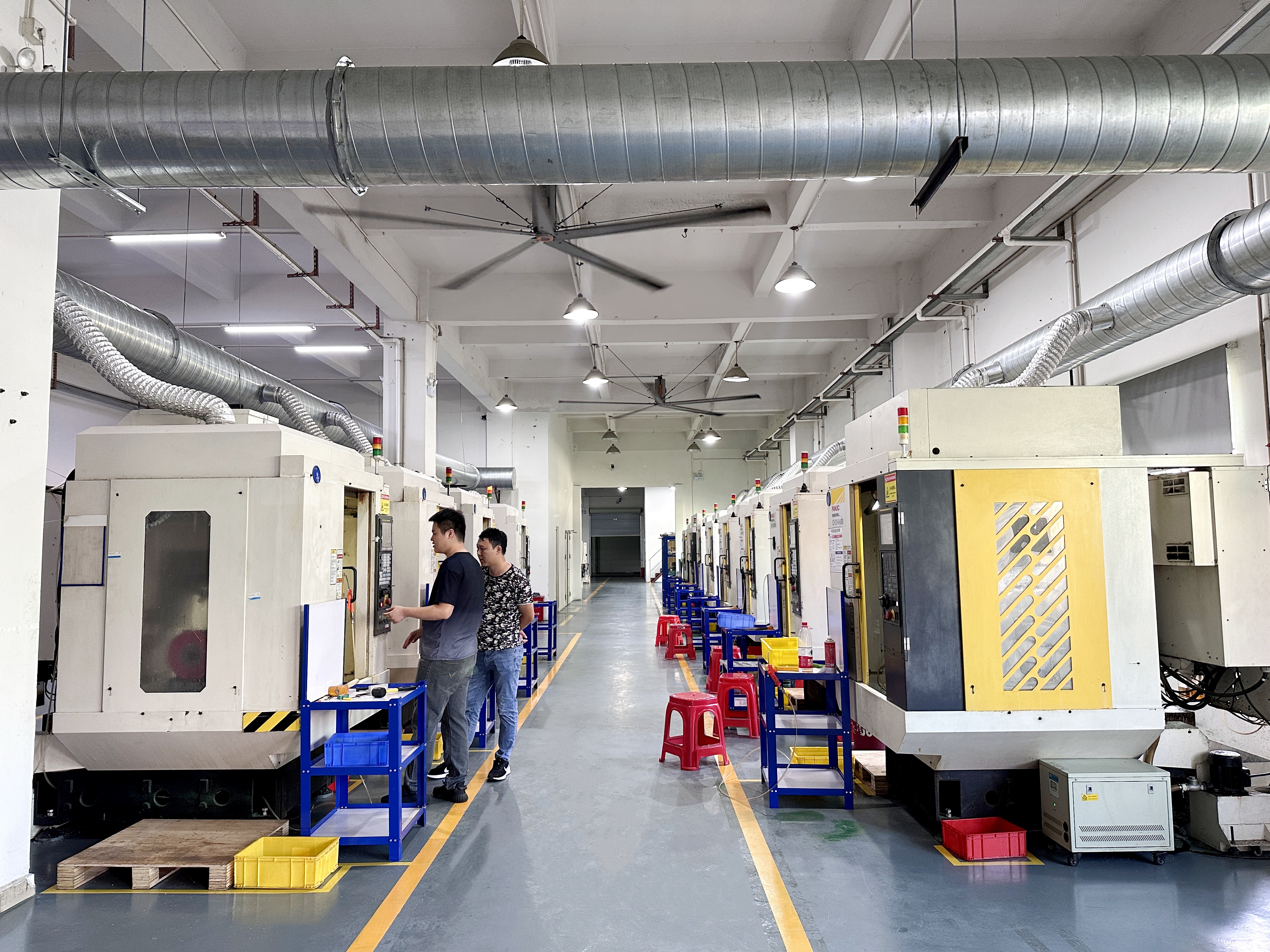
We machine precision metal components in Dongguan. Our quality management system is certified to ISO 9001:2015 (Certificate No. IAS24Q374R0, scope: production of hardware components), and every part we ship leaves with a material certificate, a measured inspection report and a certificate of conformity. What we can do here is explain what a rail buyer should demand, what we can supply, and where a different process is the right answer. That is more useful than a brochure.
The component families rail buyers actually source from machining suppliers
Rail programmes cover a huge range of parts, but the ones that land on a machining supplier's floor tend to fall into a handful of families. If your part looks like one of these, the rest of this page applies.
| Component family | Typical route | What the drawing usually controls | Common materials |
|---|---|---|---|
| Brake system brackets, caliper and actuator parts | CNC machining from plate or bar | Hole position, flatness, thread strength, surface integrity | 42CrMo4, S355, 6082-T6 |
| Bogie and suspension connecting parts | Forging or casting, then finish machining | Form and position tolerances, fatigue-critical surfaces | 42CrMo4, S355, GS-52 |
| Interior and equipment mounting brackets | Sheet metal fabrication, CNC, or die casting | Batch consistency, coating thickness, fire performance of materials | S355, 6061-T6, ADC12 |
| Signal, control and junction housings | Die casting plus CNC finishing | Sealing faces, wall thickness, coating adhesion | ADC12, A380 |
| Door and step mechanism parts | cnc machining, sometimes with hard anodising | Wear surfaces, repeatability over cycles | 6082-T6, 7075-T6, stainless 316L |
Traceability: from heat number to installed part
Ask a supplier to trace a finished part back to its material and most will say yes. Ask them to show you the chain and the answer gets vaguer. A complete chain has six links, and a rail buyer should be able to see all of them:
- Mill certificate for the stock, showing heat number, grade, chemical composition and mechanical properties.
- Incoming inspection record linking that heat number to the batch received, with quantity and date.
- Work order that records which heat number was issued to which production lot.
- Part marking — lot number, date code or serial — physically on the part or its bag, agreed with the customer.
- Inspection record tied to the same lot number, showing measured values, not just pass/fail.
- Packing list and CoC that carry the lot number through to delivery.
The link that breaks most often is the third one. A shop buys material from stock, machines it, and by the time the parts ship nobody can say which heat went into which batch. If a supplier cannot split lots and mark parts, the rest of the documentation is decoration.
What to ask: "If I give you a part number and a delivery date, can you tell me the heat number of the material it was made from, and show me the inspection values for that lot?" A supplier who can answer in ten minutes has a system. One who needs a week has a filing cabinet.
Tolerances that matter — and the ones that only add cost
Rail drawings often arrive over-toleranced. Someone adds ±0.02 mm to every dimension because it feels safer, and the price goes up by a third for no functional gain. The dimensions that actually decide whether a rail part works are usually few:
| Feature type | Why it matters on rail parts | Practical note |
|---|---|---|
| Mounting hole position (position tolerance) | Decides whether the part bolts on without reaming or shimming in the depot | Specify as a position tolerance against a stated datum, not as plus/minus on each hole |
| Flatness / perpendicularity of a mounting face | Controls how load is distributed and whether the assembly distorts when torqued | Usually the single most important callout on a bracket |
| Thread depth and class | Vibration loosening and pull-out strength | State the thread standard and inspection gauge |
| Surface roughness on fatigue-critical fillets | Tool marks act as crack starters | Call out Ra on the fillet, not on the whole part |
| General dimensions | Rarely functional | ISO 2768-m is usually enough; tightening all of them buys nothing |
On finished machined features we work to about ±0.01 mm where the geometry, material and workholding allow it, and our FANUC machining centres have a machine positioning capability in the order of 0.005 mm. Neither number is a promise that applies to every feature of every part: the tolerance that can be held repeatably depends on the feature, the material, how the part is held, and how it is measured. On a rail programme the right conversation is not "what is the tightest tolerance you can hold" but "what can you hold on this feature, batch after batch, and how do you prove it".
Batch consistency across a programme that runs for years
Rolling stock programmes run for a decade or more, and spare parts are ordered years after the original batch. A replacement bracket has to fit the same holes as the one installed in 2026. That is a different problem from hitting tolerance once.
Drift comes from predictable places: fixture wear, tool wear, a re-programmed cycle, a new operator, a different material heat, a changed coolant. The controls that keep a process frozen are unglamorous but they work:
- Fixtures are numbered, recorded and inspected on a schedule, not rebuilt from scratch each run.
- First-piece inspection on every production run, with values recorded against the drawing.
- In-process checks on the critical-to-quality features at a defined frequency, not only at the end.
- Program changes are version-controlled and notified to the customer when they affect form or fit.
- Material lots are kept separate so a change of heat can be traced if a dimensional shift appears.
Inspection documentation: what a rail buyer should ask for
| Document | When it is issued | What it should contain |
|---|---|---|
| Material certificate (EN 10204 3.1) | With every delivery | Heat number, grade, chemistry, mechanical properties, standard |
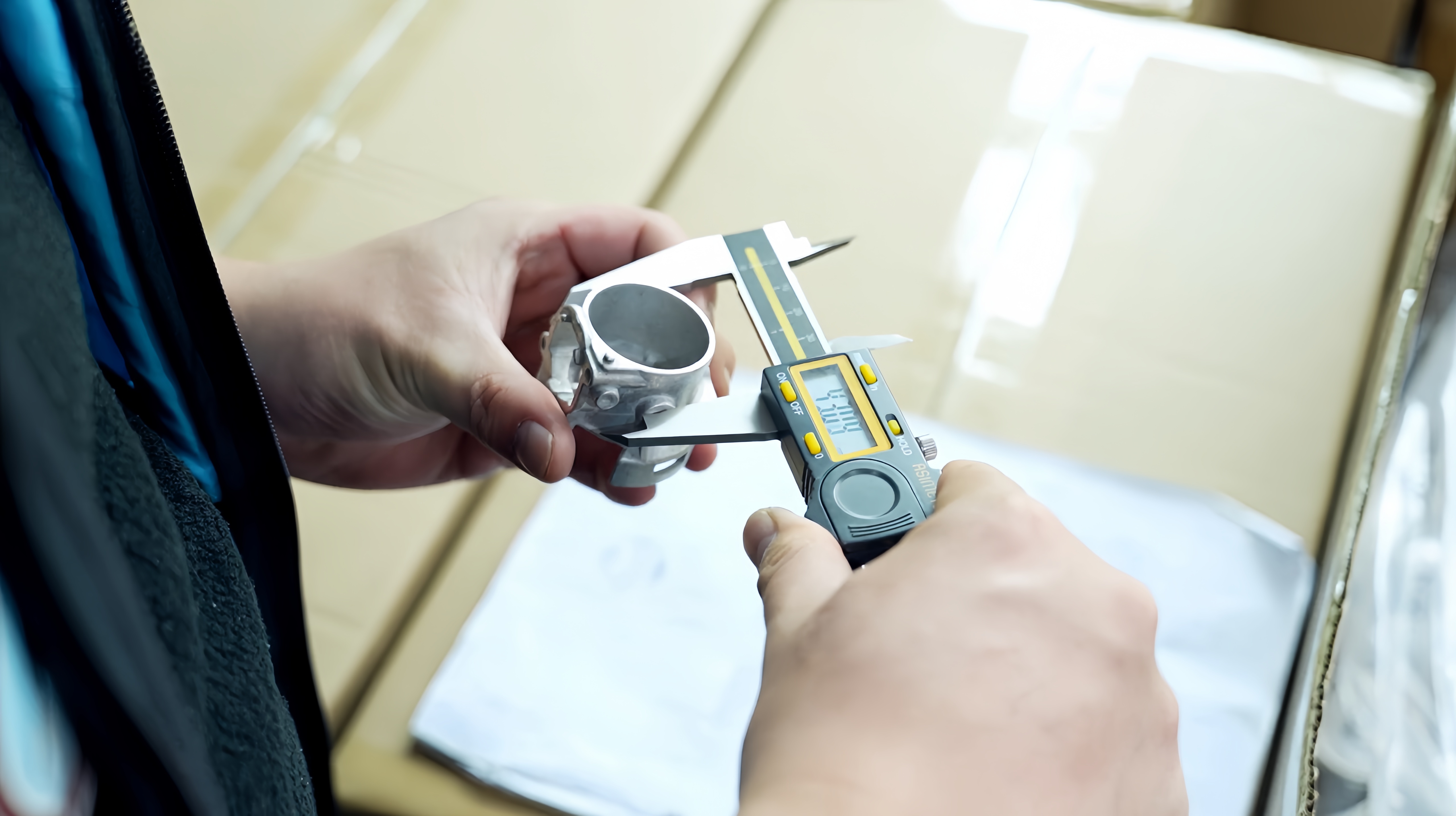
| Dimensional inspection report | With every lot | Measured values per feature, not tick boxes |
| First article inspection report | First batch and after any process change | Full drawing characteristic ballooning, values, material and finish evidence |
| Surface treatment certificate | When finishing is subcontracted or in house | Coating type, thickness, adhesion or salt-spray result |
| Certificate of conformity | With every delivery | Statement against the purchase order and drawing revision |
| Non-destructive test report | Only where the drawing requires it | Method, standard, coverage, operator qualification |
If a drawing calls for magnetic particle or dye penetrant testing, be explicit about who performs it and to which standard. Many machining suppliers do not run NDT in house; the honest ones say so and name the approved partner rather than quietly skipping it.
Where machining ends and another process has to take over
A rail part is rarely machined from solid and then finished. Bogie components often start as forgings or castings and are machined only on the functional faces. Interior brackets are usually formed from sheet and then coated. Housings are cast, trimmed, machined and sealed.
That matters commercially: every handover between processes is a place where traceability and tolerance stack-up can be lost. If your supplier only machines, ask who does the casting, the welding and the coating, and whether the documentation follows the part across those steps. A single source that controls the chain is worth more than three specialists who each do their own job well and blame each other when something drifts.
Where the money actually goes on a rail machined part
Rail buyers are often surprised that a simple bracket quotes higher than a more complex part from another industry. The geometry is rarely the reason. Five things usually drive the price:
- Material certification and lot control. Buying a specific heat, keeping it segregated and documenting it costs more than pulling a bar off the rack.
- Over-tolerancing. Every dimension tightened to ±0.02 mm adds machine time and inspection time. On a typical bracket, loosening the non-functional callouts to ISO 2768-m can remove a meaningful share of the cost without changing fit.
- Setup count. A part that needs four setups costs roughly four times the setup of a part that needs one. A small design change — a machined pad, an accessible datum — sometimes removes two of them.
- Inspection level. Full dimensional reports with measured values on every characteristic take time. Agreeing which characteristics are critical-to-quality, and reporting only those, reduces cost without reducing assurance.
- Volume. Rail orders are often small and irregular. A 50-piece lot carries the same programming, fixturing and first-article effort as a 500-piece lot, spread over a tenth of the parts.
None of this is a reason to lower the specification. It is a reason to have the conversation early, with a supplier willing to say which callouts are driving the number. If you want the background on what tolerances a CNC process can realistically hold, our note on precision CNC machining accuracy goes through it in more detail.
Lead time: why rail parts take longer than the drawing suggests
A machined bracket might take two hours on the machine. The order takes six to ten weeks. The difference is everything around the cut: material arrives on a certified heat, first article is inspected and sometimes approved by the customer before the batch runs, finishing is subcontracted, and the documentation pack is assembled and checked.
Two things shorten this materially. First, agree the inspection plan before the first part is made, so the first article is not rejected for reporting the wrong characteristics. Second, freeze the drawing revision for the duration of the order. A revision that arrives mid-batch forces a re-quote, a re-fixture and a re-inspection, and it is the single most common cause of a rail delivery slipping.
Standards you will hear mentioned — and what they actually cover
Rail buyers quote standards freely, and it is worth knowing which ones apply to a machined part and which do not.
- EN 15085 covers welding of railway vehicles and components. It applies to the welded assembly, not to a machined bracket. If your part is welded, the welding shop needs the certification, not the machining shop.
- EN 45545 covers fire protection on railway vehicles and sets requirements for materials used in interior and structural applications. It constrains material choice, and it is verified by test, not by a machining certificate.
- IRIS (ISO/TS 22163) is the railway quality management system standard. It is a system certification for the supplier, and it is the one most often used as a gate in rail tenders.
- Customer standards from the rolling stock builder or the operator usually override all of the above, and they are the ones that decide what your inspection report must look like.
Our position: our quality management system is certified to ISO 9001:2015 (Certificate No. IAS24Q374R0, scope: production of hardware components, issued by an IAF-accredited body). Where a drawing or programme brings in additional qualification — IRIS for the supply system, EN 15085 for welded assemblies, EN 45545 material testing — we set out at quotation stage which documents we issue ourselves and which come from the partner who performs that step, so the requirement is settled before the order is placed.
Qualifying a machining supplier for rail work: a short checklist
- Can they show a complete traceability chain for a part they already shipped, on the spot?
- Do they record measured values, or only pass/fail?
- Are fixtures numbered and maintained on a schedule?
- Who performs NDT, to which standard, and with what operator qualification?
- What is their change notification process for program, material or subcontractor changes?
- How do they handle a spare parts order five years after the original batch?
- Which certifications do they actually hold, and can they produce the certificate rather than the logo?
Questions we get asked
Can you supply parts with full material traceability?
Yes. Material is purchased against a specific heat, the heat number is recorded on the work order, and the certificate travels with the delivery. Where the customer needs lot marking on the part, we agree the marking method before production.
Which certifications do you hold?
Our quality management system is certified to ISO 9001:2015 (Certificate No. IAS24Q374R0, scope: production of hardware components, issued by an IAF-accredited body). Programme-specific requirements are confirmed in writing with the quotation, together with the inspection and material documents that will travel with each delivery.
Can you machine forged or cast rail components?
Yes, where the casting or forging is supplied or sourced to an agreed specification. We machine the functional faces, bores, threads and mounting features, and we inspect against the drawing before finishing.
What is a realistic tolerance for a rail bracket?
Most rail brackets do not need better than ±0.05 mm on general features, with position and flatness callouts on the mounting interface. Tightening everything to ±0.01 mm adds cost without improving fit. We will tell you which callouts are driving the price.
Further reading
Three pages that answer the questions that usually come next:
- CNC machining services — processes, materials and what we run in house.
- Investment casting — for bogie and bracket geometries that start as a casting and are then machined.
- How to choose a reliable CNC machining manufacturer — the questions worth asking before a programme starts.
Send us your rail component drawing
Tell us the material, the critical tolerances and the documentation your programme requires. We will confirm feasibility, agree the documentation package your programme needs, and quote against the drawing revision.
Start your enquiry